
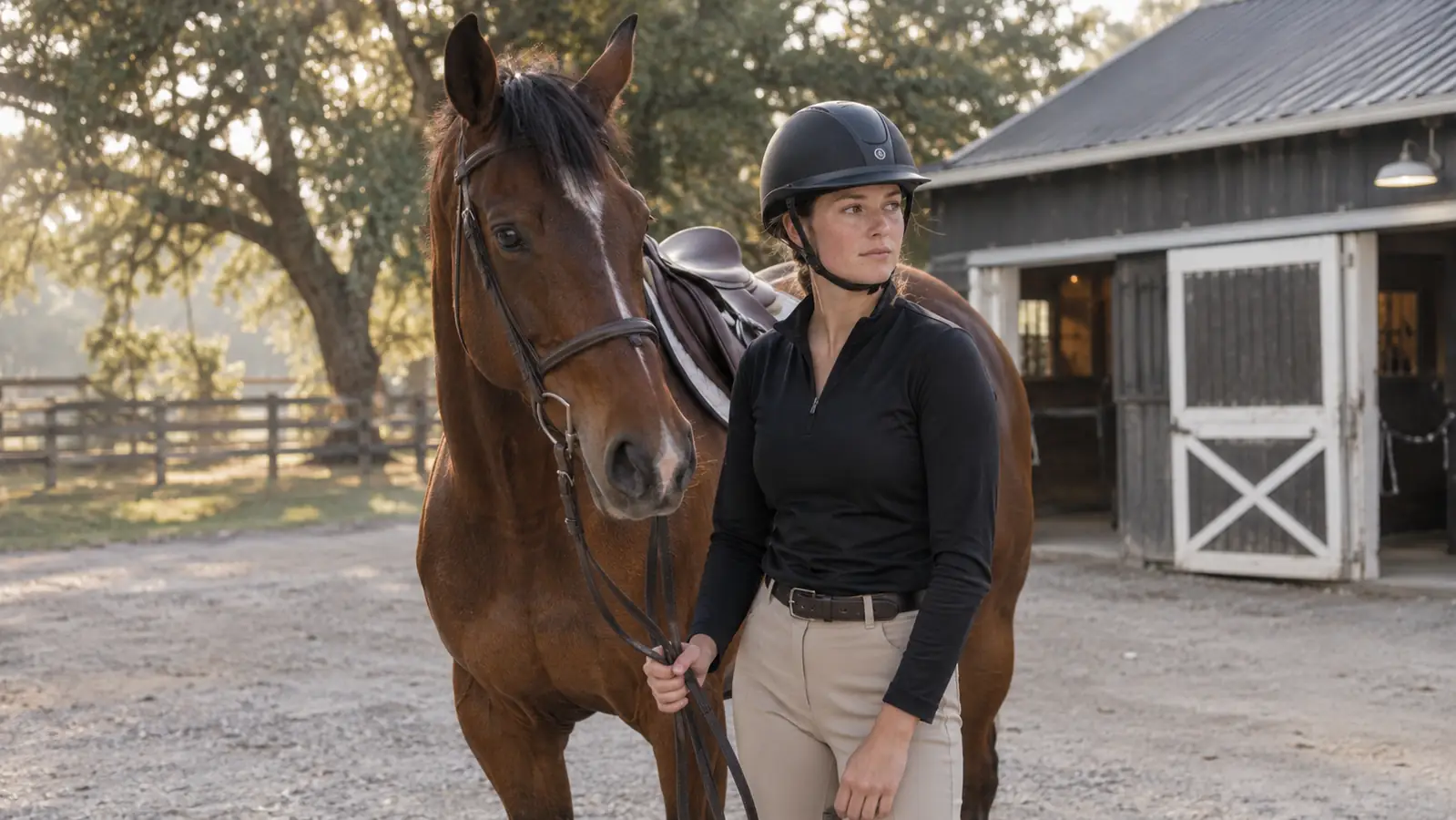
The first time I rode without a helmet I was fifteen and believed nothing bad would ever happen to me. I got away with that for about a decade. Then I bought Juniper, a bay Quarter Horse mare who is honest on the trail and absolutely certain that a plastic bag is a mountain lion, and I started doing the math. I am 46, I do the books part time for a family owned feed store outside Hollister, California, and I have a husband, three kids and a barn to get home to. That is why the Troxel Spirit hangs on a hook by my tack room door and goes on before the bridle does.
This is not a lecture, and I am not going to wag a finger. I rode bareheaded for years, so I would be a hypocrite. What I can do is lay out the ten reasons a certified helmet earns the space it takes up, using the Troxel Spirit as the example I actually own and ride in, on local trails and at the regional park, in mud season and in fly season. Take what helps and leave the rest. And if you have a health question about your own head, ask a doctor, not a blog.
The one piece of tack I put on before the bridle
The Troxel Spirit is adjustable, vented and light enough that I forget it is on by the second gate. It lives on a hook by my tack room door and comes off that hook every single ride.
Amazon Check Today's Price on Amazon →A certified helmet was tested by someone who is not the seller
There is a real difference between a riding helmet and a hat shaped like one. A certified helmet has been built and tested against a published standard, which means somebody other than the person taking your money decided what it has to survive. A fashion hat with a chin strap has not been through that. The certification is on a label inside the helmet, so flip it over and look before you hand over anything. The Troxel Spirit is a riding helmet first and a good looking piece of gear second, and that order is the whole point.
The polycarbonate shell spreads the force out instead of wearing it
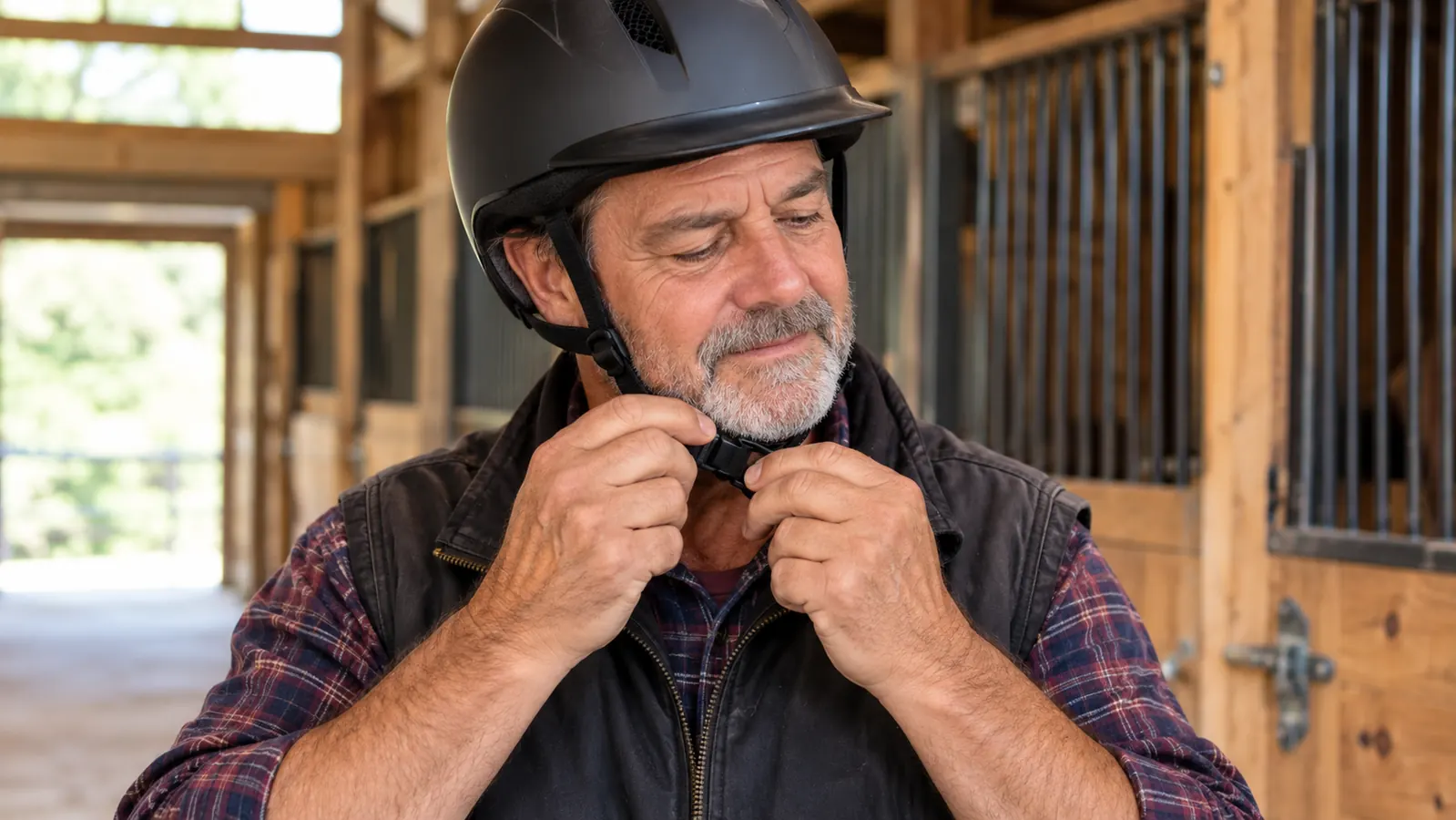
The outside of the Spirit is polycarbonate. What that buys you is a hard shell that spreads a point impact over a wider area before it ever reaches the foam underneath. You are not paying for the shell because it feels nice in your hand. You are paying for the half second when a fence rail, a hoof or the ground meets your head and you need that load to be anywhere other than one square inch of skull.
The foam liner is the part that actually takes the hit
Under the shell sits expanded polystyrene, the same rigid foam that does the real work in a bike helmet. It crushes on impact, and the crushing is what slows your head down instead of stopping it dead. That is also why a helmet is finished after a real fall even when it looks perfect from the outside. The shell springs back. The foam does not. Once the foam has done its job, it has done it.
0.76 kg is light enough that you stop noticing it
The Spirit is listed at 0.76 kg. That sounds like a number until you have ridden two hours with something on your head, and then it is the only number that matters. Light enough that I forget about it somewhere around the second gate means I am not taking it off halfway through the ride. A helmet in your hand protects exactly nobody for the miles you ride without it.
The shell springs back. The foam does not. Once the foam has done its job, it has done it.
Adjustable fit puts it back in the same spot every time
The Spirit is adjustable, and this is the feature I lean on hardest. A helmet that fits properly sits level and low, with the front edge just above your eyebrows, and it does not rock when you push up on the brim. One that does not fit slides back and leaves your forehead bare, which is where a lot of falls land. Because the Troxel adjustment holds where you set it, mine goes on the same way every single time. Set it once in the tack room and then quit thinking about it.

Vents that do something on a 100 degree afternoon
The listing calls it maximum ventilation, and I will translate that into barn terms. There are airflow vents placed around the shell, and on a 100 degree afternoon out here you can feel the difference between a helmet with them and a helmet without. Sweat in your eyes is not just unpleasant. It is a reason to take a hand off the reins. A cooler head is a rider who is still paying attention at the end of the ride instead of counting the minutes.
The visor keeps the glare out without blocking the trail
There is a visor on the front, and it does the job a ball cap brim does. I ride west in the late afternoon more often than I should, straight into the sun, and the visor is the reason I can still pick out a gopher hole in the shadows. Small thing, until the first time your horse stumbles and you realize you did not see the ground in front of him. Then it stops being small.
A low profile cut that does not catch the wind
The Spirit is cut low profile, which in plain language means it follows the shape of your head instead of sitting up on top of it like a mixing bowl. That is not about looks. A helmet that sits high catches wind and tips, and a helmet that tips is one you are forever reaching up to fix. Mine stays where I put it, which matters when I am leaning over to work a gate latch from the saddle with one hand.
13 by 9.25 by 8.25 inches fits where your boots already are
Those are the listed dimensions, and they are small enough that the helmet lives in the trailer tack compartment, on a shelf in the barn or behind the seat of the pickup without a special bag. That sounds like a minor thing. It is not. A helmet that needs its own fancy carrier stays in the house. A helmet that fits on the shelf next to your boots goes to the trail with you, which is the only place it is any use.
A limited one year warranty and 5,461 reviews worth reading
Troxel covers the Spirit with a limited one year warranty. It will not help you after a crash and it is not meant to. It covers the helmet failing on its own. What I find more useful is the review count: a 4.8 average across 5,461 reviews at the time I looked. That is enough people for a pattern to mean something. Read the two and three star ones first. That is where you learn whether the fit runs tight on your head shape.
What I'd Skip
Two things I would skip. First, do not buy any helmet, this one included, without measuring your head with a soft tape and checking the maker's size chart. The Spirit is adjustable and the listing I bought from was a size Small, but adjustable is not the same as one size fits everyone, and a helmet that is too loose is not much better than no helmet. Second, do not buy a used helmet, do not borrow one, and do not keep riding in one that has hit the ground. You cannot see crushed foam. You can only trust that it is not there.
And the thing I would skip hardest is the idea that a helmet is for other people. I am not a competitor. I ride trails on a Quarter Horse mare with a good mind and the occasional bad idea. Nobody watches me ride and nobody would notice if I left the helmet on the hook. That is exactly why I wear it. The wreck you plan for is not the one that gets you. Ask a doctor about your own situation, then go measure your head.
Measure your head this afternoon, order tonight, ride this weekend
Ten minutes with a tape measure saves you a return box later. After that the helmet hangs by the door and you stop thinking about it, which is exactly the goal.
Amazon See the Troxel Spirit on Amazon →