
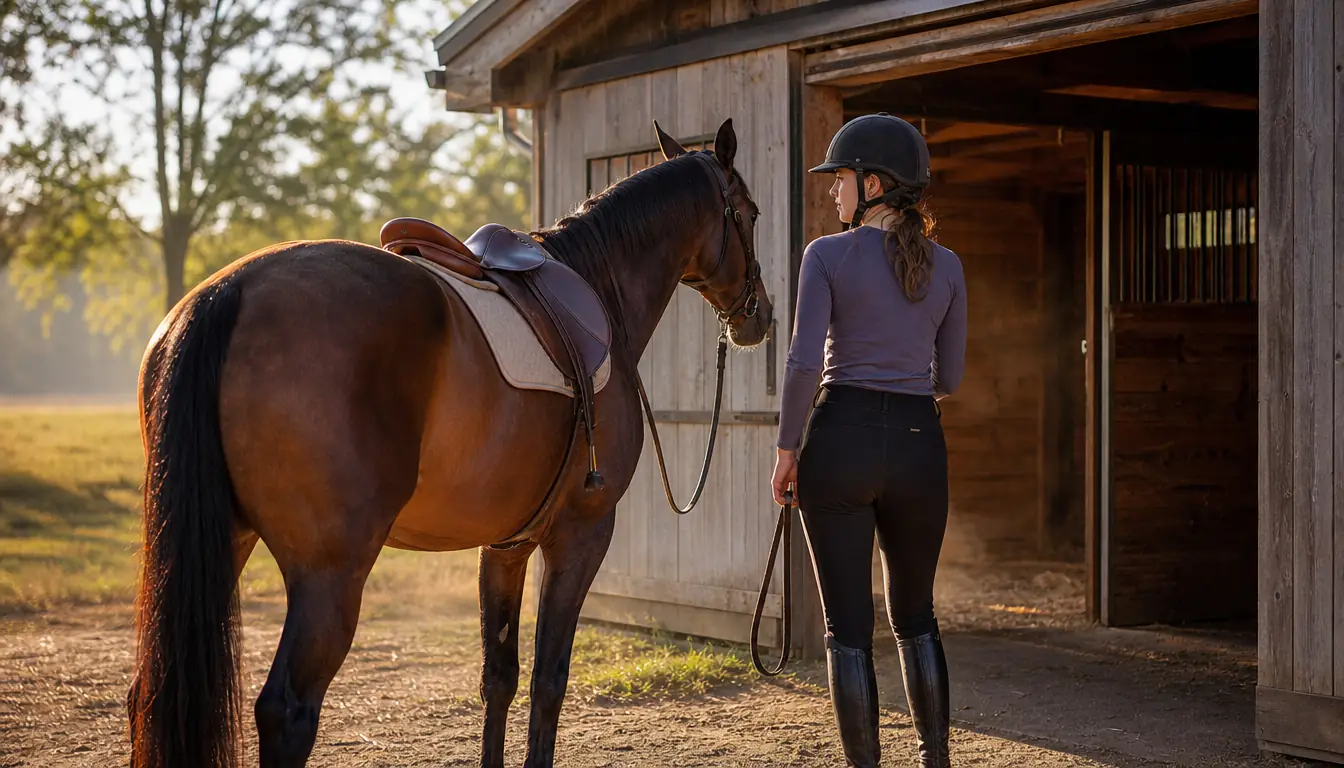
The helmet I rode in before this one had a liner that packed down after about a year. By the end of that summer it sat on my head like a serving bowl instead of holding it. I did not notice how bad it had gotten until someone else borrowed it, handed it back, and said, "This thing wobbles." That was the push. I ordered the Troxel Spirit Duratec in a small, and it has been on my head for every ride since.
That was the spring of 2023. Since then I have worn it five or six days a week: two full summers of 95 degree afternoons in San Benito County, one muddy winter, a lot of early mornings before my shift at the feed store, and one low oak branch at a regional park that I did not duck in time. My mare Juniper is a 14-year-old Quarter Horse, easy on the trail and thin-skinned everywhere else, so we ride trees and ditches more than arenas. I am 46. I do not bounce the way I did at 20, and a helmet stopped being an accessory in this house a long time ago.
The Quick Verdict
A light, low-profile trail helmet whose fit has held for two years of daily wear, with vents that genuinely work and a visor that took a branch so my forehead did not. The sizing chart is unforgiving if you guess.
Amazon Check Today's Price →Two years in, it is still the helmet hanging by my barn door
Not because I am loyal to a logo, but because the padding has not gone soft and the fit has not crept. Read the size chart before you order, then check today's price.
Amazon Check Today's Price on Amazon →How I've Used It
My routine is not glamorous. I feed at 6:15, turn Juniper out while I muck the two stalls, and ride once the light is decent. The Spirit lives on a hook by the barn door, not zipped in a bag in a tack trunk, which means it gets used and it gets dirty. That is the whole point of it. A helmet that lives in a bag stays in a bag, and the best helmet in the world does nothing hanging on a nail while you are on the horse bareheaded.
I tried the bag first, to be fair to myself. For the first month the Troxel lived in a padded helmet bag on the shelf next to the fly masks, because that is what you are supposed to do with a helmet. What actually happened is that I would get Juniper groomed and saddled, walk to the shelf, and decide the bag was one more step between me and the gate. Twice that month I rode without a helmet at all rather than fight with a zipper. So the bag went into the tack trunk and the helmet went onto a hook by the door. It is dusty now. It is also on my head every single time, which is worth more than a clean shell.
The one event worth describing happened in June of 2024 at a regional park outside Gilroy. There is a stretch of trail where the oaks close over the path, and one branch hangs lower than the rest after a wet spring. Juniper ducked. I did not. The branch caught the top of the visor and the front of the shell and shoved my head down and back. I came out of it with a scratched visor and a sore neck for two days. I do not know what that would have been without a helmet on, and I have no interest in finding out.
Maintenance is about five minutes every couple of weeks. I wipe the outside with a damp rag and a drop of dish soap, wipe the inside padding with a clean damp cloth, and set it on a shelf in the shade to air out. Never in the truck cab in July, because heat is hard on the foam inside any helmet and a hot truck is a slow way to ruin one. It has never smelled bad, which I cannot say for the helmet it replaced.
What Full Coverage Means on a Real Trail
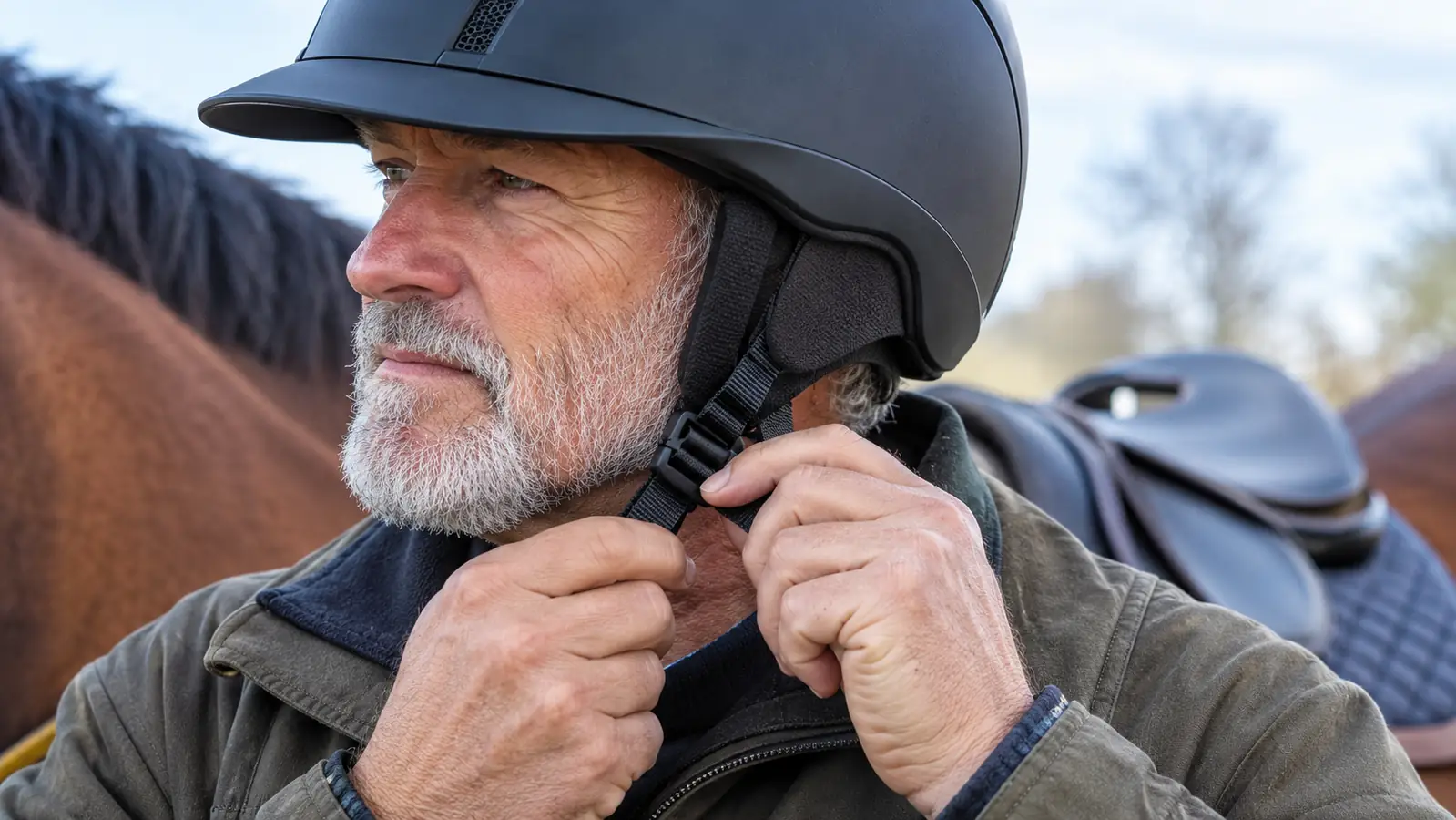
Full coverage in the name refers to how far the shell comes down around the back and sides of the head. There is more of my skull inside this shell than there was in the open, vented schooling helmets I grew up riding in. Set the Spirit next to the spare schooling helmet I keep for guests and the difference is easy to see without a tape measure: the back edge sits noticeably lower, and the side panels come down further past the temple and over the top of the ear. You feel that extra shell on a hot day. You are grateful for it on a cold morning.
The first time I understood what that coverage was for, it was February and the light was flat and gray and the deer were moving. A doe came out of the brush about fifteen feet off the trail and Juniper spun left the way a Quarter Horse can, all four feet at once. I stayed on. What I remember afterward was not my hands or my seat. It was how much of the back of my head had something over it when my chin came down. Two years of riding in this helmet, and that was the first time I thought about it while it was happening instead of after.
The visor is the piece I underestimated. I ride into a low afternoon sun more often than I would like, and having a brim out front instead of squinting has changed how relaxed I am on the way home. It is also the part that took the branch. That is a strange thing to be fond of, but I am.
The listing puts the Spirit at 0.76 kg, a hair under two pounds. That is neither the lightest nor the heaviest helmet on the shelf, and the scale number is not what I notice. What I notice is where the weight sits. It does not feel top heavy on a long descent, and I can wear it three hours without the muscles at the base of my neck filing a complaint, which was not true of a heavier loaner I rode in for a month last year.
Fit, Sizing, and the Adjustable Part
Troxel sells this as an adjustable fit in a small, and small is what I ordered. Measure first. Soft tape, an inch above the eyebrows, around the widest part of the back of your head, and read the size chart instead of translating from your hat size. I came in around 22 inches and the small fits with room to snug it down.
I nearly ordered a medium out of habit, because every hat I own is a medium and I assumed a helmet would follow. What stopped me was a borrowed tape measure at the feed store counter on a slow Tuesday, and the sizing chart on my phone. The difference between what I assumed and what the chart said was one size, and one size in a helmet is not a small thing. My honest read for anyone between sizes is to trust the chart, not the hope that it will loosen into comfort. It does not loosen. It is adjustable, which is not the same thing.
Setup took a couple of minutes and then I left it alone. In two years it has not crept. The one rule I follow is nothing under it. No bandana, no thick braid at the crown, no winter beanie under the shell. Layers change how a helmet sits, and a helmet that fits in October will not fit the same in January if you stuff a hat underneath. On cold mornings I wear a neck gaiter pulled up to my chin and let the helmet handle the rest.
The liner is where normal wear shows up first. Two summers of sweat means I clean it more often than I did the first year, and the padding along the forehead has compressed slightly, the way any foam will when a person sweats into it five days a week. It has held up far better than the liner in my old helmet did. If it ever stops feeling snug, that is my signal to replace the helmet, not to add a layer underneath to fake the fit back.
Ventilation Through Two Hollister Summers
The listing calls them strategically placed airflow vents, which is catalog language for holes in sensible places. What I can tell you is that on a 98 degree August afternoon I am hot, but I am not cooking. The top of my head stays the coolest part of me, which is not what I expected from a helmet with this much shell around it.
The ride where it clicked was a Saturday in July, five miles out on the ridge trail with the sun straight overhead and no shade for the last mile and a half. I used to have to stop on that climb, pull the helmet off and hold it in my lap while I cooled down. That day I rode the whole thing through, got to the top, and noticed I had not thought about my head once. I am not going to claim it feels air conditioned. I am saying the difference is big enough that I stopped planning my rides around it.
The vents do not stop sweat from running into my eyes on a long climb, and no helmet will. I keep a bandana in my back pocket for that. My hair is thick and it is wet by the time I pull in, and the liner takes the brunt of it. That is the trade for airflow. I will take the trade.
Winter is the other side of the same coin. Thirty-eight degrees with a headwind coming across the valley and you feel every one of those vents. I did not solve it by adding anything under the shell, because that changes the fit. I solved it by riding later in the morning and keeping the gaiter up over my chin and ears. If you ride in real cold, know that this is a summer-biased helmet and plan around it.

What Has Worn, and What I Would Change
The polycarbonate shell has scuffs now. One from the branch, a couple from being set down on the tailgate a little harder than I meant to. No cracks anywhere, and the shape is still round when I set it on the shelf. The visor carries a scratch across the front that I can see when the sun is low, which is cosmetic. I have stopped noticing it.
Two things I would change. The sizing is unforgiving, as I said, and I would rather see that spelled out in bigger type than buried in a chart. And the warranty is a limited one year, which is normal for helmets and still worth saying out loud: foam does not last forever, impacts are cumulative even when the shell looks fine, and a riding helmet is a replaceable item on a schedule, not a buy-once piece of tack. Do not plan to hand this down to your kid.
The last thing I would tell a friend is to check the standard a helmet is certified to before you buy it, and to check it on the manufacturer's page or inside the helmet rather than trusting a marketplace bullet point. I am not a safety engineer and I am not going to pretend to be one. What I can say is that a shell, a visor and a comfortable liner are not the same thing as a tested helmet, and if a listing cannot tell you what standard it meets, keep shopping. Ask your trainer or your local tack shop if you are unsure. The testing behind a helmet is the part that actually matters when your head hits something.
What I Liked
- The adjustable fit has held snug for two years of five-days-a-week use
- Ventilation is genuinely effective on 95 degree afternoons
- The shell comes down lower at the back and sides than a schooling helmet
- The visor shades your eyes and takes hits so your face does not
- Light enough at 0.76 kg to wear for a three hour ride without neck fatigue
Where It Falls Short
- Sizing runs tight and the chart does not forgive a guess
- Vents that save you in August make cold, windy mornings sting
- The limited one year warranty means you are budgeting for replacement on a schedule
- The visor scratches and stays scratched
A helmet is not a lifetime purchase. The best one is the one that still fits in year three, and this one has not gone soft on me.
Who This Is For
This is a good fit for the rider who is out on trails and in a backyard arena several days a week, wants a low-profile helmet rather than a show helmet, and will actually measure their head before ordering. It suits the person who wants full coverage without a bulky feel and who is willing to replace it when the padding tells them to. If you are a weekend rider who keeps one helmet on a hook and wants it to be simple, adjustable and cool in the heat, this is the shape of helmet you are looking for.
Who Should Skip It
Skip it if you are between sizes and unwilling to measure, because the adjustable fit is not a substitute for the right size. Skip it if you ride in serious cold and want a helmet that stays warm, since the airflow is working against you from November to March. And skip it if you want a show-ring look, because full coverage reads as a trail helmet, not a hunt coat helmet. None of that is a knock on the Troxel Spirit. It is just what it is for.
Measure your head, then order the Spirit once
Two years and one oak branch later, this is the helmet I still reach for. Check the size chart first, then the current price. Sizing and availability are on the listing.
Amazon Check Today's Price on Amazon →