
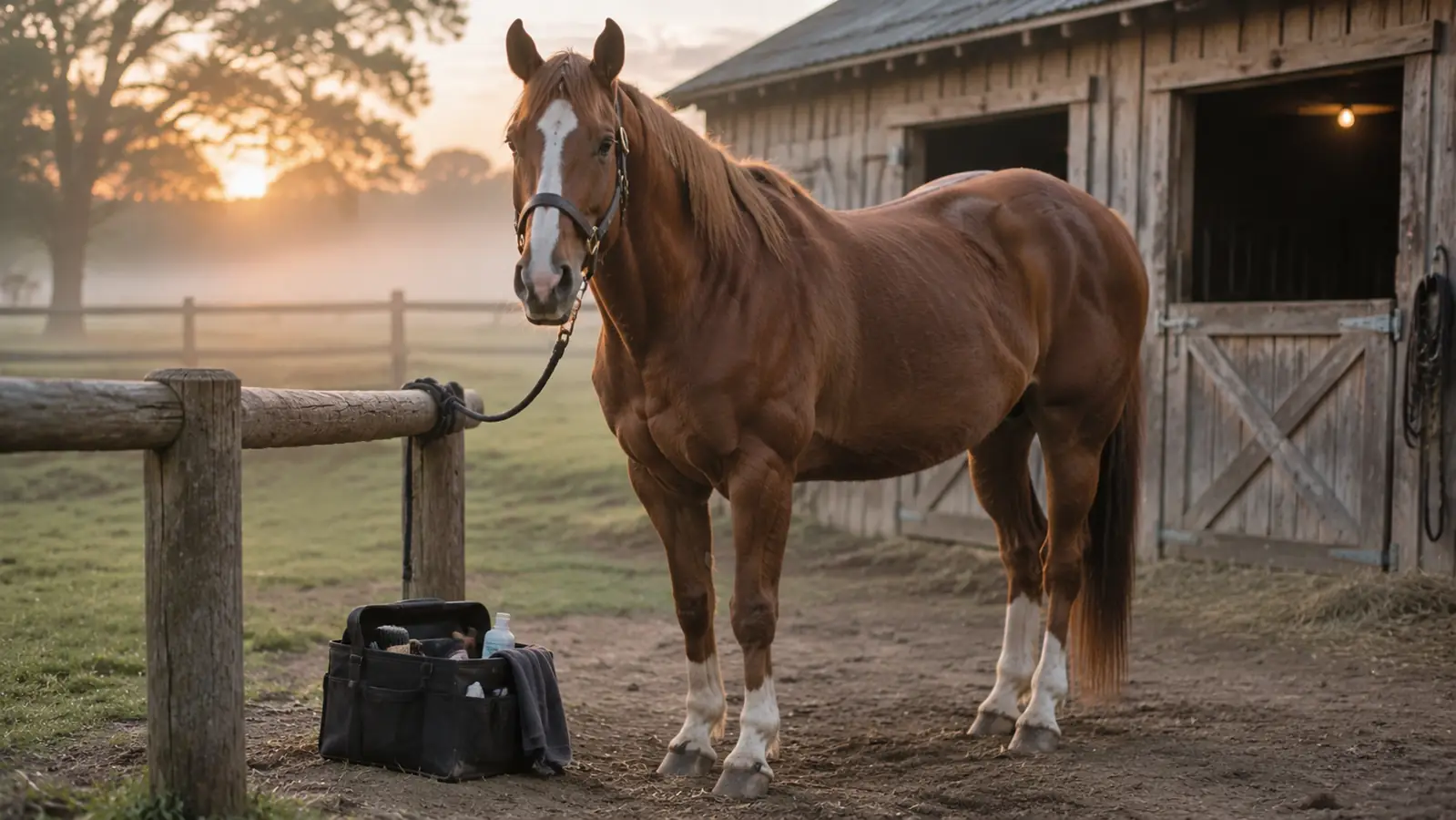
The first thing that goes in my barn bag every spring is a hoof pick, and for about six years the thing holding that hoof pick was a plastic feed store bag with a hole in the bottom. Four brushes, three of them bald in the middle. A comb missing two teeth. It worked, mostly, right up until the morning I needed to scrape mud off a wet horse and had nothing but a towel. So I bought the Weaver Equine Horse Grooming Kit, the seven-piece set that comes with its own tote, and I gave up a whole muddy Saturday in February to compare it against the cheap brush pile I already owned. Short answer for anyone who wants it fast: the kit is the better tool for trail riding. But it wins for reasons the listing photos do not show, and it loses on at least one thing that surprised me.
Here is the shape of the argument. A cheap brush set gets you brushes. The Weaver Equine kit gets you a system you can carry, and those are two different jobs. My mare Juniper is 14, about 1,050 pounds, and thin-skinned enough that fly bites, rain rot and cracked heels are a standing problem from March through November. Grooming her is not a show-ring ritual. It is ten minutes in the aisle before a ride and fifteen minutes after, with a hoof pick in my hand more often than a brush. I am not a trainer and I am not a vet, so take anything health-related here to one of them. What follows is just what a woman with one horse and a full schedule has learned about which of these two setups actually gets used.
| Weaver Equine Kit | Cheap Brush Set | |
|---|---|---|
| What comes in the box | Seven pieces: brushes, a comb, a hoof pick and a sweat scraper | Typically four or five brushes, with the hoof pick sold separately |
| Carrying it | Nylon tote with six outer pockets and webbing handles | A cardboard sleeve or a thin pouch, no pockets |
| Hoof pick | Included | Usually not included |
| Sweat scraper | Included | Almost never included |
| Weight | 2.76 pounds for the whole bag with everything in it | Lighter, mostly because there is less in it |
| Storage footprint | 12 by 12 by 7 inches, rectangular, sits flat on a tack trunk | Loose brushes roll around the trailer floor and get stepped on |
| Replacing one lost piece | Sold as a kit, so a lost brush means substituting or buying another set | Any feed store or tack shop has a single brush on the rack |
| Handle material | Nylon and polypropylene, fine after a rinse under the hose | Often wood, which swells and splits if it sits in water |
| Warranty | Satisfaction guaranteed on the packaging | Whatever the store's return window happens to be |
| Best for | Trail riders who groom in more than one place | One horse, one wash rack, brushes already hanging on the rail |
Where the Weaver Equine Kit Wins
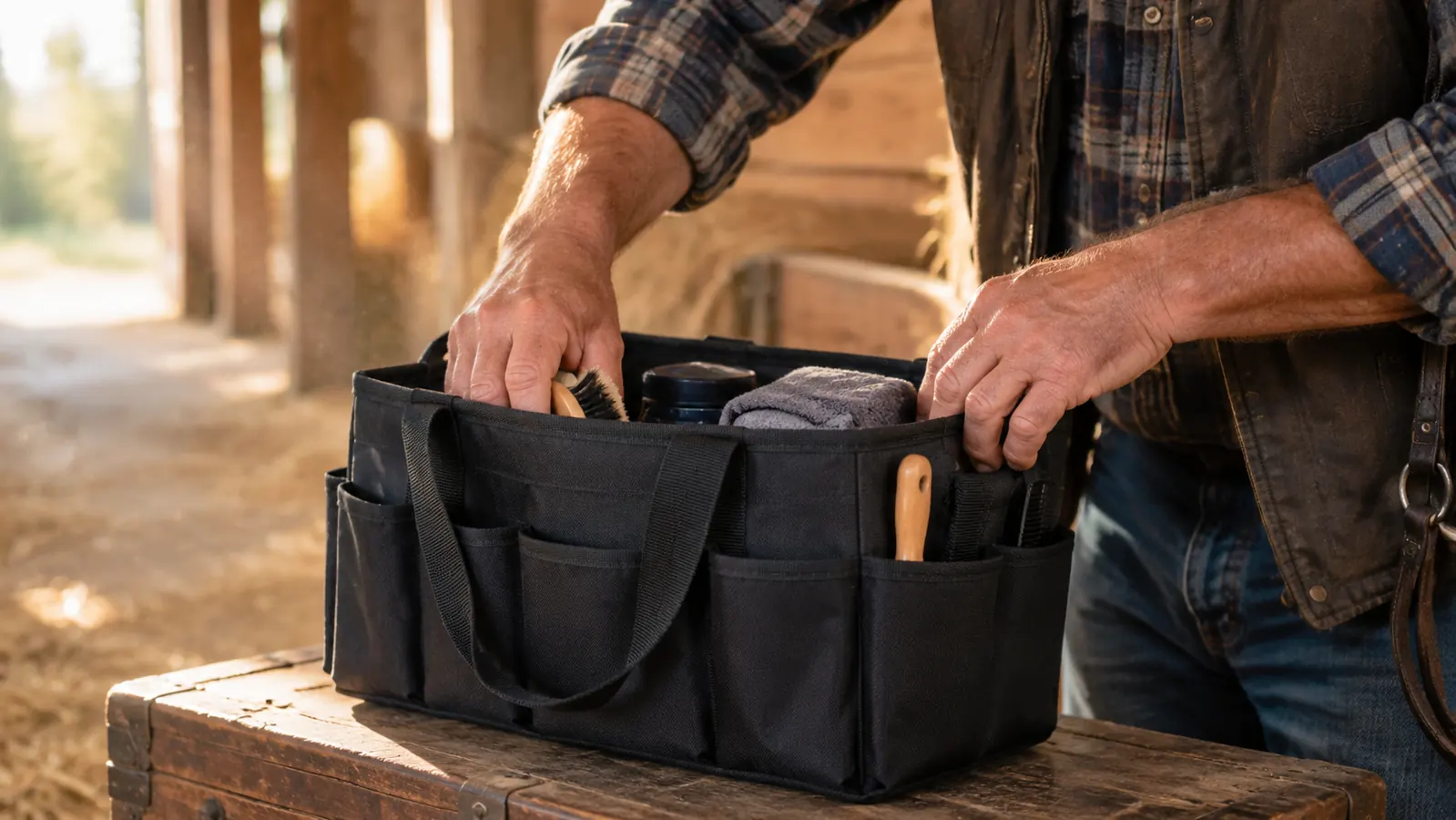
The tote is the entire argument. It measures 12 by 12 by 7 inches, weighs 2.76 pounds with all seven pieces in it, and has six outer pockets plus webbing handles. That sounds like a minor detail until you have carried four loose brushes, a comb and a hoof pick across a paddock in the dark while a horse dances at the gate. With the bag, everything leaves the tack room in one hand. The brushes go back in damp, the pockets keep them from being crushed under a saddle pad, and the hoof pick is in the same pocket every single time. My old system was a splitting plastic bag and a mental list of where each brush had last been set down. That list lived in my head for six years and I am glad to be rid of it.
Second, the kit fills gaps I did not know I had. A hoof pick was in the set. A sweat scraper was in the set. Both of those are things I had bought separately over the years, one at a time, usually on a day when I had already driven to the feed store for something else and did not want to make a second trip. Having them arrive together means the tools match the job instead of matching whatever happened to be on the clearance rack that week. The whole kit is plastic and nylon, so a rinse under the hose does not hurt it, and the packaging states satisfaction guaranteed, which I have not had to test. It also carries a 4.7 star average across more than 3,500 ratings, which is roughly why it was on my radar at all.
Seven pieces in one bag means one trip from the tack room instead of three, and that is the whole difference on a morning when the trailer is already hooked up.
Where the Cheap Brush Set Wins
Here is where the cheap set earns its place, and I am not being polite about it. It is lighter. When you are hauling a bag from the truck to the trailer at 5:40 in the morning, lighter is not nothing. More to the point, a cheap brush is a brush you can lose without a funeral. I keep a stiff brush in the barn aisle, one in the trailer, and one in the house for muddy boots, and if one disappears at a regional park I am out a brush, not a system. Nothing in my kit is so precious that I want to police it, but the bargain brushes are genuinely easier to treat as disposable, and that freedom has value I did not expect to miss.
The other honest point is that a cheap set is a fine answer if you groom in exactly one place. If your horse lives at a boarding barn with brushes already hanging on a rail by the wash rack, you do not need a tote. You need a hoof pick in your pocket and a towel. Buying seven pieces and a bag to carry them twelve feet is solving a problem you do not have. I will also say plainly that my first batch of cheap brushes lasted four years, and the only thing that finally killed them was me leaving them outside through a wet week. The Weaver Equine kit is better organized. It is not magic, and it will not outbrush a decent stiff brush on a caked winter coat.
The Setup That Lives in One Hand Instead of Four
Seven pieces, a tote with six outer pockets, and a hoof pick that is always in the same pocket. If your current grooming kit is a plastic bag and a search party, this is the tidy version of that.
Amazon Check Today's Price on Amazon →The Mud Season Test
February in our part of California means wet mornings and a horse who finds every patch of clay on the property. That was the month I put both setups through the same routine on purpose. The routine is this: halter, tie, pick the feet first because that is where the mud hides, then a stiff brush for the caked stuff, then a softer brush for the dust, then a comb through the mane if it needs it, then a sweat scraper after a ride when she is damp under the saddle pad. On a bad day that is fifteen minutes. On a good day it is six.
With the loose brushes, the routine broke down at the same place every time. I would set a brush down on the trunk, turn to pick a hind foot, and come back to a brush on the floor in the shavings. Nothing dramatic, just constant small losses of time. With the tote, the brushes stay in the pockets and the pockets stay next to me on the trunk. I pick a foot, drop the hoof pick back in its pocket, and my hand goes back to the same spot for the next brush. Six weeks of that and I stopped thinking about where things were, which is the only real measure of a grooming setup.
The sweat scraper is the piece I underrated. Juniper gets damp under the pad even on a cool ride, and a damp horse in a cold barn is how you get a skin problem. Having the scraper in the bag rather than in a bucket somewhere meant I actually used it, every ride, instead of promising myself I would find it later. That alone changed our after-ride routine more than the brushes did. If your horse has thin skin and a habit of getting wet, this is the piece you will notice.
What I'd Change About the Kit
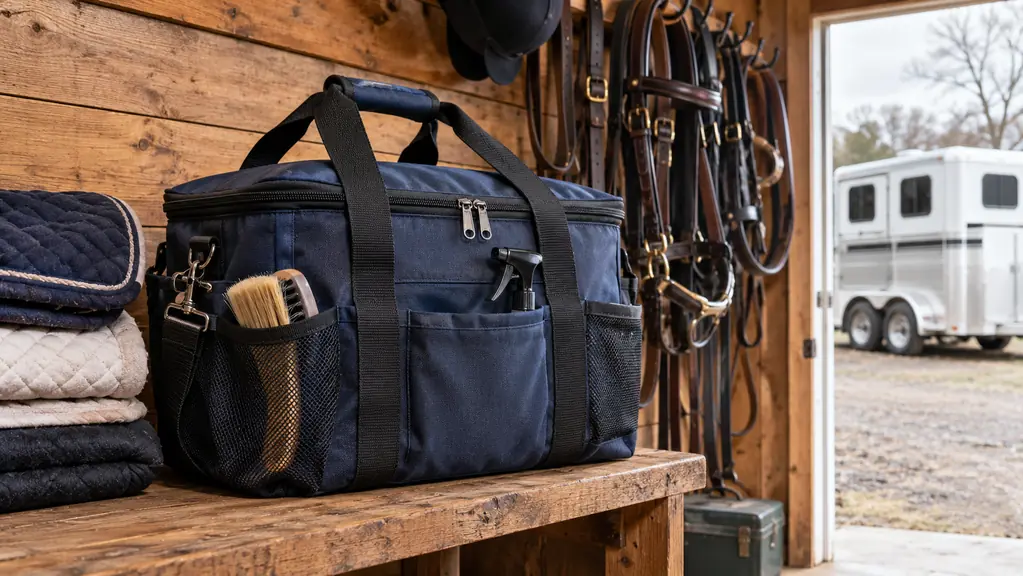
Two things. The tote is bigger than it needs to be for a horse kept at home. At 12 by 12 by 7 inches it takes up real shelf space, and on a two-stall barn with one horse, shelf space is contested territory. If I were hauling to showgrounds every weekend I would feel differently, because then the size is the point. For trail riding out of my own barn, I use maybe three of the seven pieces on a normal day and the rest live in the bag until mud season or a bath. That is not a flaw exactly. It is just worth knowing before you clear a shelf for it.
The second thing is a complaint about kits in general, not this one specifically. Seven pieces is a set of tools chosen by someone who has never met your horse. Juniper has a thin coat and dry heels, so my priorities are a soft brush, a hoof pick and a towel. Someone with a grey horse in a wet climate will want a different mix, and someone with a woolly winter coat will want a stiffer brush than anything in this bag. The Weaver Equine kit covers the common middle well. It is not tailored to one animal, and no kit is, so plan on adding the one or two pieces your horse actually needs.
How It Has Held Up
I have had the kit through one full wet season and one dry one. Rain rot showed up in January the way it always does, which meant a lot of brushing and a lot of rinsing. The bag has been hosed off, dropped in the aisle, and left on a tack trunk in a tack room that leaks under the north window. The webbing handles have not frayed. The pockets have not torn at the seams. The brushes have shed a few bristles, which I would expect from anything used on a mud-caked horse three days a week for a year.
What surprised me is the shape. It is rectangular and it sits flat, so it stacks under a saddle rack or on a shelf instead of collapsing into a heap. That sounds like a silly thing to write a paragraph about, and it is, but a bag that keeps its shape is a bag you keep using. The one I replaced had folded in on itself by year two and I had quietly stopped bothering with it, which meant the brushes scattered and the hoof pick vanished. This one is still standing open on the trunk, so the tools are still in it.
Who Should Buy Which
Buy the Weaver Equine kit if you groom in more than one place, if you haul to trails or to a regional park, if your current setup is a pile of mismatched brushes in a bag with a hole in it, or if you have a thin-skinned horse that needs a sweat scraper and a hoof pick as often as a brush. It is also a sensible first kit for someone who just bought their first horse and does not yet know what they will actually reach for. Skip it and buy two or three good individual brushes instead if you board at a full-service barn with a groomed wash rack and brushes on the rail, if you own one easy horse and always groom in the same spot, or if you already have a tote you like. In that case the cheap brush set is not the compromise. It is the correct answer, and I would rather tell you that than sell you a bag you do not need.
One Bag, One Trip, No Hunting for the Hoof Pick
The seven-piece Weaver Equine grooming kit with the organizer tote. If you are tired of arriving at the trailhead with three brushes and no hoof pick, this solves that in one purchase.
Amazon See the Kit on Amazon →