
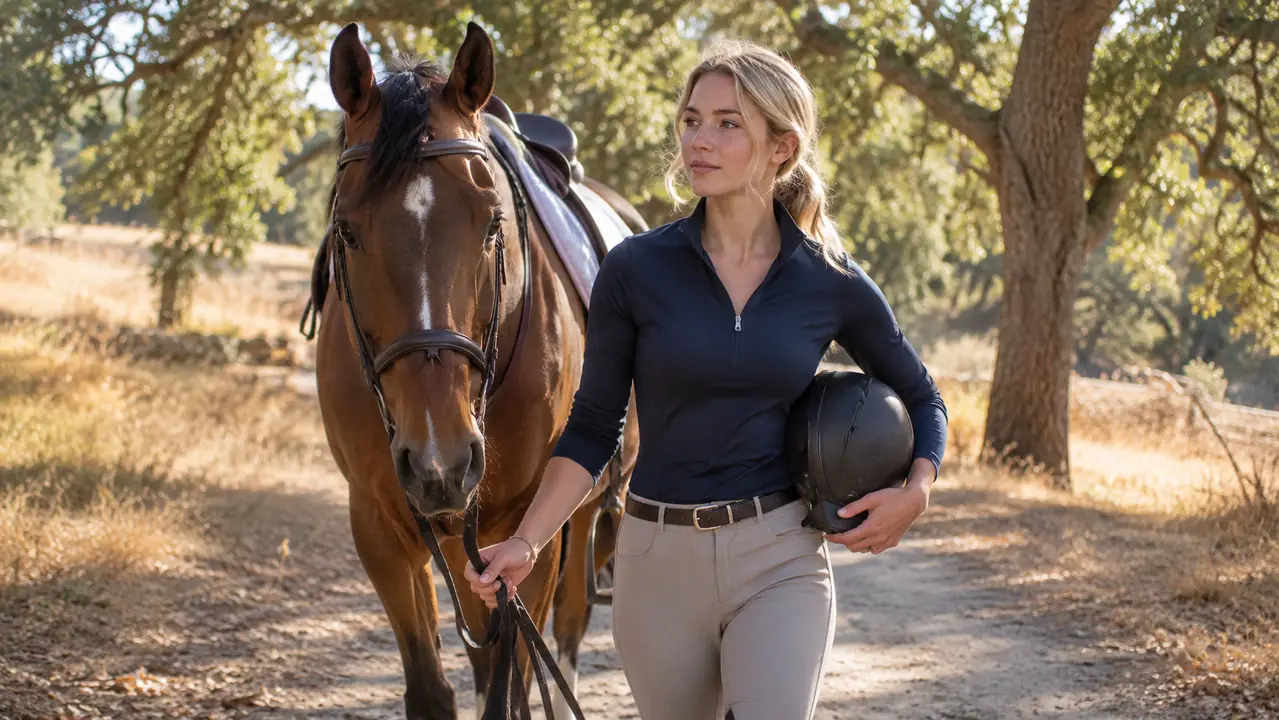
The first time I rode Juniper in a borrowed helmet, I spent the whole ride thinking about my head instead of the trail. The helmet sat too high, the visor caught the wind, and by the time we got back to the trailer I had a red mark across my forehead. That was the day I stopped treating a riding helmet like an accessory and started treating it like the one piece of gear I will not guess at. If you are shopping for a trail helmet, the Troxel Spirit is one worth putting on your short list. But the helmet itself is only half the decision. The other half is whether it fits your head, your horse, and the way you actually ride.
Trail riding is not show jumping. You are out for two hours, maybe three, in sun and bugs and changing weather. You are opening gates, ducking branches, and getting on and off. A helmet that pinches or cooks your head will make you miserable, and a miserable rider makes sloppy decisions. The right helmet is the one you forget you are wearing until you need it. Troxel builds the Spirit for that kind of riding with a low-profile design, a visor, and airflow vents. The rest is fit.
Start With a Helmet You Will Actually Keep On
The Troxel Spirit has a low-profile design, full coverage, a visor, and adjustable fit. Check the current listing before you buy.
Amazon Check Today's Price on Amazon →The Five Steps I Use Before I Buy a Trail Helmet
Here is the order I use when I am shopping. It keeps me from buying on looks and then discovering the helmet gives me a headache by the time I reach the first gate.
Step 1: Measure Your Head Before You Fall in Love With a Helmet
You need a soft tape measure and a mirror. Wrap the tape around your head about an inch above your eyebrows, keep it level, and write the number down in centimeters. Do it twice. If the numbers are different, use the larger one. Most people guess their hat size and guess wrong. A helmet that is too small will press at the temples. One that is too big will rock forward over your eyes when you look down.
Troxel lists the Spirit in size Small, with outer dimensions of 13 by 9.25 by 8.25 inches. That tells you the outer size, not whether it will fit your head. Use the brand's size chart and your measurement. If you are between sizes, call the seller or order from a place with a return policy you understand. I would rather deal with a return than ride in a helmet that gives me a headache.
The measurement is the part people skip. I have done it. You see a helmet on a sale rack, you try it on over your ponytail, and you decide it fits. Then you get home and find out it presses when you pull your hair down. Measure first, then shop. It takes five minutes and saves a return.
Step 2: Match the Helmet to Trail Riding, Not the Show Ring
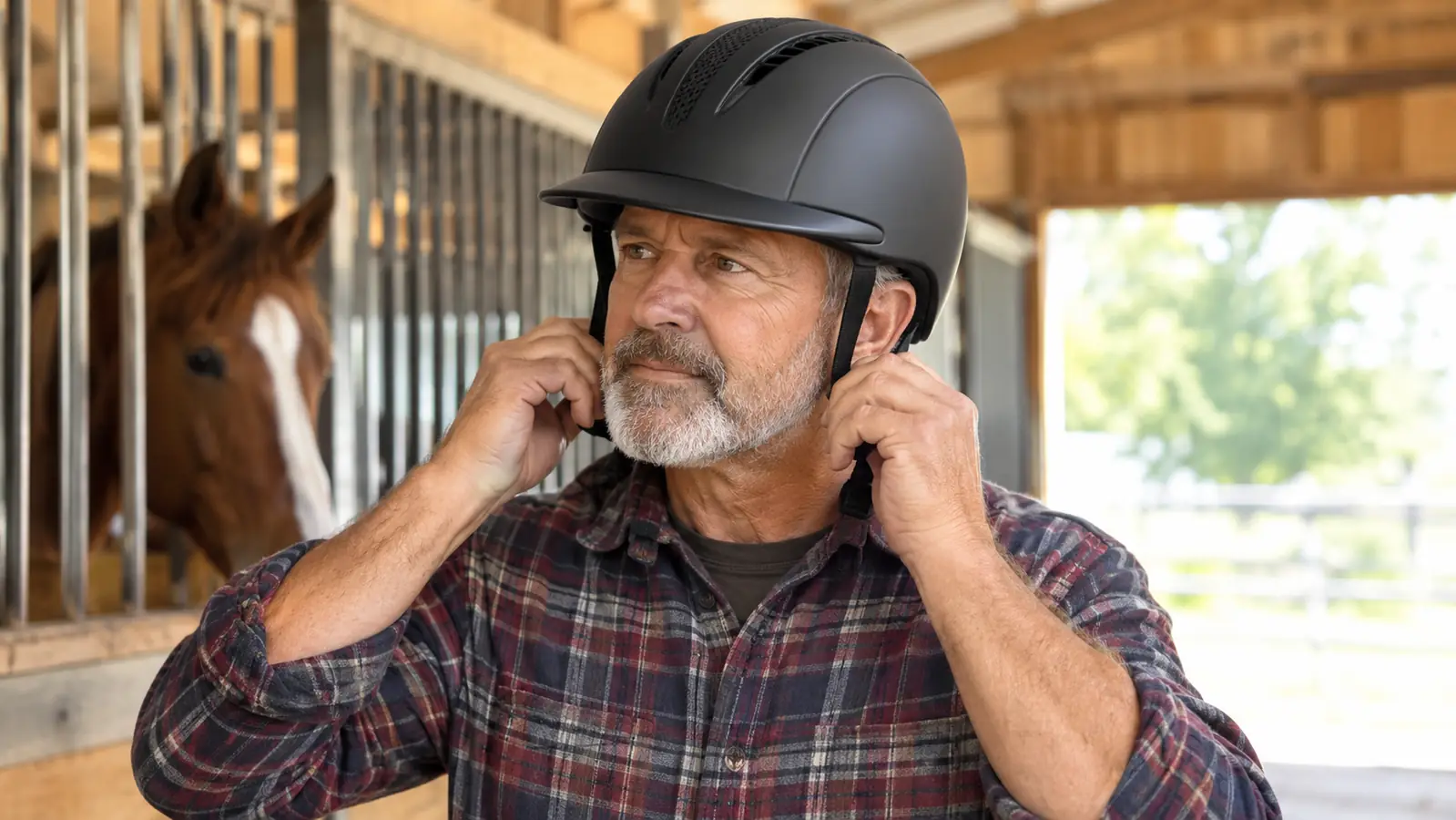
Trail riding asks for coverage, ventilation, and a visor that keeps sun and branches out of your eyes. The Troxel Spirit has a full coverage design, a visor, and airflow vents. That combination makes sense for long hours in the saddle. The low-profile shape is also less likely to feel bulky on your head, which matters when you are ducking under oak limbs.
Do not buy a helmet because it looks fast. Buy it because you will wear it for the whole ride. A visor helps on west-facing trails in the late afternoon, and vents help when the temperature climbs. The Spirit is built with a polycarbonate outer shell and an expanded polystyrene inner liner. Those are the materials listed for it. I am not a safety engineer, so I will not pretend to grade the shell. I can tell you that the materials and the full coverage shape are the reasons it landed on my list for trail use.
Trail helmets also need to work with the rest of your gear. If you wear a hydration pack, a jacket with a high collar, or a helmet cover in fly season, check that nothing pushes the helmet out of place. The Spirit has a visor and vents, and those are the features you will notice most on a long ride. The shape matters, too. A low-profile helmet is less likely to catch on branches when you duck.
Step 3: Check Coverage, Weight, and Ventilation Together
No single number decides a helmet. Coverage without ventilation is a sauna. Ventilation without coverage is a hat. The Spirit lists a weight of 0.76 kg. On a two-hour ride, that number matters more than it sounds. A helmet that feels fine in the tack room can feel heavy at mile eight. The full coverage shape and the vents are the tradeoff Troxel made here. Try it on and wear it around the house for twenty minutes before you commit.
Look at the visor, too. A visor should shade your eyes without blocking your view of the trail ahead. If it catches wind or cuts your peripheral vision, it is the wrong visor for you. The Spirit has a visor listed as an additional feature. Check that it sits where you need it. Also check the fit adjustments. The helmet is listed as adjustable fit, so use that to snug the shell around your head, not to make a too-large helmet work. Adjustment is not a substitute for the right size.
I also check the inside of the helmet with my hand. The liner should feel smooth and even, with no hard spots. The Spirit uses an expanded polystyrene inner liner. That is a common helmet material, and it is designed to absorb impact. It is not designed to be squished into a shape that does not match your head. If the liner presses hard in one spot, the helmet is not right for you.

Step 4: Do the Shake Test, the Bend Test, and the Long Ride Test
Put the helmet on and fasten it the way you will on the trail. Shake your head side to side and nod yes and no. The helmet should stay level and move with your head, not slide around on top of it. If it rocks back and exposes your forehead, it is too big or not adjusted correctly. If it presses hard enough to leave a mark in a minute, it is too small or the shape is wrong for you. A helmet should feel snug and even, not tight in one spot.
Then wear it for twenty minutes while you muck a stall or carry feed. That is the test that catches the small annoyances. A seam that rubs, a visor that blocks your view, a liner that feels hot. The Spirit comes in at 0.76 kg, and the vents are there to move air. If you still feel heat building behind your forehead while you are standing still, imagine July. I would rather find that out in my barn aisle than three miles from the trailer.
One more thing. Check the warranty. The Spirit is listed with a limited one-year warranty. Read what it covers. A warranty is not a fit test, but it tells you what the brand stands behind.
Step 5: Replace It When It Has Done Its Job, and Care for It in Between
A riding helmet is not a lifetime purchase. If you take a fall and your head hits, or the helmet takes a hard knock, replace it. Do not inspect it and decide it looks fine. The damage that matters is often inside. Follow the manufacturer's replacement guidance. I am not a safety tester, and I do not cut corners on this. I also do not store my helmet in a hot truck or leave it in the sun on the dashboard. Heat and UV are hard on the materials.
Between rides, wipe the liner and let the helmet air out. Do not soak it or put it in the washing machine. The Spirit has an expanded polystyrene liner, and that is not a material you want to crush or soak. Keep it in a helmet bag or on a shelf, not under a saddle or a hay bale. If your helmet has a visor, check the visor before every ride. A cracked visor or a loose fit adjustment is a sign to stop and fix it.
One habit that helps is a quick check before every ride. Set the helmet on your head, fasten it, and look in a mirror if you have one. The front edge should sit low on your forehead. The helmet should not tip back when you look up. Do that check even when you are in a hurry. A helmet you do not adjust correctly is not giving you the protection you think it is.
A helmet that sits level and stays put through a head shake is doing more for you than a helmet with the best vents and the wrong size.
What Else Helps
Two low-cost habits make a bigger difference than any helmet upgrade. First, keep your hair flat and low when you measure and try on. A bun or a thick headband changes the number. Second, bring the sunglasses or goggles you actually ride in. A helmet that fits fine in the tack room can press the arms of your sunglasses into your temples. If you ride in a baseball cap, stop. A cap under a helmet changes the fit and can keep the helmet from sitting level.
Ask someone to watch you from the side. A helmet should sit level, not tipped back. If the front edge is high enough to show your whole forehead, it will not protect the front of your head the way it should. The Troxel Spirit has a low-profile design, but low-profile does not mean you can wear it perched. Fit comes first.
One more piece of advice for parents: do not buy a helmet for a child to grow into. A helmet that is too big will not stay in place. The same rule applies to adults. Buy the size that fits now.
Finally, buy from a seller with a return policy you understand. You cannot know how a helmet feels on hour three until you try it. The Spirit is listed as size Small in the listing I checked, and it has a limited one-year warranty. Check the current sizes and the latest details before you order. Sizes and listings change, and I would rather you check than trust a blog post from last year.
If Your Helmet Sits High or Pinches, Try the Troxel Spirit
Low-profile design, full coverage, a visor, and adjustable fit, listed at 0.76 kg. Check the current sizes and details on Amazon before your next ride.
Amazon See the Troxel Spirit on Amazon →