
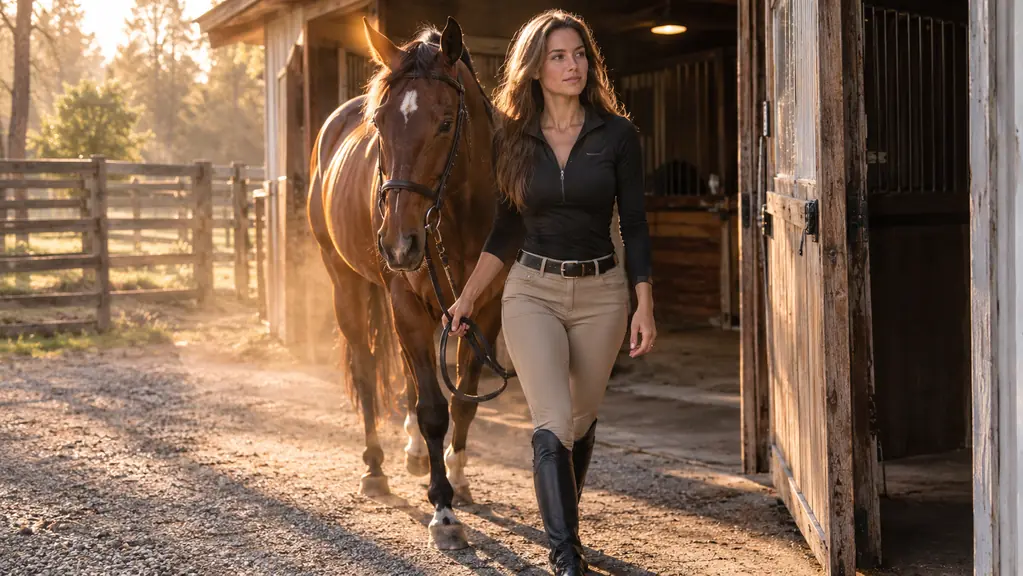
Two summers ago I pulled the saddle off Juniper after a four hour trail ride and found a dry, bald patch on her back the size of my palm. Not a cut. Not a swelling. Just hair rubbed down to the skin in the exact shape of a saddle panel, and a mare who flinched when I ran my hand over it. The saddle fit was fine. The pad was the problem.
That is how a saddle pad stopped being an afterthought in this house. It is the one layer between a thousand pounds of moving horse and a rigid saddle tree, and it does more work than most riders give it credit for. I have been using the TuffRider Basic All Purpose pad on Juni since that summer. Here are ten reasons a good pad protects a horse's back, in the order I actually learned them.
The pad I stopped second-guessing
Diamond quilted, flannel against the horse, polyester lining to move sweat away. The layer most riders forget is the one doing the protecting.
Amazon Check Today's Price on Amazon →It spreads the saddle's weight instead of pooling it under one panel
A saddle tree puts load on two panels, the panels put it on the pad, and the pad puts it on the horse. Take the middle layer out and those contact points get sharper. The diamond quilting on this TuffRider pad gives Juni's back a cushioned layer that carries the weight across a wider footprint. I notice it most on descents, where the back drops away and the rider's weight slides forward onto the front of the panel.
The flannel underside is gentle on thin, sensitive skin
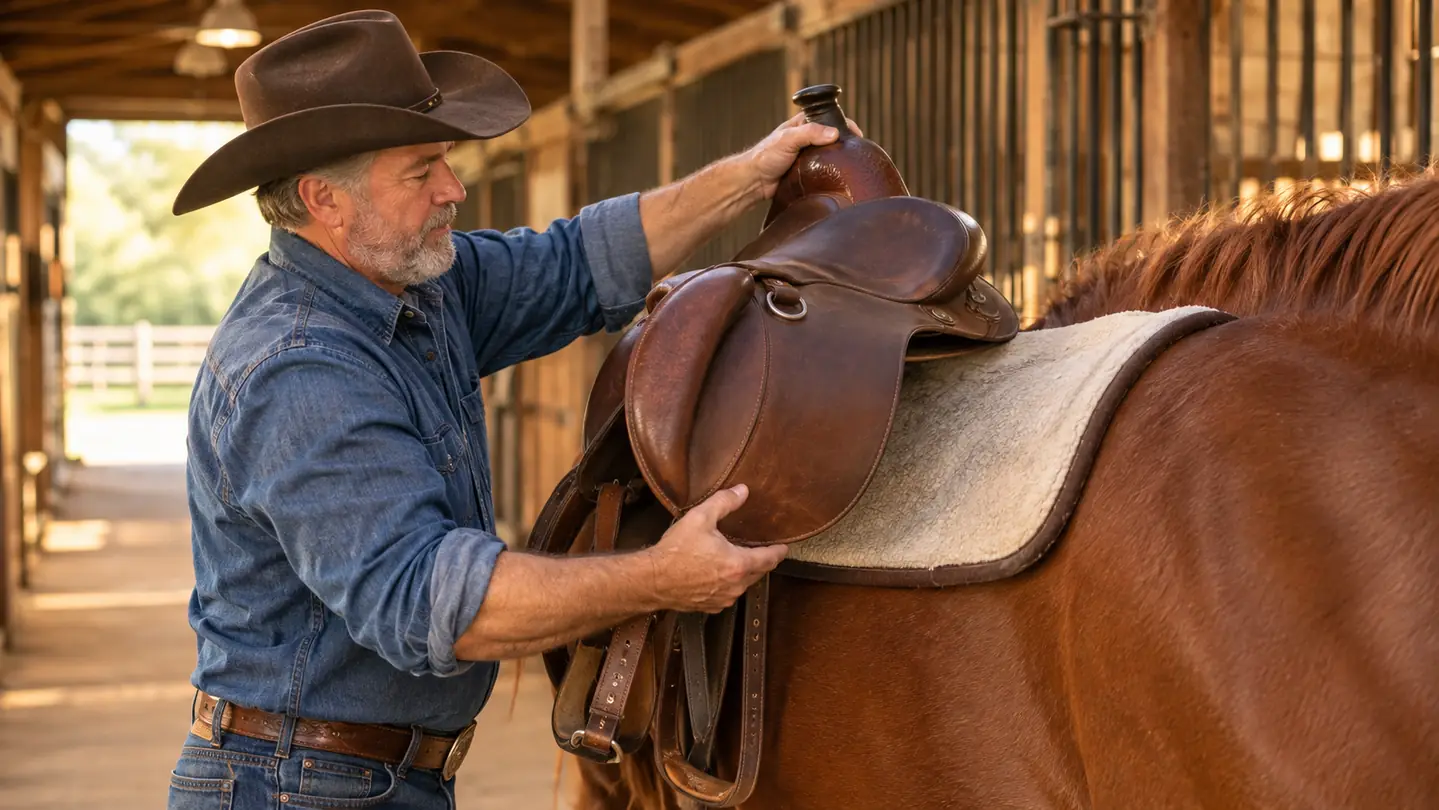
Juni is thin-skinned. She gets fly bites along her flank in June, rain rot after a wet week, and the hair over her withers rubs if anything roughs it the wrong way. The underside of this pad is flannel, which is the softer side of the sandwich against the horse. That is not a small detail for a mare who pins her ears if a stiff seam touches her. The first pad I tried after that summer was a stiff quilted square from the feed store with a rough binding along the edge, and she sidestepped away from the saddle every time I set it down. I sold it at a tack swap and did not miss it. Flannel against the hair is the difference between a horse that stands quiet while you tack up and one that braces.
The polyester lining moves moisture instead of trapping it
A wet back under a saddle is a chafed back waiting to happen. The TuffRider pad pairs a flannel underside with a polyester lining, and the listing says the two wick moisture and help regulate temperature. In plain terms, sweat gets lifted off the hair instead of sitting in a puddle for hours. I have pulled this pad after a long ride and found the top side damp while Juni's hair underneath was dry.
Diamond quilting keeps the layers flat under your leg
The quilting is stitched through in a diamond pattern, so the layers stay put instead of sliding into a lump under your thigh halfway through a ride. I have owned pads that bunched into a ridge behind the cantle by mile three. This one has stayed flat, and flat means no pressure ridge digging into the same spot for the whole loop.
The 19 1/2 inch drop covers the panel area a general saddle actually uses
TuffRider lists this pad at a 19 1/2 inch drop and 26 inches long, cut for an all purpose saddle rather than a dressage or close contact shape. That matters, because a pad that runs small leaves the back edge of the panel sitting right on the hair, and one that runs big folds and wrinkles under the leg. On Juni's 15.1 hand frame it sits where it should. Before I ordered I ran a soft tape along the top of her panel line, from the front edge to the back, and got roughly 20 inches. The 26 inch length leaves a couple of inches of margin front and back, which is what you want. More than that and the extra fabric folds under the skirt and rubs.
Her back was dry and flat after four hours, and that is the only test I actually trust.
It soaks up the sweat that would otherwise sit against the hair for hours
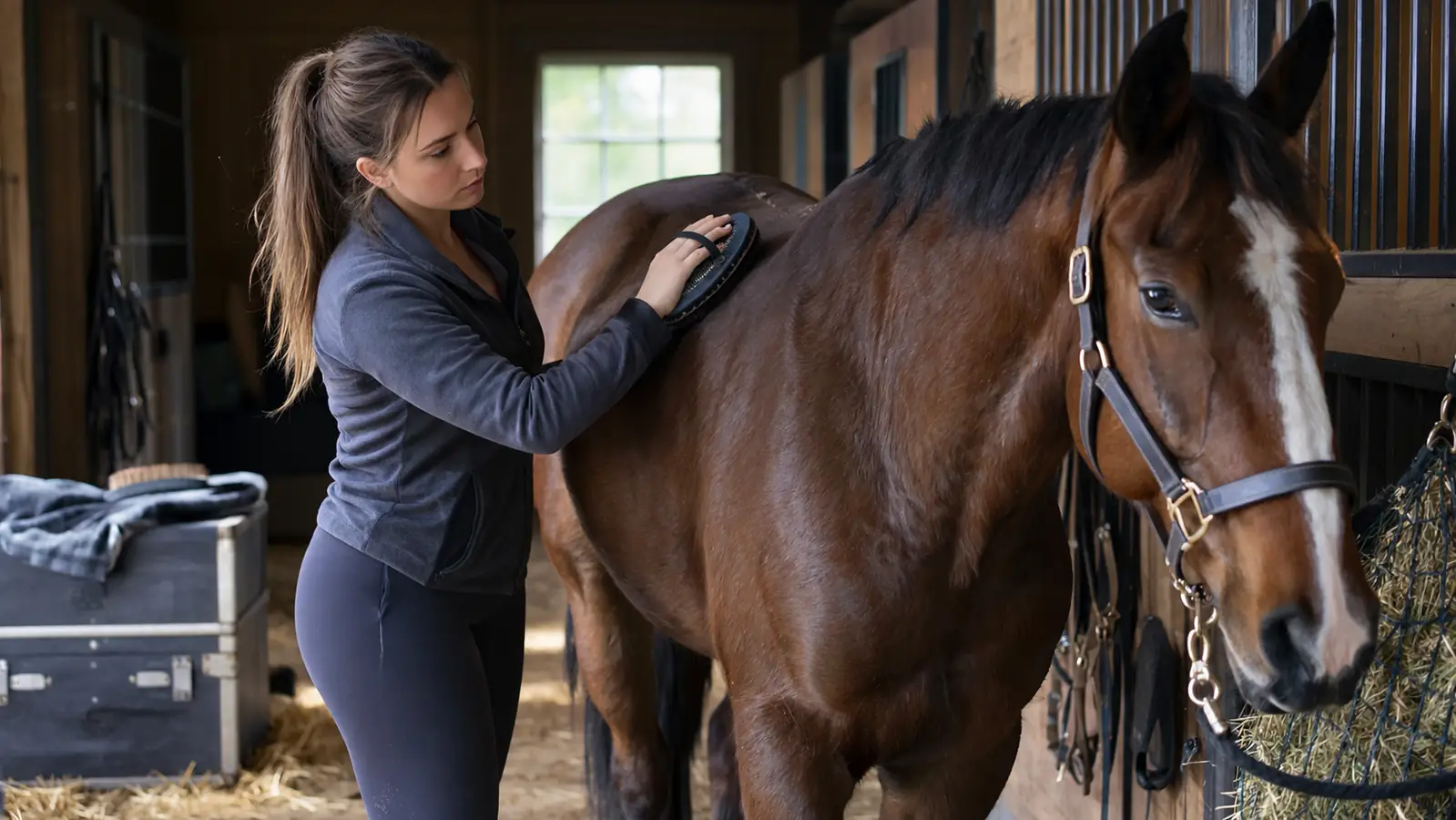
The build is 84% polyester and 16% cotton, and that cotton content earns its place on a hot day because it gives the pad something to absorb into. On a ninety degree ride in the hills behind Hollister, I would rather have the sweat in the pad than on the horse. Pull the pad, let it dry, brush the hair, and you have a back that is not marinating.
It gives you one clean variable when you are chasing a back problem
When a horse starts flinching at the saddle, everybody has an opinion. The saddle fit is off. The rider sits crooked. The horse has ulcers. All of those can be true. But swapping a pad is the one thing you can test this afternoon, by yourself, without a fitter out to the barn. If the dry spot moves or disappears, you have learned something. That is the first thing I check now.
It keeps the hair from rubbing thin on long rides
The bald patch I found on Juni was not from a badly fitting saddle. It was from a thin pad and four hours of steady walking with my weight shifting over the same two spots. Since I switched, the hair has grown back and stayed. I run my palm along the panel line after every ride. If I feel heat or a raised spot, I want to know that day, not next week.
It holds up to mud season and a regular wash
This is a working pad, not a show pad, and I treat it like one. It gets brushed, hosed when it needs it, and washed when the smell tells me it is time. The quilted construction has held its shape through all of that. No seams have opened up and the flannel has not pilled into a rough patch. For a pad that goes on four or five days a week, that is the whole test. It has been through two mud seasons now, the kind where the paddock turns to soup in January and every ride ends with a wet horse and a wet pad. It has been hosed off, hung over the stall door, and back on the next morning without a wrinkle.
It is the first thing to check and the easiest thing to swap
Before you book a custom fitting or start shopping for a new saddle, change the pad and ride the same loop twice. Same horse, same saddle, same girth tension. If the flinching eases, you have your answer. If nothing changes, you have ruled out the layer everyone forgets about. Either way you know more than you did when you started.
What I'd Skip
I would skip the thin, stiff pads sold as one size fits everything. The ones that fold under the panel edge and bunch up behind the shoulder cause more rubs than they prevent, and you feel them every stride. I would also skip any pad that will not tell you what it is made of. If the listing cannot name the materials, it cannot tell you how it handles sweat.
And if your horse flinches at grooming, or you feel heat or swelling along the back, put the pad down and call your vet. A saddle pad is a piece of tack, not a treatment. I am not a vet, a farrier or a trainer, and I say that plainly because no listing page ever will.
Ten reasons, one pad, no more guessing
Same horse, same saddle, one changed variable. Ride the loop twice and check the panel line with your palm.
Amazon Check Today's Price on Amazon →