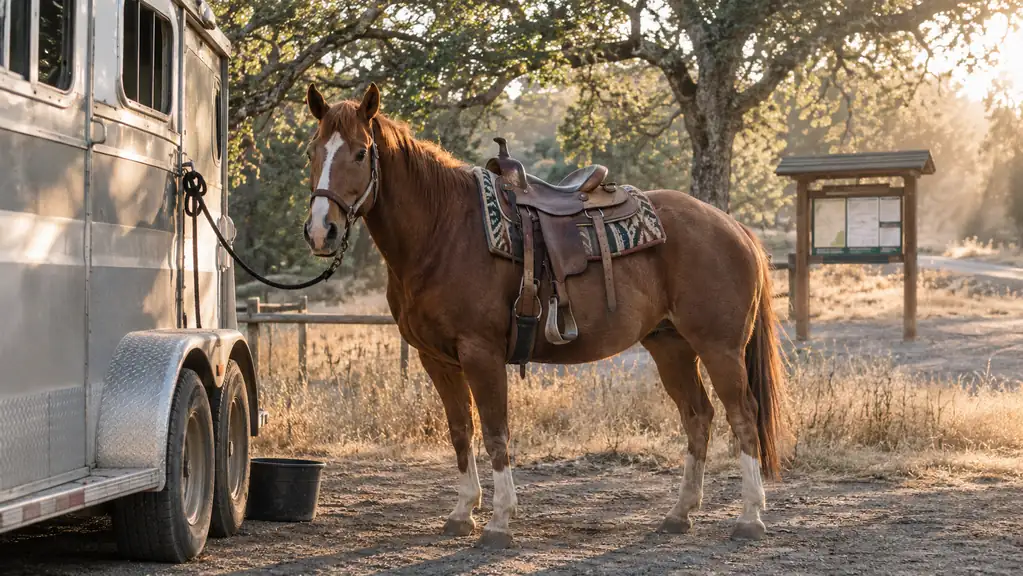
Short answer first, since that is what you came for. For ordinary trail riding, the kind where you tack up in the morning light, ride two or three hours of fire road and single track, and hose the horse off before dinner, the TuffRider Basic All Purpose Saddle Pad is the pad I would put in your hand. A wool felt pad earns its place in a narrower window: long days, steep ground, or a horse whose back wants more between it and the saddle than a quilted pad can give. I keep both hanging in my barn. Which one goes under Juniper depends on what the day looks like.
I am Dana Halvorsen. I live on five acres outside Hollister, California, with my husband Mark, three kids, and one bay Quarter Horse mare named Juniper. She is 14, about 1,050 pounds, 15.1 hands, and easygoing on the trail right up until something flappy moves in the brush. I do the books part time for a family owned feed store, which means my working hours are spent around people with strong opinions about tack who will share them whether or not you asked. I ride trail and pleasure. I do not compete, and I am not a trainer, a farrier or a vet. Anything that presses on a horse's back for years is a question for your vet.
| TuffRider Basic All Purpose Saddle Pad | Wool Felt Pad | |
|---|---|---|
| Fit on an all purpose saddle | Cut to the shape: 22 1/4 inch top line, 19 1/2 inch drop, 26 inch bottom edge | Usually sold as a square or a rectangle, so the fitting is your homework |
| Cushioning | Diamond quilting over a flannel underside, moderate cushion | Dense felted wool with noticeably more material between horse and saddle |
| Heat and sweat | Polyester and cotton that wick moisture and dry quickly | Wool holds moisture and gets heavy once it is soaked |
| Grip on steep ground | Fine on rolling trail, can creep on long descents | Grabs the back and holds |
| Washing | I can put it in the machine and it comes out the same shape | Cold hand wash, reshape, air dry for a day or more |
| Break in | Ready to ride the day it arrives | Stiff at first and needs miles to conform |
| Durability | Quilting flattens and the pad gets retired every season or two | Years of use if it is cared for |
| Weight in the hand | Light enough to carry two at once | Heavier, and it stays heavy |
| Upfront cost | Less to buy and less to replace | More per pad |
| Best for | Everyday trail miles and quick barn days | Long days and steep country |
How I Ended Up Keeping Two Pads for One Horse
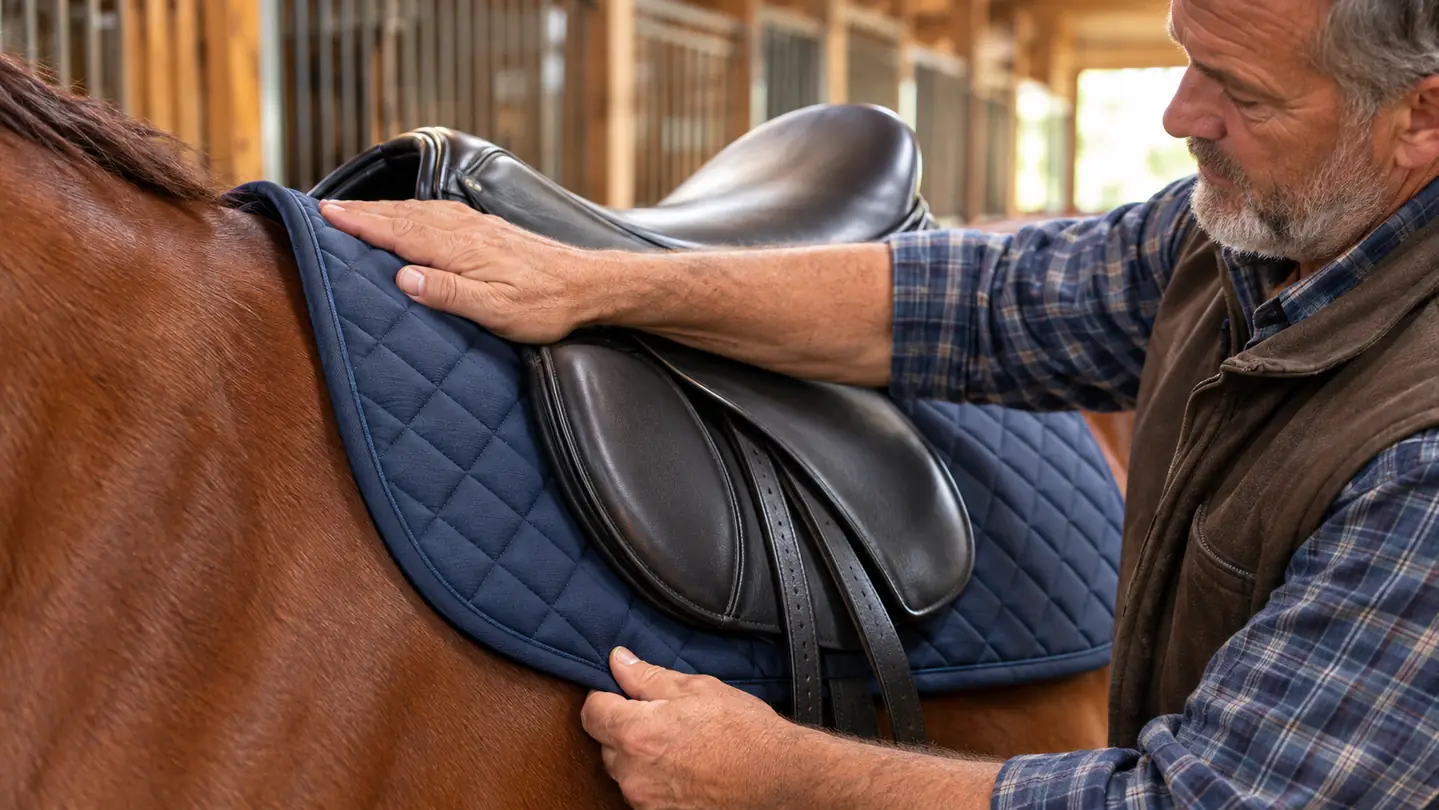
The TuffRider pad came home the same day as the saddle, because the person behind the counter handed me the all purpose version without asking many questions, and that turned out fine. It is a plain quilted pad: diamond quilting on top, a flannel underside against the horse, 84 percent polyester and 16 percent cotton in the shell. The listing puts the top line at 22 1/4 inches, the drop at 19 1/2 inches, and the bottom edge at 26 inches. Nothing about it is fancy and nothing about it has surprised me, which after a few seasons is about as good as a compliment gets.
The wool felt pad arrived two winters later, in January, at the tail end of a wet week that had turned the run-out paddock into something closer to a bog. I had spent that week riding and thinking about how much of a long day ends up pressed into one square foot of horse, and I wanted more substance under the saddle. A felted wool pad is dense in a way a quilted pad is not. Mine weighs more than the TuffRider and it holds its shape instead of folding into whatever corner of the tack room it lands in. I bought it ahead of a weekend at a regional park with a lot of climbing, a ride that turned into close to four hours of up and down with one long gravel descent in the middle, and it has been my long day pad ever since.
So there is no dramatic winner in this barn. On a Tuesday the TuffRider is the pad I grab because it is clean, it is dry, and using it requires no plan. On a day that starts before light and ends with Juniper half asleep in the trailer, the wool felt pad goes on. What follows is the honest split, including the places where the inexpensive quilted pad loses.
Where the TuffRider Basic All Purpose Saddle Pad Wins
The first win is fit, and it is a boring win, which is the best kind. An all purpose saddle has panels that sit in a particular place, and a pad cut for that shape covers them without a lot of extra skirt flapping around your leg. The 22 1/4 inch top line and 19 1/2 inch drop put the front edge where it needs to be on Juniper, and the 26 inch bottom edge clears the saddle without hanging down past the point where it would catch in brush. I have ridden this pad down hills where a poorly fitted pad slides forward, and it stayed put.
The second win is sweat and drying. Juniper is thin skinned and she sweats under the saddle even on a cool morning, and the flannel underside and polyester lining do what the listing says they do: they move moisture and dry out fast. I have pulled this pad off after a hot afternoon and found it dry enough to shake out and hang by the time I finished hosing the mare. That sounds like a small thing until you have owned a pad that stays damp in the truck and smells like a wet dog by Thursday. The other half of it is that she does not come in with hot spots under this pad, which I cannot say for a heavier synthetic pad I tried one summer and gave away by July.
The third win is that I can put it in the washing machine and it comes out the same shape it went in. Mud season in San Benito County means mud, fly season means fly spray, and by August the pad is filthy in both directions. I wash it, hang it over the fence, and it is back on the saddle the next morning. It is also inexpensive enough that I do not treat it like a family heirloom, which means I actually keep it clean instead of saving it for an occasion that never comes.
Where a Wool Felt Pad Wins
Now the other side, because the felt pad is not a decoration. It is denser, thicker and considerably heavier, and on a long day that density is the whole point. When Juniper and I are four hours in with a long descent still ahead, the felt pad spreads the same saddle and the same rider weight over more material, and I can feel the difference in how she moves out at the end of the ride. If you ride a horse with a sensitive back, or you are in the saddle six hours instead of two, that is worth more than every convenience the quilted pad offers.
The felt pad also grips. Felted wool against a horse holds in a way quilted fabric does not, and on steep ground that matters more than weight in the hand. The one I own has taken two seasons of hard use and looks about the same as the day I bought it, while I have retired quilted pads that flattened out and stopped cushioning anything. The first time I noticed the grip was on a descent that runs maybe a quarter mile down to a creek crossing, loose gravel the whole way, the kind where you sit back and let the horse pick a line. The saddle had not moved a fraction by the time we reached the water. Care is the tradeoff, and I will get to that, but the durability is real. Buy one felt pad and you may not buy another for a long time.
For Most Trail Days, This Is the Pad That Fits the Saddle You Already Own
The TuffRider Basic All Purpose Saddle Pad is 84 percent polyester and 16 percent cotton with a flannel underside, cut 22 1/4 inches across the top with a 19 1/2 inch drop and a 26 inch bottom edge. Light, washable, and ready to ride the day it arrives.
Amazon Check Today's Price on Amazon →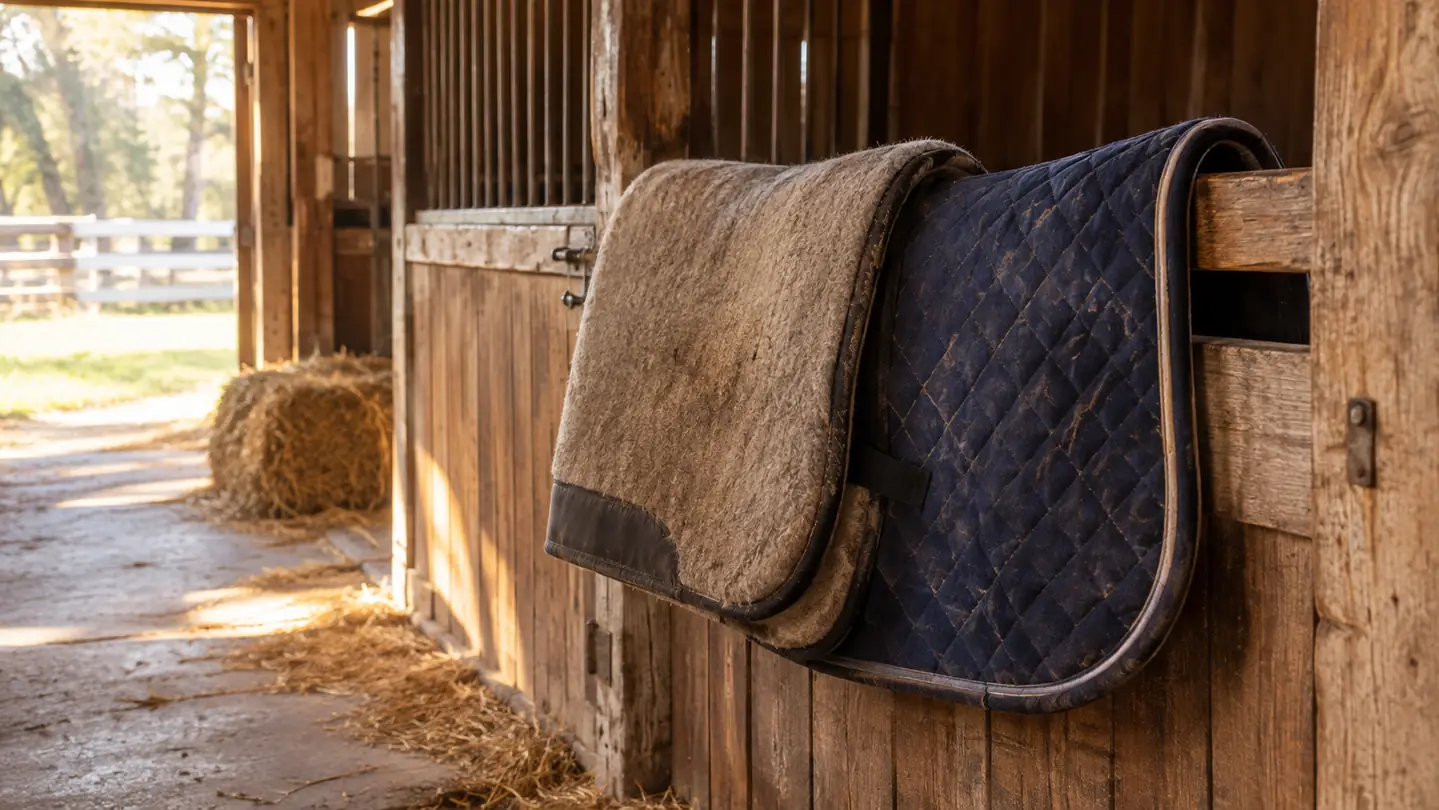
Sizing and Fit, and Why the Measurements Matter More Than the Label
Most saddle pad problems I hear about at the feed store are really sizing problems wearing a disguise. A pad that is too short leaves the saddle panels sitting near the pad edge, which concentrates pressure instead of spreading it. A pad that is too long hangs down and catches on your leg or the brush. The TuffRider numbers are a useful starting point: 22 1/4 inches across the top, a 19 1/2 inch drop, and 26 inches along the bottom. Hold a tape measure against your own saddle before you buy anything, and you will avoid most of the returns.
A wool felt pad usually arrives as a square or a rectangle, which means you are doing the fitting work yourself. People fold them, trim them, or buy a bigger one and let it hang. None of that is wrong, but it is a decision you make rather than one the manufacturer made for you. If you want the pad to be a solved problem before you ever put a leg over, the cut matters as much as the material.
On a Tuesday I want the pad that goes in the washing machine. On a six hour day I want the pad that weighs more. One horse does not mean one pad.
Care and Washing, Where Most Pads Actually Die
Quilted pads either survive the laundry or they do not, and this one has been through enough cycles that I trust it. Cold water, ordinary detergent, no fabric softener, hang to dry. The one thing I watch is the underside. Flannel against a sweaty horse will eventually pill and mat if you let it sit dirty, so I wash it more often in summer than in winter, and it has held up.
Wool felt is a different relationship. You do not machine wash it unless you want a pad the size of a postage stamp. Cold water by hand, with a wool safe soap, then press the water out, reshape it flat, and let it air dry for a day or more. In a wet week that means planning ahead, and if you have one felt pad and one horse, planning ahead is the entire game. I made the mistake once of draping mine over the stall wall to dry in February, and it was still damp in the middle two days later, which is how a pad ends up smelling like a barn floor. Now it goes flat on a rubber mat with a box fan pointed at it and dries overnight. It is not hard, but it is not nothing, and it is the reason a lot of felt pads end up stiff and misshapen in the corner of a tack room.
Who Should Buy Which
Buy the TuffRider Basic All Purpose Saddle Pad if you ride a few times a week on local trail, you want a pad that fits an all purpose saddle without guesswork, and you would rather spend barn time riding than maintaining tack. It is also the pad I would hand a newer rider, or anyone fitting out a first horse on a tight budget, because the stakes are low and the fit is predictable. Think about the mornings you tack up in the dark before a softball tournament, one eye on the clock and one on the mare. A pad you can shake out, slap on, and forget is worth more on that morning than a nicer pad that needs a plan. It is the pad that lives on my saddle most of the year.
Buy a wool felt pad if your rides run long, your ground runs steep, or your horse has told you in his own way that the saddle is not sitting as comfortably as it could. It is also the better pick for a horse whose back changes with the season and needs more material under the panels. Plenty of riders keep one of each and switch by the day, which is what I do. Mine hang side by side on a rail by the barn door, and which one comes down depends on the forecast and how far we are going. If your horse is sore, lame, or changing attitude under saddle, call your vet before you buy any pad at all.
Start With the Pad That Fits the Saddle You Already Have
Diamond quilting, a flannel underside, and a cut made for an all purpose saddle. This is the pad that goes on before the trailer pulls out on a normal Saturday.
Amazon Check Today's Price on Amazon →