
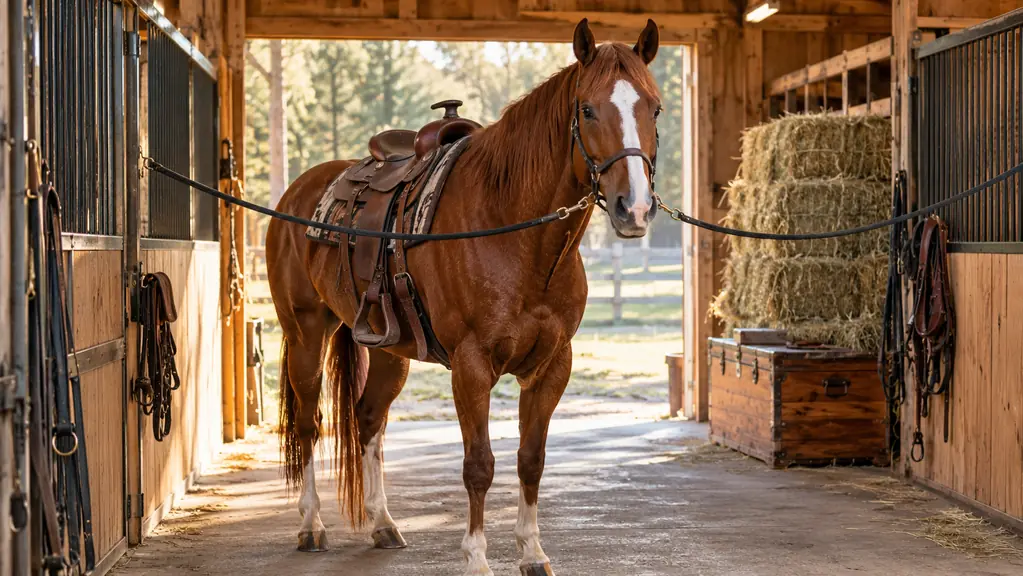
A saddle pad is the cheapest part of the tack room and the first place a horse tells you something is wrong. Juni, my 14-year-old bay Quarter Horse mare, is easygoing on the trail but thin-skinned. She is about 1,050 pounds and 15.1 hands, and she will let me know with a swish and a hollow back if a pad bunches or rubs. I ride trail and pleasure, not shows. I do the books part time for a family-owned feed store, and I keep Juni at home on five acres outside Hollister, California. Last February I put the TuffRider Basic All Purpose Horse Riding Saddle Pad into regular rotation. I wanted a plain pad I could toss in the wash, not a piece of tack I had to baby. Eleven months later, I have a clear picture of what this TuffRider pad does well and where it stops.
I used it three or four rides a week, mostly on local trails and the occasional regional park. Between my son's dirt bike races and my daughters' travel softball weekends, I do not have time for tack that needs a special wash bag or a drying rack in the living room. The TuffRider pad went on, came off, got brushed, and went into the washer when it needed it. That is the test I care about. A pad can look nice on a rack and still fail the third time you saddle up in a muddy parking lot.
The Quick Verdict
A plain, breathable all-purpose pad that stayed flat, washed clean and held up over 11 months. The loft is modest and it will not fix saddle fit, but for everyday trail miles it earns its place.
Amazon Check Today's Price →If your current pad bunches behind the withers, start with the simple fix
The TuffRider Basic All Purpose pad is the one I reached for on ordinary trail days because it sat flat and washed clean. Check the listing and make sure the size fits your saddle before you order.
Amazon Check Availability on Amazon →How I've Used It
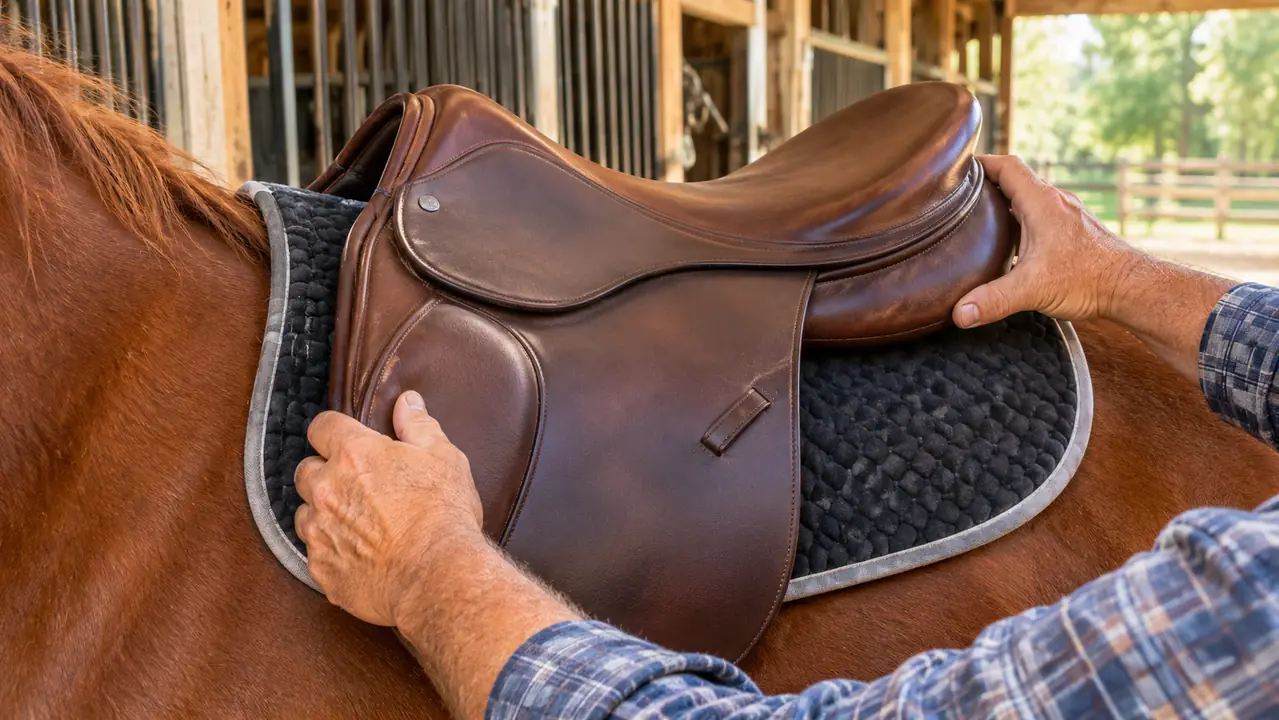
My routine is not fancy. I groom Juni, check her back and girth area, set the TuffRider pad on her back, and set my all-purpose saddle on top. I check that the pad is even on both sides before I tighten the girth. Then I ride. The pad is diamond-quilted on top, with a flannel underside and a polyester lining. The listing says the shell is 84% polyester and 16% cotton. Those numbers matter less to me than how the material feels against a horse that gets rain rot after wet weeks and dry, cracked heels in summer. The flannel side is soft, but it is not a fleece pad. It does not add a lot of bulk.
The sizing line in the listing is a little muddled. It gives a 22 1/4 inch length, a 19 1/2 inch drop and a 26 inch length in the same block, plus overall dimensions of 28.5 by 27 by 1 inches. I stopped trying to reconcile the tape measure and checked it on my saddle instead. On my all-purpose saddle, the TuffRider pad covered the panels and sat even under the skirt. It did not hang so far past the edge that it looked sloppy. If you ride a smaller saddle or a much larger one, measure your own before you order. That is true of any pad, not just this one.
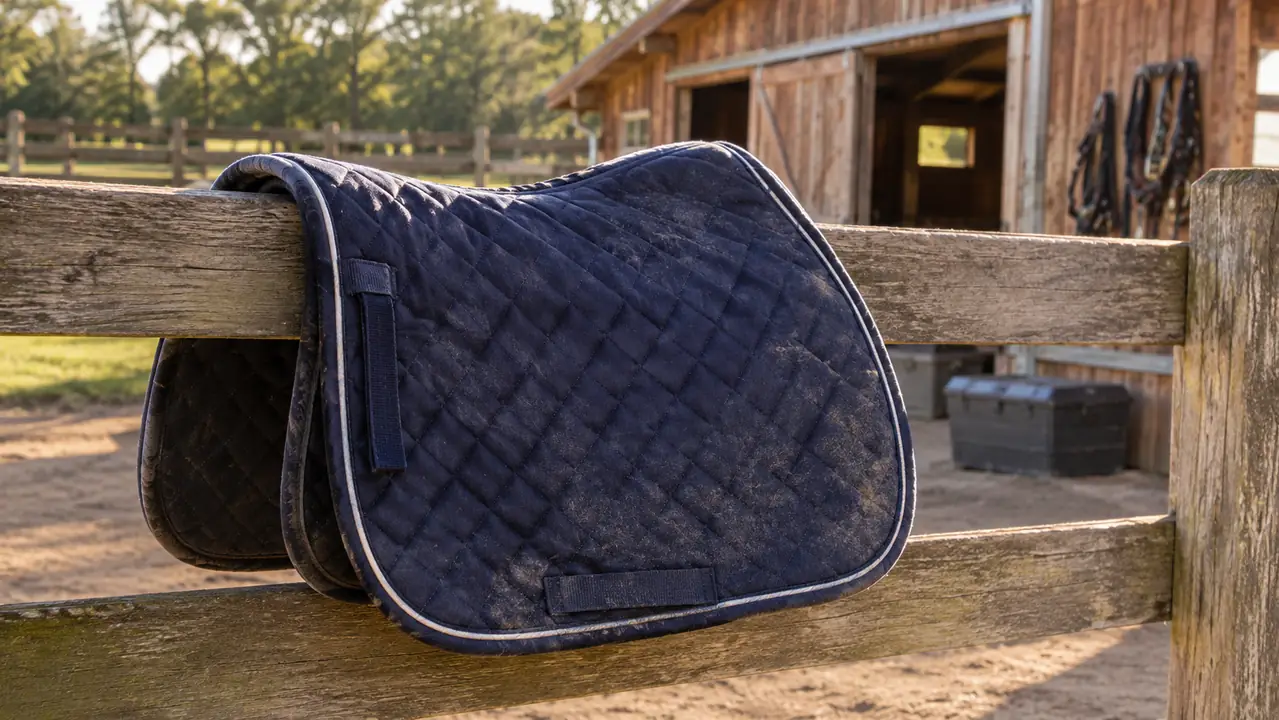
I washed it cold on a regular cycle and air dried it on a rail outside the barn. I did not put it in the dryer. The first wash was in March after a wet trail ride, and the pad came out without twisted quilting or a wadded lining. It dried overnight in the sun. In fly season I brushed the underside before I put it away because the flannel holds hair. That is not a defect. It is what flannel does. If you want a pad you can knock clean with one hand, this is not the one.
Most of our miles are walking and trotting on decomposed granite and clay. In wet weather the trails hold water, and Juni comes back with mud up to her knees. The pad gets dusty and sometimes damp at the edge. I brushed it after every ride, and it never stained through to the top in a way that bothered me. I did not use any special cleaner. A cold wash and a line dry were enough. That kind of simple care is why the TuffRider pad stayed in the rotation instead of getting pushed to the bottom of the tack trunk.
What the TuffRider Pad Gets Right
The first thing I noticed is that the TuffRider pad stayed flat. Juni is not a hard bucker, but she will hump up when she is fresh, and a pad that shifts on the first mile is a nuisance. I still checked it after mounting, because I check every pad. Most rides it was where I put it. The diamond quilting gives it enough structure to sit under the saddle without folding at the edge. It is not stiff. It is not a molded pad. It just behaves like a plain all-purpose pad should.
Breathability is the second thing. The flannel underside and polyester lining are meant to wick moisture, and on our summer rides the sweat marks were even across Juni's back. The pad was damp after a hot ride, not soaked through. I am not a vet, and I am not going to make a medical claim about a saddle pad. What I can say is that the material did not turn into a wet sponge on a 90 degree afternoon. For a thin-skinned mare that gets rain rot after wet weeks, that matters.
The third thing is that it is simple. There are no extra pads to layer, no shims to adjust, no special care instructions beyond a cold wash and air dry. I can hand it to my daughter if she is helping me tack up and not worry that she will put it on backward or lose a piece. After a long week of feed store books and softball schedules, I want tack that works without a lecture.
It also stayed put on a windy ridge ride where Juni was looky at a plastic bag caught in the brush. She did a quick sidestep, and I felt the saddle move with her. When I got off and checked, the pad had not rolled or bunched. I do not take that as a guarantee for every horse. I take it as a good sign that the pad has enough grip and structure for ordinary trail work. That is the kind of proof I want from a basic pad, not a laboratory chart.
Where It Falls Short
The loft is modest. That is the honest caveat. After a few months, the panel under the seat flattened compared with how it felt new. It still had enough cushion for my saddle on a two hour trail ride. If you have a hard saddle, a very bony horse, or a back that needs more protection, this basic TuffRider pad is not going to be enough on its own. It is a daily pad, not a problem solver.
The flannel underside grabs hair and pasture grit. In fly season I brushed it after every ride. If I skipped a day, I could see the hair in the flannel. It washed out, but it is extra work. The same softness that feels good against Juni's back is the reason the pad collects fuzz. A slicker pad would be easier to wipe down. It would also be less forgiving on a thin-skinned mare. I will take the brushing.
This pad will not fix a saddle that does not fit. I want to be clear about that. If your saddle bridges, rocks, or presses on one side, a different pad is not the answer. I am not a saddle fitter and I do not play one on the internet. I had my saddle checked by a fitter two years ago, and I check Juni's back after every ride. If you are seeing white hairs, swelling, or a change in attitude under saddle, stop guessing and call your vet or a qualified saddle fitter. A pad is a cushion, not a diagnosis.
The edge coverage is another small thing. On my saddle it was fine, but if your saddle has a longer skirt or your horse is wider than Juni, check the drop before you buy. A pad that is too small will pull tight at the corners and a pad that is too big will bunch. The listing numbers are there, but they are not a substitute for laying your own saddle on the pad. I learned that the hard way with a different pad years ago.
How It Held Up Over a Year
I have used the TuffRider pad for 11 months. It has been through more than 40 wash cycles, most of them cold, all of them air dried. The quilting is softer than it was in February, but the lines are still there. I have not found a tear at the edge or a split seam. The flannel underside is a little less fuzzy, which is expected. It has not pilled into hard little balls or worn through where the saddle sits. For a basic pad that gets used three or four times a week, that is a good record.
The pad did compress over time. I noticed it most in the heat of summer, when I was riding longer and the saddle sat on the pad for two or three hours. The area under the seat felt thinner than the area near the skirt. It did not rub Juni, and it did not bunch. It just flattened. If you want a pad that stays lofty for years, you need a different material and probably a different level of investment. This one is honest about being a basic pad.
After 11 months and more than 40 wash cycles, the TuffRider pad still sat flat under my saddle. The quilting was softer, but the pad had not bunched, torn or twisted.
I also want to mention the size after washing. Some pads shrink at the edge or curl up after a few cycles. This one did not curl. I laid it flat on the saddle rack to dry, and it stayed flat enough to put on without fighting it. That is a small thing until you are saddling in the dark before a breakfast ride. Then it is the difference between a calm start and a wrestling match.
During a wet week in March, Juni got rain rot on her hindquarters, which is a recurring issue for her. I was extra careful about keeping her back clean and dry. The pad went into the wash more often that week, and it came out fine each time. I am not saying the pad prevented anything. I am saying it did not make a bad week worse by staying damp or holding grit against her back. That is what I need from a pad in wet weather.
Back Health and Breathability
I keep coming back to breathability because that is where a cheap pad usually fails. A pad that traps heat will leave a wet back, and a wet back in a cold wind is a recipe for a sore horse. The TuffRider pad has a flannel underside and a polyester lining, and the listing says the materials wick moisture. On our rides, the sweat was spread across the panel area instead of pooled in one spot. Juni cooled out normally. I did not see heat bumps or a rubbed patch.
That does not mean this pad treats a back problem. It does not. If your horse has swelling, heat, a sore back, or a change in gait, call your vet. A saddle pad is not a medical device. What this pad does is give you a clean, breathable layer between the saddle and the horse for ordinary work. For a trail horse that gets groomed before and after every ride, that is enough. If you need more than that, you already know it.
I also check the pad after every ride for burrs, foxtails and grit. We have foxtails in California, and they will work into anything. The flannel underside is a place where they can catch. I brush it out before I hang the pad up. If you live in a foxtail area, do the same. That is not a knock on this pad. It is just barn reality. A pad that is easy to inspect and easy to wash is a safer pad than one with a lot of hidden layers.
Who This Is For
This is for the trail or pleasure rider who wants a simple all-purpose pad that sits flat, washes clean, and does not need a special routine. It fits a horse with a normal back and a saddle that already fits. It is a good choice for a busy household where tack gets used in the dark before work and put away after dark. If you want a pad you can brush, wash, and hang on a rail without thinking about it, the TuffRider Basic pad is a sensible pick. It is also a fair choice for a first pad if you are setting up a young horse or a new-to-you horse and you do not want to commit to a specialized pad that may not fit.
Who Should Skip It
Skip this pad if you need extra cushion for a bony back, a hard saddle, or a horse with a prominent wither that needs more clearance. Skip it if your saddle does not fit, because no pad will correct that. Skip it if you hate brushing hair out of flannel. And skip it if you want a pad that stays thick and lofty for years. This TuffRider pad is a basic daily pad. It does a good job at that. It is not a corrective pad, a show pad, or a replacement for saddle fitting.
What I Liked
- Diamond quilting gives it enough structure to sit flat under an all-purpose saddle
- Flannel underside is soft against a thin-skinned horse
- 84% polyester and 16% cotton shell washes and air dries without twisting
- Stayed put on ordinary trail rides and did not bunch after mounting
- Held up through 11 months and more than 40 wash cycles
Where It Falls Short
- Loft is modest and flattens under the seat over time
- Flannel underside collects hair and pasture grit
- Not a corrective pad and will not fix saddle fit
- No extra clearance for a prominent wither
- Needs brushing after rides in fly season
A basic pad that did its job for 11 months
If you want a plain all-purpose pad for trail miles, the TuffRider Basic is the one I kept reaching for. Measure your saddle, check the listing, and start with a pad that sits flat.
Amazon Check Availability on Amazon →