
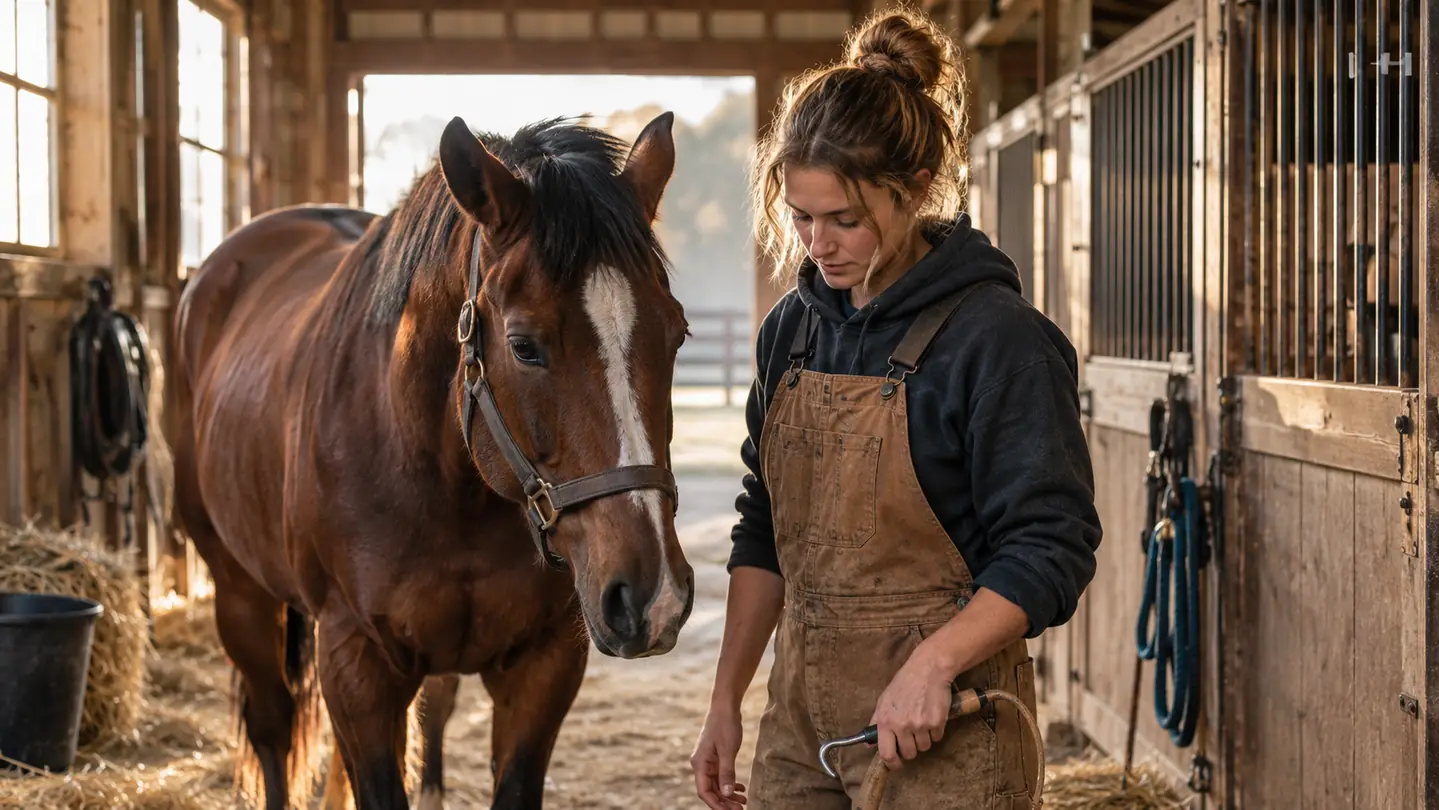
Hoof care is one of those jobs that looks simple until you are standing in the barn aisle at 6:10 in the morning, holding a muddy hoof and trying to find a clean spot on your pants to wipe your hand. I keep Juniper, my 14-year-old Quarter Horse mare, on five acres outside Hollister, and between mud season, fly season and the dry weeks that crack her heels, her hooves get checked more often than my truck gets washed. The BOTH WINNERS hoof pick with brush is the tool I reach for now because it does the two jobs I used to do with two separate tools. It picks, it brushes, and it goes back in the bucket.
I am not a farrier or a vet. I am the person who does the daily check, picks out the packed dirt and calls the farrier when something looks wrong. That is exactly the job this tool is built for. Here are ten reasons it has earned a spot by my barn door, plus one thing I would skip if you are shopping.
The hoof pick that does the picking and the brushing
One tool in the bucket instead of two, with a soft touch handle for cold morning chores.
Amazon Check Today's Price on Amazon →It picks out packed mud without a second tool
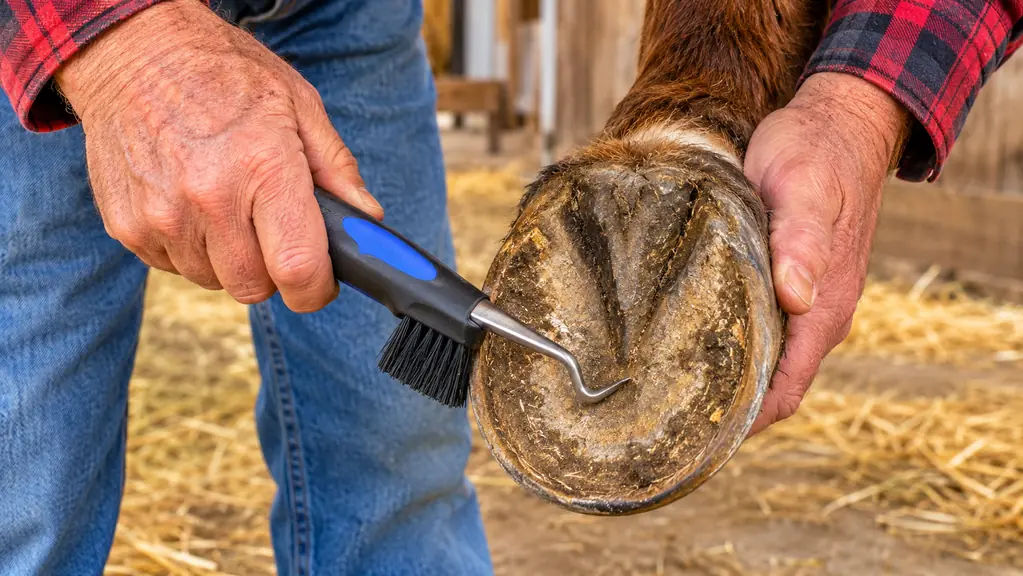
The metal pick is reinforced with steel for a strong hook, which matters when the mud has packed into the frog and dried overnight. I set the hook at the edge of the clod and work inward instead of stabbing at the middle. The brush side follows behind to knock the loose grit off the sole. That one-two motion is faster than switching tools with a hoof resting on my knee.
The brush side clears the fine dirt before you look
After I pick the big chunks, there is always a layer of fine dirt left in the sole. The brush side handles that without me hunting for a separate brush. I give the sole a few short strokes, pick once more if I see a packed spot, then brush again. It sounds fussy, but it takes less time than reading this paragraph. A clean sole is easier to inspect for heat, cracks or a stone.
The soft touch handle is easier on cold hands
The handle is listed as a soft touch comfort grip, and that is the part I notice in January. My hands are dry and stiff by the time I get to the barn, and a hard handle is not something I want to hold for long. The grip gives me something to hold onto when the weather is cold. I still wear gloves, but I am not fighting the tool.
It fits in a coat pocket or a grooming bucket
The package size is listed at 6 by 2.5 by 0.5 inches and 0.32 ounces. That is small enough to drop into a coat pocket or the side pocket of my grooming bucket. I keep one in the barn and one in the trailer, so I am not walking back to the tack room with a horse in tow. It does not take up the space of a full grooming box.
One tool means fewer trips to the tack room
Before this pick, my routine was pick, set it down, find the brush, brush, pick up the pick again. With Juniper standing tied, every extra step is a chance for her to shift and lean. One tool means one reach into the bucket. That sounds small until you have done it in the dark before a morning feed. Fewer trips make a daily check more likely to actually happen.
It handles mud season without clogging
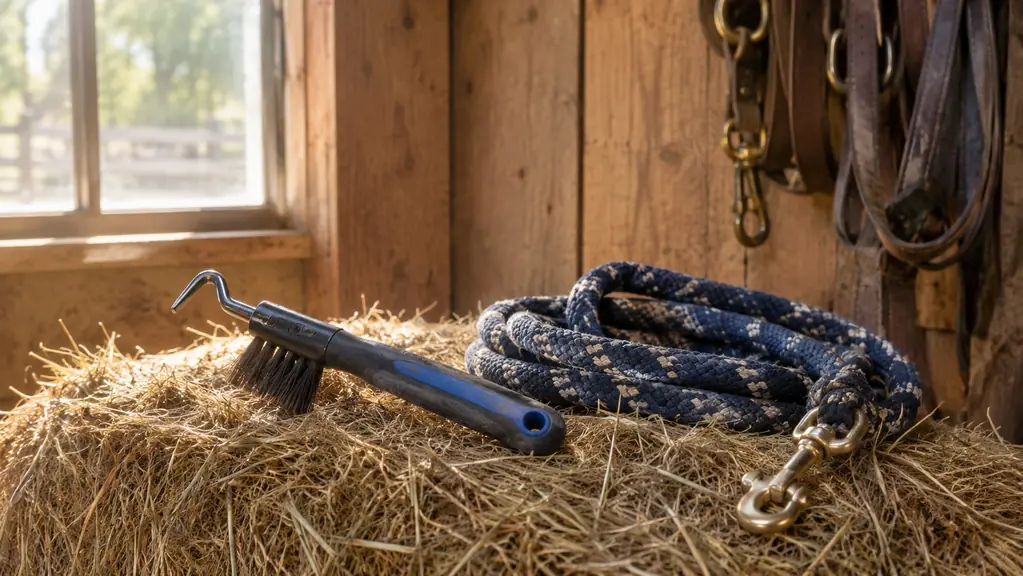
Mud season in our paddock is not a gentle event. The ground holds water, the horses pack it into their hooves, and by the next morning it has dried like concrete. The strong hook gets under the edge and the brush clears the grit. I have used picks that bent at the tip or clogged with wet clay. This one has held up to the job I actually ask it to do.
The hook is strong enough for a stubborn clod
The listing says the hook is reinforced with steel, and I can feel the difference when I put a little weight behind it. I do not mean I pry at the hoof like I am opening a paint can. I mean the tip does not flex when I meet a hard clod. You still want to work gently around the frog and never dig into live tissue. A strong hook is a help, not a license to be rough.
It works for more than hooves
The listing also mentions other cleaning around the home or stable. I have used the brush side to knock dried mud off a bucket handle and to clear dirt from the lip of a feed pan. I would not buy it only for that, but it is handy when the tool is already in my hand. It lives in the barn bucket, so it is available for the small jobs.
It is quick enough for a daily check
Hoof care works best when it is a habit, not a project. A tool that takes two seconds to grab and two minutes to use is a tool I will actually pick up. The BOTH WINNERS pick sits by the barn door with the hoof knife and the thrush spray. I check Juniper's hooves before a ride and after turnout. The easier the check is, the more often I catch a packed stone or a soft spot early.
It gives you a clean hoof to actually see
The whole point of cleaning a hoof is to see what is going on. A packed sole hides bruises, punctures and heat. The pick gets the packed material out and the brush clears the dust so I can look at the sole and frog. If I see something that worries me, I call the farrier or the vet. The tool does not diagnose anything. It just gives me a clean surface to check.
What I'd Skip
I would skip the idea that you need to replace every tool in your bucket at once. If you already have a pick that works, keep it. If your pick is dull or you are always looking for a brush, the BOTH WINNERS hoof pick with brush is a sensible place to start. I would also skip using any pick on a hoof that is hot, swollen, bleeding or oozing. That is a call to your vet or farrier, not a barn chore.
The pick gets the packed mud out, and the brush gets the grit off the sole. That is the reason the BOTH WINNERS tool stays in my bucket.
A quick check beats a packed hoof
Keep the pick where you can reach it, use the brush before you inspect, and call your farrier when something looks wrong. The BOTH WINNERS hoof pick with brush is the one I keep by the door.
Amazon Check Today's Price on Amazon →