
Short answer first. For the everyday job, I reach for the BOTH WINNERS hoof pick. It is a two in one tool, a stiff brush on one side and a steel-reinforced hook on the other, six inches long and about a third of an ounce, which means it lives in my jacket pocket and I forget it is there until a hoof needs it. But a plain metal hoof pick still beats it in two places, and I keep one in the tack trunk because of that. So this is not a piece that tells you one tool wins everything. It is the split I actually use, most mornings, in the dark.
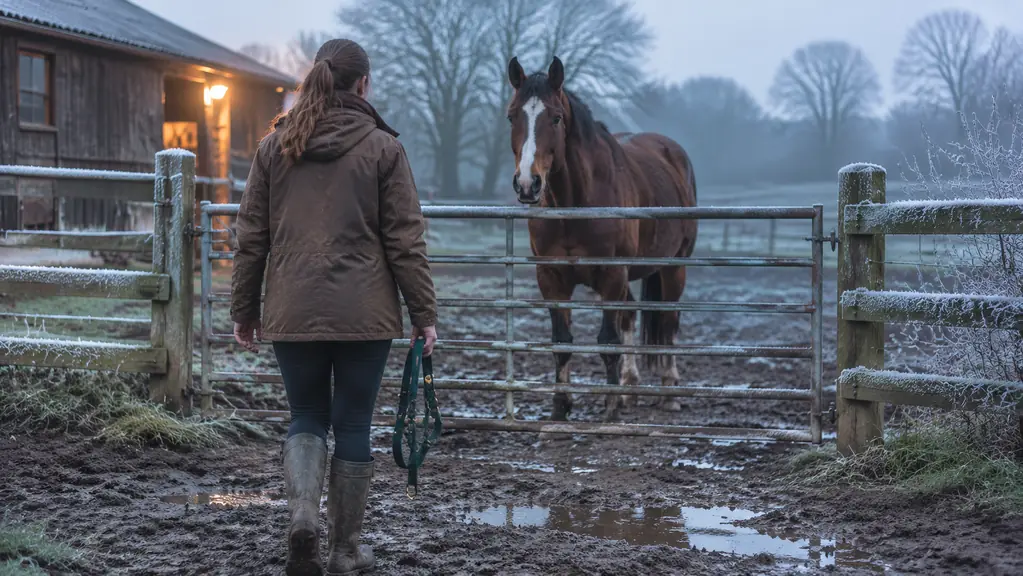
Tuesday morning, 6:20, still dark enough that I needed the barn light. Juniper was at the gate with her weight shifted onto three legs, which is her polite way of saying the run-out had turned to soup overnight. We get one wet week in January out here and the paddock goes from dust to pudding in about a day. By the time I had her haltered, the mud had packed up past her coronet band, the soft ring of skin just above the hoof, and there was a plug of it wedged into the sole. A hook gets that plug out. It does not get the film off afterward, and that film is where the thrush conversations start. Every time I ask my farrier about it he says the same thing: clean, dry feet, every single day. Which is a habit problem, not a tool problem. But the tool decides whether the habit takes ninety seconds or five minutes.
| BOTH WINNERS Hoof Pick | Plain Metal Hoof Pick | |
|---|---|---|
| Clearing packed mud | Hook breaks the plug loose, then the brush scrubs the film off the sole and wall | Hook only, so the plug comes out but the wet film stays |
| Deep frog grooves | Strong hook, but it is short and the brush body crowds the angle in a narrow packed crease | One slim hook that follows the groove all the way down |
| Grip with cold or wet hands | Soft touch comfort grip, listed for cold weather and easy to hold in a glove | Bare metal or a plain handle that gets slick in the wet |
| Cleaning the tool itself | Mud works into the bristles and needs a dunk and a finger comb | One dunk in the bucket and it is done |
| Weight in a pocket | About a third of an ounce, six inches long and half an inch thick, easy to forget | Heavier, and it swings around in a jacket pocket |
| Beyond the hooves | The listing mentions cleaning around the home or stable, and mine gets used on boots, the wheelbarrow and the truck mats | A hook is a hook, not much else it can do |
| Best for | Everyday chores, thin-skinned horses, cold mornings, trail rides | Deep packed grooves, and anyone who wants one tool for one job |
Where the BOTH WINNERS Hoof Pick Wins
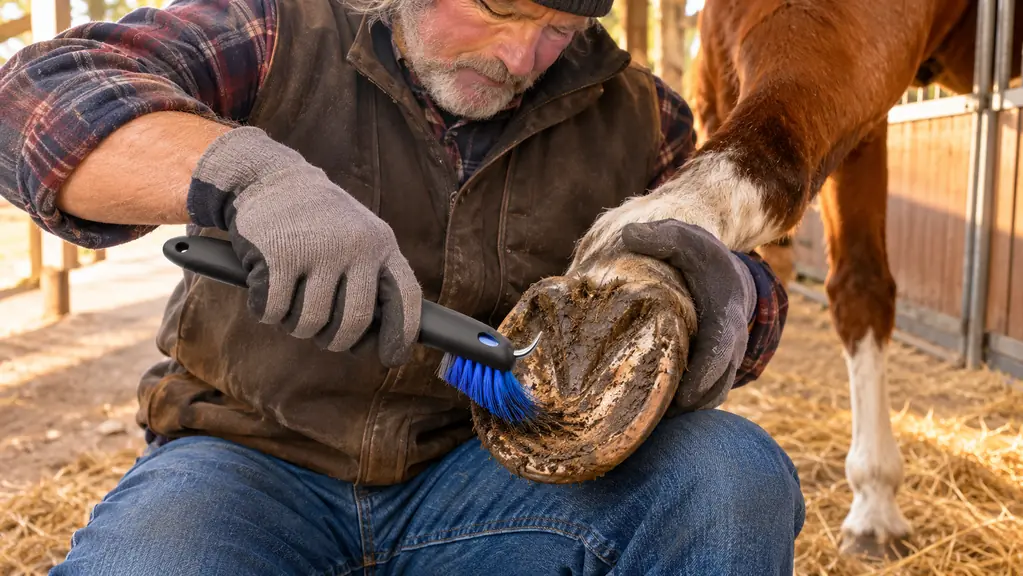
The hook does the breaking and the brush does the sweeping, and doing those two things in that order beats doing them with two separate tools. I dig the plug loose from the heel and work forward, then flip the tool over and scrub the sole and the hoof wall with the bristles. On a wet morning that second step is the difference between a hoof that is clean and a hoof that merely looks clean. Mud film sits in the same pockets that thrush likes, and three strokes with the brush reaches it.
Before this one I went the cheap route, which is a story I tell on myself. I bought a two dollar plastic pick out of the bin by the register at the feed store, and by the second wet week the tine had bent enough that it skated off the sole instead of digging in. Then I tried the other lazy version, which was a stiff brush on its own. A brush is fine for the sole once the plug is already broken loose. It does nothing at all against a plug that is packed in hard, and I stood there in the aisle scrubbing at a hoof like an idiot while Juniper shifted her weight and sighed at me. The two in one is the first tool I have owned that does the breaking and the sweeping without me setting one down and picking the other up.
The grip matters more than I expected it to. In January my hands are either numb or wet, and a bare metal pick is a miserable thing to hold at 6:20 in the morning when the air is somewhere near forty degrees. The soft touch handle on this one is listed as a comfort grip for cold weather, and in my case that is not marketing language. I can hold it inside a glove and still get real leverage on a stubborn plug, which is more than I could say for the pick I used before it.
It also gets borrowed for jobs that have nothing to do with hooves. The listing mentions cleaning around the home or stable, and mine goes after mud on boots, the wheelbarrow handles, the stall latch and the floor mats in the truck. That sounds like a small thing to care about, but a tool that stays in my pocket gets picked up. A tool that lives at the bottom of a bucket in the tack room gets forgotten until it is a problem.
Where the Metal Hoof Pick Wins
Deep grooves belong to the metal pick. Some horses pack grit down into the central sulcus of the frog, the crease that runs down the middle of it, and that grit does not come out with a brush. It needs a slim hook that can follow the groove to the bottom. The hook on the two in one tool is reinforced with steel and it is genuinely strong, but it is short, and the brush body keeps me from getting the angle I want in a tight, packed crease. When Juniper has gravel packed down in there, I want the long single hook.
What sold me on keeping a metal pick was one ride at the regional park in the spring, where the trail surface is decomposed granite and it gets into everything. I pulled Juniper's left front and found grit packed down into the central sulcus like sand in a shoe. The short hook on the two in one got the top of it and then ran out of reach, and the brush just polished the surface. I walked back to the trailer, dug out the old pick, and had the groove clean in about four strokes. That is not a knock on the two in one. It is a description of the one job it was not built to do.
The metal pick is also the easier tool to clean. Mine gets dunked in the water bucket and it is done. The brush side holds mud in the bristles, so it takes a dunk, a finger comb and sometimes a second dunk before it goes back into my pocket. That is not a big deal at the barn, where there is always a bucket within twenty feet. It is annoying at the trailer, where there is not.
And it is the one I hand to other people. It has one job and nothing to clog, so I do not think twice about passing it to the teenager who boards in the next stall or to a friend who wants to check her own horse's feet after a ride. The two in one is mine, and I am slightly territorial about it, which probably tells you more about how often it gets used than any spec sheet could.
The Grip Question, and Why Winter Changes the Math
There is a version of this argument that only shows up in bad weather. In July, any tool works. In January, with wind coming down the barn aisle and the hoof wet and cold, the tool you can actually hold onto is the tool that gets used. A comfort grip stops being a luxury at that point and turns into the reason the job is finished before you lose feeling in your fingers.
I tested this the unglamorous way one February, which is to say I dropped it. I was picking out a hind hoof with wet hands and the tool went into the mud and I had to fish it out with two fingers while Juniper stood on three legs wondering what was taking so long. The comfort grip is what made that a nuisance instead of a problem, because it came up out of the mud still grippable and I finished the hoof without going back to the barn. A bare metal shaft in the same situation is a slick thing that wants to slide out of your hand, and you end up gripping harder than the job requires, which is how you get a sore forearm by the third horse.
None of which means metal picks are unusable in the cold. Plenty of them come with a handled grip, and plenty of riders get along fine without one. It comes down to what yours has. If you are holding a bare metal shaft with wet hands in February, you will notice it. If your metal pick already has a rubber or plastic handle, you have solved most of this and the gap narrows to just the brush.
What I would tell a friend setting up her first barn is to stop thinking about this as a brand question and start thinking about it as a placement question. The right tool is the one within arm's reach when the hoof is packed and the horse is leaning on you. That is why I ended up with one of each, in two different places, instead of one expensive answer.
A hook gets the plug out. The brush gets the film off. Once that clicked, I stopped arguing with myself about which one to carry.
The One That Stays in My Pocket
Two in one, steel-reinforced hook on one side and a stiff brush on the other, with a soft touch grip that works in a glove. About a third of an ounce and six inches long, so you forget it is there until you need it.
Amazon Check Today's Price on Amazon →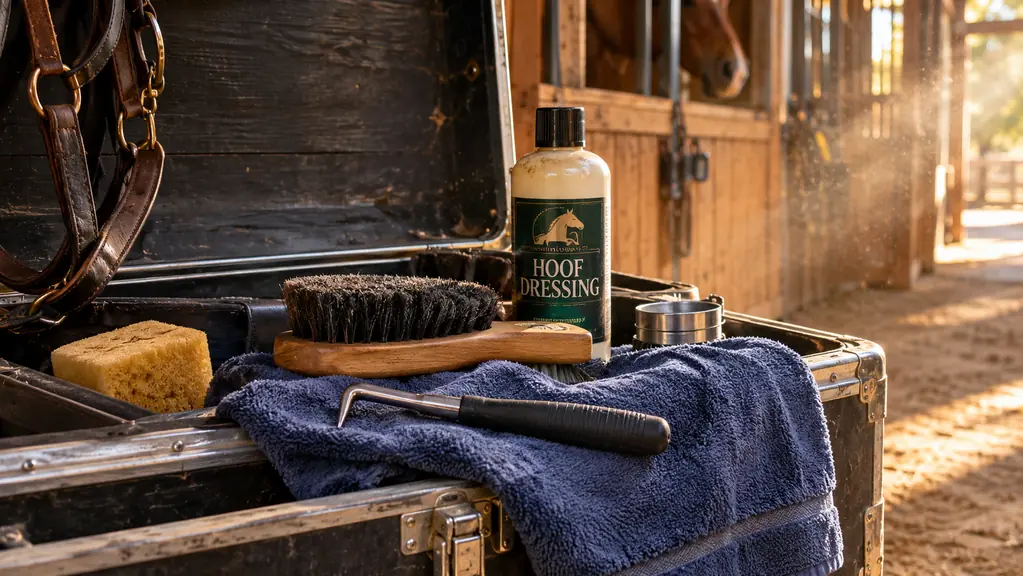
Who Should Buy Which
Buy the BOTH WINNERS hoof pick if you want one tool that handles the whole job on most days, and if you are tired of hunting for two different things in the dark. It suits thin-skinned horses that need the sole scrubbed and not just dug out. It suits anybody doing chores in the cold or in gloves. And it suits a trail rider who wants something in a jacket pocket, because at a third of an ounce you will genuinely forget it is in there until you reach for it.
There is also a version of this decision that has nothing to do with your own horse. If you are the person in your barn who gets asked to look at everybody's feet, the two in one is the one to keep on your person and the metal pick is the one to keep in the trunk for the horse that needs it. I have handed mine to a boarder's teenager more than once and gotten it back muddy, which is fine, because it rinses off. What I do not do is lend the metal one out and forget where it went, because it is the only one I have and I am not interested in buying another.
Buy a plain metal hoof pick if your horse packs grit into deep grooves, if you want a tool that rinses clean in one dunk, or if you want a spare that will survive being lent, dropped and left out in the rain. There is nothing fancy about it and that is the entire point. Mine has ridden in the tack trunk for years and I would replace it the same afternoon I lost it.
And if you are outfitting a barn from scratch, the honest answer is not one or the other. It is one of each, kept in different places, so the tool you need is near where you are standing. That has less to do with brands than with how barn work actually goes. You are never standing at the tack trunk when the hoof turns out to be packed.
What I Do With Each One Now
The two in one rides in my jacket from October through April and sits on a nail by the barn door the rest of the year. The metal pick stays in the tack trunk next to the hoof dressing and the spare wrap. That is the whole system, and I did not plan it. It is just the arrangement that survived contact with actual mornings, wet weather and a horse who leans.
If I could keep only one, I would keep the two in one, because the film on the sole is the part I care about and the brush deals with it. I would complain about the deep grooves, though, and I would borrow a metal pick twice a month. Which is my way of saying these two tools are not really competing. They overlap, and the useful question is which mess your own horse actually makes.
One Tool, Most Mornings
Six inches long, about a third of an ounce, hook on one side and brush on the other. If your horse packs mud rather than gravel, this is the one to start with.
Amazon Check Today's Price on Amazon →