
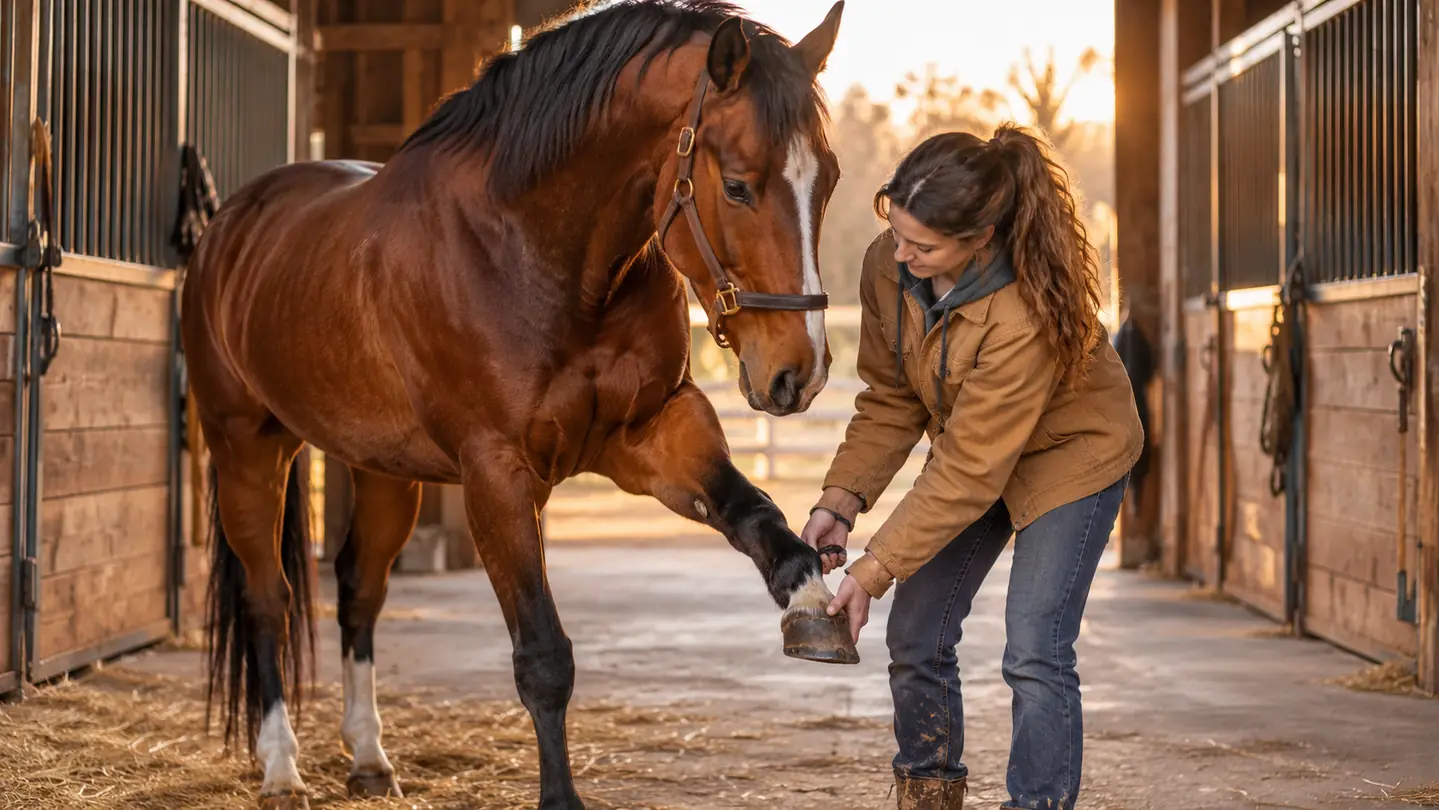
Hoof picking is the least glamorous five minutes of my day. It is also the five minutes I used to skip when the weather turned, or the softball tournament ran long, or the light was already gone by the time I got out to the barn. Juniper is a 14-year-old bay Quarter Horse mare, about 1,050 pounds, and she is easygoing about almost everything except having her feet handled when she is hungry. Skip a week of picking in wet weather and I pay for it. Her feet pack up, the packed dirt holds moisture against the sole, and she starts lifting a hind leg before I have even asked.
About eight months ago I retired the bent, rusty pick that lived in my back pocket and replaced it with the BOTH WINNERS hoof pick brush, the two-in-one tool with a metal hook on one end and a stiff brush on the other. I did not expect much. A hoof pick is a hoof pick, or so I thought, and I have owned enough of them to be skeptical of a handle described as soft touch. Eight months of Hollister mud, July dust and one thin-skinned mare later, I have a specific opinion, and it is mostly good. Here is what eight months actually looked like.
The Quick Verdict
The brush end does more work than the hook does, which is the opposite of what I expected. Eight months on one horse: the hook is still straight and the grip still works with gloves on in the dark.
Amazon Check Today's Price →The pick that lives in my jacket pocket, wet hooves or dry
A reinforced steel hook on one end for packed mud, a stiff brush on the other for the grit left behind. Two steps, one tool, about four seconds of brushing.
Amazon Check Today's Price on Amazon →How I've Used It
My routine is boring, and that is the point. I pick Juniper's four feet before every ride and after every ride, and I pick them again on the days she does not get ridden, because a horse standing in a run-out paddock packs dirt into her feet whether or not anybody swings a leg over her. That works out to somewhere between fourteen and twenty pickings a week. Most of them happen in the dark with a headlamp. A fair number happen in the cold with gloves on, which turns out to matter more than I expected. The afternoon picking is the one that used to get skipped, so I moved this pick to the jacket I actually wear out to the barn and stopped treating it like a tool that lives on a shelf. When the light is gone by half past five in December, a tool that is already in your pocket is a tool that gets used.
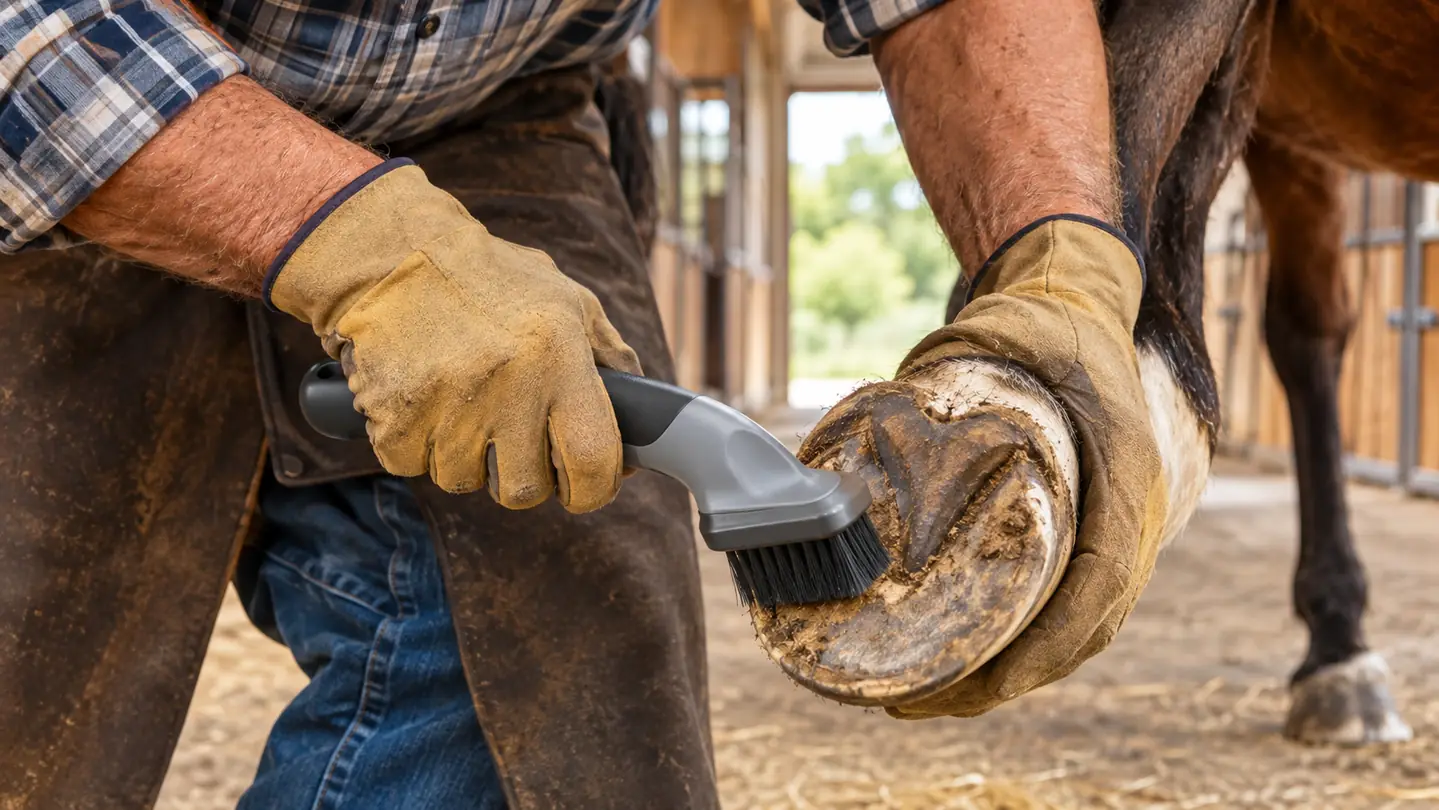
The way I use it is two steps. Hook first: the steel end goes in at the heel and drags toward the toe, and the packed material comes out in one or two pulls instead of five. Then the brush: a few strokes around the sole and the frog, and the fine grit the hook loosened gets swept out onto the barn floor instead of redistributed onto my jeans. That is the whole technique. It takes about as long to do as it did to read.
Before this, my routine was one step. I would hook out what I could reach, wipe the sole with my hand, and call it done. The grit stayed in the foot, the moisture stayed with it, and on wet weeks I was the person standing in the aisle with a hoof full of sand and no good way to get it out. I am not going to pretend a brush solved a lameness problem, because it did not and it could not. What it did was make the job finishable in one pass, which meant I actually finished it.
There is a second place this earns its keep, and it is not at home. At a trailhead, after a creek crossing, the brush is what turns a wet foot into a dry one before the trailer ride home. I keep a second one in the trailer with the lead rope and a spare halter, and I have used it on a tailgate more times than I can count while Juniper stands tied and hip-shot and ready to leave. That is where a plain pick leaves you wiping a wet sole with your glove and hoping for the best.
The Pick End: What a Reinforced Steel Hook Does Differently
My last pick was stamped from thin metal, and after two winters the tip had curled into a shallow hook that skated across hard ground instead of digging into it. The BOTH WINNERS pick is reinforced with steel for a strong hook, and eight months in the tip is still where it started. That sounds like a small thing until you are working on a foot that has dried into a clay plug, because a curled tip means you are scraping at the surface while your horse shifts her weight and sighs at you like you are wasting her afternoon.
The tip is not needle sharp, and I like that. A pick that is too pointy is a pick that finds a tender spot in a hurry, and I have seen enough of them to be careful about it. I am not a farrier and I do not play one online. Anything involving the sole, the white line, or a hoof that smells wrong goes to my farrier, and I say that as somebody who learned it the expensive way. This tool is for dirt. That is all it is for, and it does that job without drama.
Where it runs out of road is late August, when the ground has baked hard and the clay inside the feet has gone the same way. On those days I need two or three pulls where a heavier forged pick would need one. I tried the obvious fix first, which was soaking the foot with a wet rag for a few minutes before picking. It worked, and it also added four minutes per foot and a wet rag to the laundry, so I quit doing it by the second week. A heavier pick is the real answer for baked clay, and if I still boarded somewhere with gumbo dirt I would own one. For one horse on five acres of decomposed granite, this hook is enough.
The Brush End: The Half I Did Not Expect to Use
If you had told me the brush would be the reason I keep this thing in my pocket, I would have laughed. I bought it for the hook. But the hook is the obvious half, and the brush is the half that changes the job. After hosing her legs off in the summer, the brush gets the wet grit out of the sole. In July, when the paddock turns to powder, it gets the dust out before the dust turns into mud inside the foot. The clearest example was a September ride where Juniper came out of a creek crossing with a sole packed with wet sand and small gravel. Two minutes with the brush at the trailer and her feet were dry and clean before I loaded her. Before I had a brush I would have loaded her anyway and picked at home an hour later, which is a small thing that stops being small when wet sand sits against a thin sole for an hour. The listing calls it multi-using and I rolled my eyes at that too, right up until I used it to knock dried mud off a turnout strap and then out of my own boots.
The bristles are stiff. That is what you want on a hoof, and it is also the one thing to think about if your horse is touchy about sole pressure. Juniper does not care. She stands for it and goes back to her hay. A horse that flinches when you brush the sole will tell you in about two seconds, and if that is your horse, use the brush lightly or not at all around the sole and ask your farrier what he wants you doing down there.
I have picked this mare's feet more than five hundred times with this tool. The brush is the reason I would buy it again.
Cold Mornings, Gloves and the Soft Touch Handle
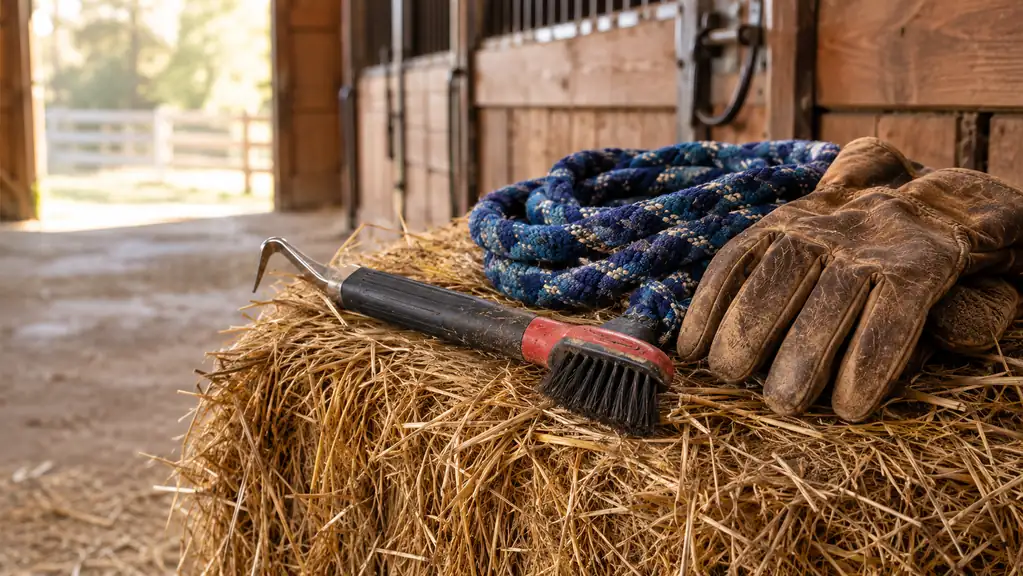
The whole tool measures six inches long and weighs 0.32 ounces, which means it disappears into a jacket pocket and I stop thinking about it until I need it. It is small enough that in February, picking feet at 5:40 in the morning under a headlamp with gloves on, I can find it by feel. The soft touch handle is the part I expected to be marketing. It is not. A slick handle inside a cold glove is how picks end up in the dirt, and this one has stayed in my hand through two wet winters without me having to think about my grip.
The honest downside of the size is that it is small in a large hand. Mark has meatier hands than I do and he finds it fiddly in winter gloves, which is why the one in the trailer is mine and he keeps his own pick in the truck. For me the size is the feature. I have lost two picks in ten years to wheelbarrows and hay bales, and the one that rides in a pocket is the one that does not get lost.
Eight Months of Mud, Dust and One Small Complaint
Eight months is not a lifetime, but it is long enough to have an opinion. The hook has not bent, the join between the brush and the handle has not loosened, and I have not seen rust on the steel, which is more than I can say for the pick this one replaced. The bristles have flattened slightly at the tips and I have pulled three or four loose ones out by hand. That is normal wear on something used twice a day, and it has not changed how the brush works.
January was the real test. We had three weeks where the paddock never dried out, and every picking was a wet one. The hook pulled out plugs the size of my thumb and the brush got whatever was left, and I never once had to walk back to the barn for a different tool. I remember one Tuesday in that stretch where I picked all four feet twice before seven in the morning and still found mud packed in behind the frog on the last one, and the brush cleared it in three strokes without me going back for a hose. By then I had stopped expecting either a wobble at the join or a spot of rust, and neither showed up. My farrier, out for a regular trim in the middle of that stretch, picked it up, used it on one foot, and asked where I got it. He did not say it was better than his. He said it was handy, which from him counts as a review.
My one real complaint is the one I already made: hard, baked clay asks for a heavier pick. The other is that the brush is stiff enough that I would not hand it to a nervous beginner around a horse that is already sore. Those are small things. Over a thousand people have reviewed the BOTH WINNERS hoof pick brush on Amazon and it sits at 4.8 stars, which lines up with my experience better than most ratings do. It is not a fancy piece of equipment. It is the kind of thing that either works quietly for years or annoys you daily, and this one has been quiet.
What I Liked
- Two steps in one tool: the hook takes out the packed mud, the brush takes out the grit the hook leaves behind
- Reinforced steel hook has stayed straight through eight months of clay, gravel and wet paddock
- Soft touch handle stays grippable with winter gloves on, in the dark, at early feeding
- Six inches and 0.32 ounces, so it rides in a jacket pocket and does not get left in the wheelbarrow
- Handy enough around the trailer and the barn that a second one is worth keeping in the tack compartment
Where It Falls Short
- On sun-baked clay the hook needs two or three pulls where a heavier forged pick would need one
- Stiff bristles are not for a horse that flinches at sole pressure
- Small in a large hand, and Mark finds it fiddly in winter gloves
Who This Is For
This is for the person who does their own chores on one or two horses and picks feet every single day, in the dark, in the cold, in a hurry because the school bus is coming. Trail riders, owners who keep a horse at home, 4-H families with a mare in the paddock and a kid who needs a barn job that takes ninety seconds and cannot easily be done wrong. If your pick lives in your pocket and your horse's feet pack up in wet weather, the brush end will save you a step you did not know you were taking. The BOTH WINNERS hoof pick brush is built like a barn tool, not a show kit, and it holds up like one.
Who Should Skip It
Skip it if you want one heavy forged pick with a long reach for a big-footed draft horse, because this is a small two-in-one and it is not that. Skip it if your horse is sore on the sole and flinches at pressure, because the brush is stiff and the last thing a sore horse needs is a firm scrub from someone learning as they go. And skip it if you want a pick you will never replace, because the bristles will wear and one day you will buy another. Mine has a good while left in it yet.
Two ends, one pocket, and a horse that stands still for it
The hook digs out the packed mud. The brush gets the grit out before it turns into a problem. It is the only barn tool I have managed not to lose in eight months.
Amazon Check Today's Price on Amazon →