
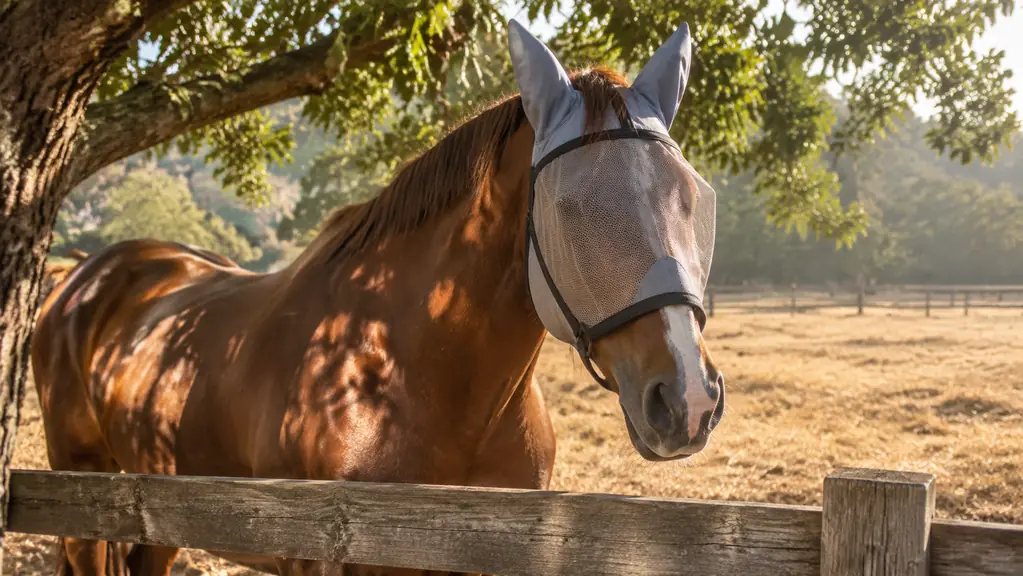
Fly season outside Hollister starts earlier than anyone expects and ends later. For my mare Juniper, a 14-year-old bay Quarter Horse who weighs about 1,050 pounds, it is not a nuisance. It is six weeks of head shaking, stomped feet and a face rubbed raw on the fence line. She is thin-skinned, and every June the bites show up around her eyes and muzzle before I have hung the first sticky trap. I tried sprays, wipes, and a homemade brew that stained my hands for a week. What actually changed the summer was the Harrison Howard CareMaster Pro Luminous fly mask.
Not because a mask is magic. Because it removes the daily negotiation. Instead of chasing a horse around a paddock with a spray bottle while she throws her head, I walk out, put one piece of gear on her head, and go start the coffee. That is the whole trade. Here are the ten things it actually does, in the order I noticed them.
The 30-second fix for a horse that rubs her face raw
Juniper wears the Harrison Howard CareMaster Pro Luminous from May through October. Midge-proof mesh, ear covers, fleece binding, touch closures, and enough eye clearance that she stopped scraping her eyelid on the fence.
Amazon Check Today's Price on Amazon →It holds the mesh off her eyes so she stops rubbing her face on the fence
Juniper's first move when flies land is to drag her face down the fence rail, and that is how she ends up with a scrape above one eye every June. The large eye space is the entire reason I bought this mask. The fabric sits away from the eyelashes instead of pressing on them, so when she does rub, she is rubbing mesh against wood and not eyelid against wood. That is a small design choice that solved a problem I had been treating with ointment for three summers.
It shuts out the midges, not just the flies you can hear coming
The bites that wreck Juniper are not the big ones. They are the tiny ones that leave a row of bumps along her crest and under her jaw, and they show up overnight. The listing calls the fabric midge-proof and breathable, and breathable matters in July when it is already hot at feeding time. A heavy mask that traps heat gets rubbed off in an afternoon. This one has stayed on through the worst days because she does not seem to cook in it.
It takes the sun off thin hair and thin skin
The mesh is translucent, and the listing says the UV protection is lab-tested. I am not going to pretend I can verify a lab result from my own paddock. What I can tell you is the thin hair around her muzzle stopped bleaching out, and the skin under it stopped flaking by mid-July, which had not happened in previous years. She also keeps her eyes open in the pasture instead of squinting into the glare all afternoon.
The ears stay covered, so the head shaking stops
Ear coverage is the difference between a mask that stays on and a mask that ends up in the water trough. When a horse's ears are exposed, the flies go there first and the head shaking starts within minutes. This one covers the ears in the same mesh and has enough give that she can still swivel them to listen behind her. I checked the first week for hair rubbed off the base of her ears and found none.
Thick fleece padding means no bald stripes on the cheekbones
Every cheap mask I have tried left a bald stripe across the cheekbones by August. The binding on this one is thick fleece, so it sits between the mesh and the horse rather than against bare skin. That padding also closes the gaps at the edges where small flies sneak underneath. After a full season of daily wear, Juniper's cheekbones still have hair on them, which is a lower bar than it sounds and one that three previous masks failed.
The touch closures hold through a roll in the dirt
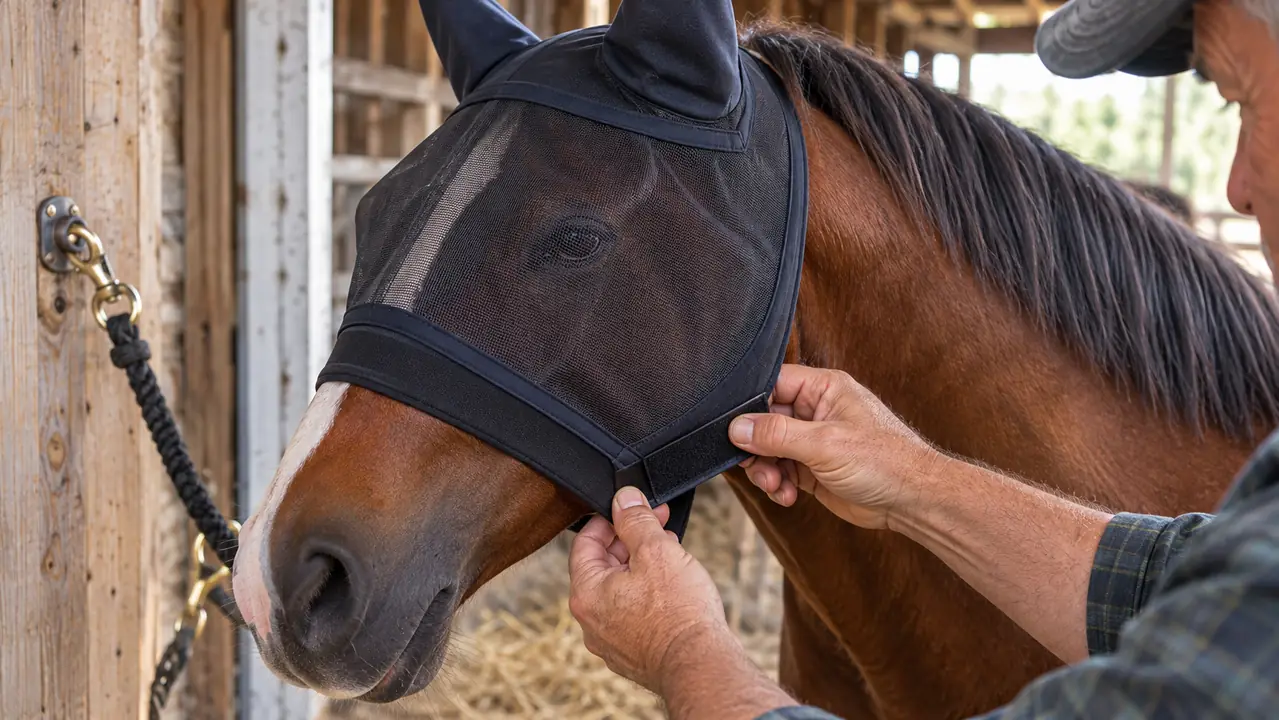
Juniper rolls most days, usually right after I turn her out. The touch closures under the jaw and at the throat are wide enough that they do not peel apart in the dirt, and the material has not torn where she rubs it on the fence. I still check both closures every morning, because a mask that comes loose in the paddock is a mask tangled around a leg. But the checking is quick, because they are usually still right where I left them.
You can still read her expression through it
A mask that hides the whole head makes it hard to tell whether your horse is dozing or in trouble. The mesh on this one is translucent enough that I can see her eye and her ear position from the gate. That sounds minor until you have walked out at dusk to check a horse who would not come in and needed to know whether she was colicking or napping. Ask your vet about any real health question. Being able to see her face is still worth something.
At 6.7 ounces she forgets she is wearing it
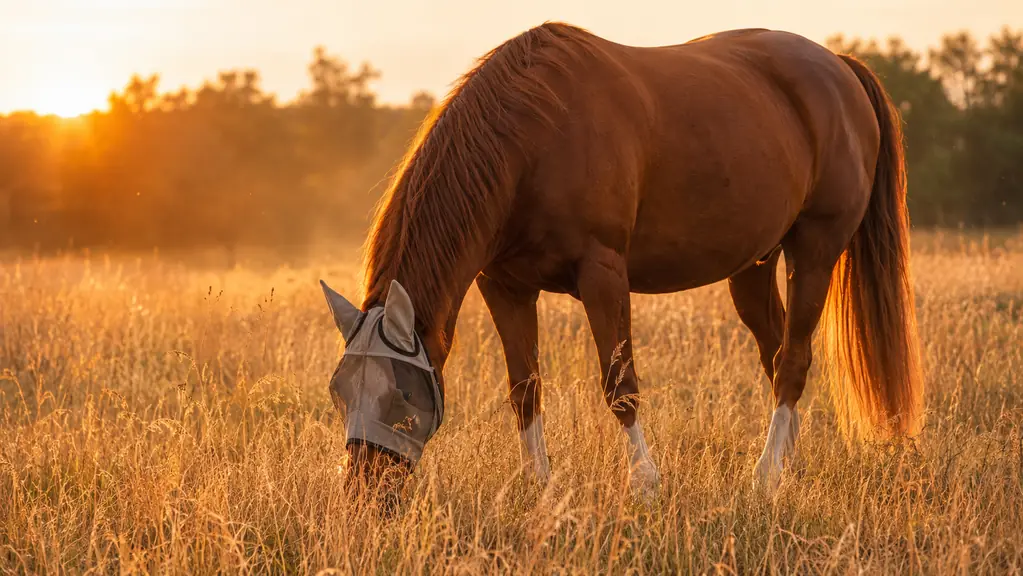
The mask weighs 6.7 ounces according to the listing, and on a 1,050 pound mare that is close to nothing. I expected a week of head shaking, the way she shakes off a new fly sheet. Instead she put her head down and went back to grazing. Light gear gets worn. Heavy gear gets destroyed. That is the whole theory and it has held for a full season.
It is unscented, so it does not fight with anything else you use
This sounds like a throwaway detail. It is not. I use a wipe on her chest and shoulders during the worst weeks, and I do not want a mask that smells like citronella competing with it or pulling flies toward her head. The mask is unscented, so it adds nothing to the mix. If your horse is sensitive to smells, that is one less variable to argue with every morning.
It turns fly season into a habit you will actually keep
The mask is shaped to fit a horse's head, so it goes on in one motion. Over the nose, ears through, closure under the jaw, done. I put it on before I turn her out and take it off at night, or leave it on when the flies are relentless and check underneath for rubs each morning. The point is that it is fast enough that I still do it on a morning when I am already late for a softball tournament. Gear that takes two minutes gets skipped.
What I'd Skip
I would skip buying a backup mask before you know the size is right. Fit is the one thing you cannot judge from a listing, and a mask that shifts will rub no matter how good the padding is. I would skip any mask without ear coverage if your horse gets bitten around the ears the way mine does, because that is where the head shaking starts. And I would skip the idea that a mask replaces everything else. I still pick the paddock, still keep the manure pile well away from the barn, still wipe her chest and shoulders where the mask does not reach. The mask handles the face. It does not handle the whole horse. If your horse is rubbing until the skin is broken, or has a skin condition you cannot get on top of, that is a call to your vet, not a shopping decision.
Three summers of ointment on a scraped eyelid, and the fix was the eye space built into a fly mask.
Six months of daily wear and her cheekbones still have hair on them
The Harrison Howard CareMaster Pro Luminous has been on Juniper's head every morning since May. Midge-proof breathable mesh, lab-tested UV protection, fleece padding at every edge, and touch closures that survive a roll in the dirt.
Amazon See the CareMaster Pro Luminous on Amazon →