
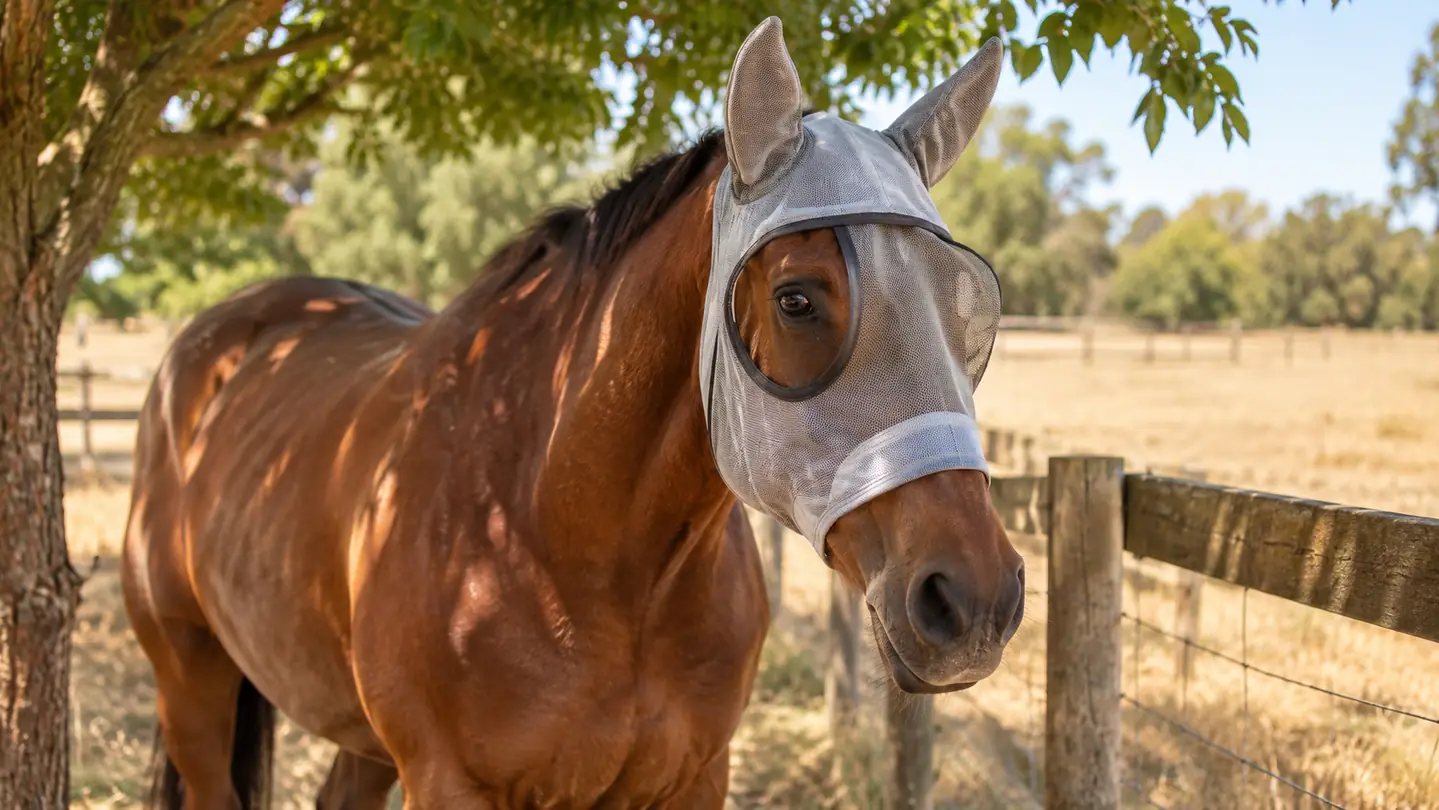
The first summer Juniper came home, I spent more on fly spray than I care to add up. She is a 14-year-old bay Quarter Horse mare, about 1,050 pounds and 15.1 hands, easygoing on the trail and thin-skinned everywhere else. The face flies found her the way ants find a dropped cracker. By the second week of June she had a raw spot under her jaw from rubbing her face on the fence, and she had started doing that thing where she stands in the middle of the paddock with her head low and her eyes half shut, just enduring it.
That summer I went through three cheap fly masks. One came off in the mud and I found it two days later in the run-out. One rubbed a bald patch across her cheekbones. The third lasted about nine days before the binding let go at the ear. So before the next fly season I bought the Harrison Howard CareMaster Pro in size Large, the version with ears, and I have used that same style through three fly seasons on the same horse. Here is what held up, what did not, and who I would hand it to.
The Quick Verdict
The only fly mask I have repurchased. The fleece edging cleared the rub on her cheekbones in a week and the mesh has survived three seasons. The ear covers run hot in August.
Amazon Check Today's Price →A fly mask that survives a real fly season, not just a photo shoot
Fine mesh, fleece padding along every edge, and touch closures you can fasten one-handed in the dark at morning feed.
Amazon Check Today's Price on Amazon →How I've Used It
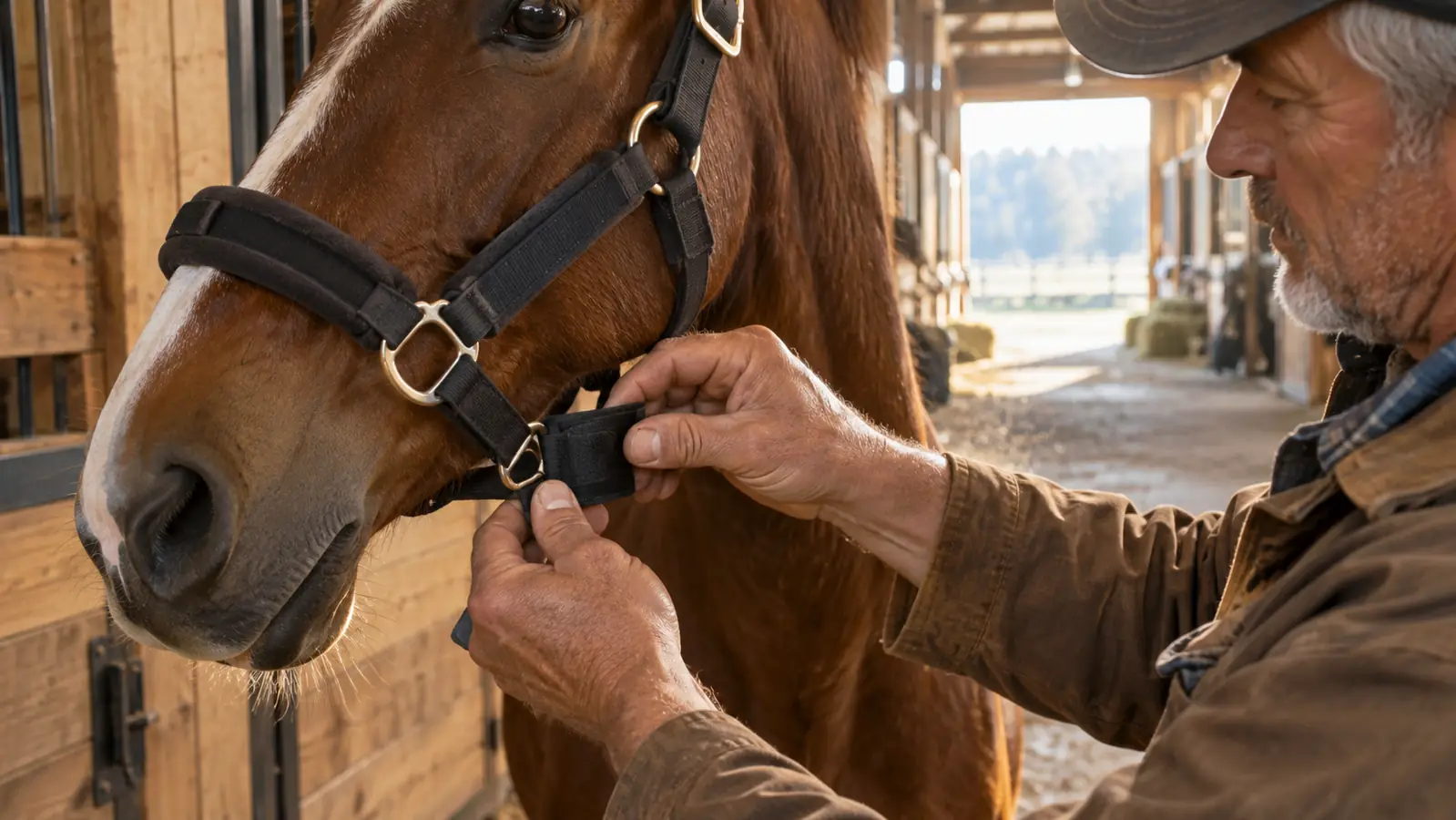
Juni lives in a two-stall barn with a run-out paddock, so she is not stalled all day. In fly season the mask goes on at morning feed, which for me is usually still dark, and it comes off at night check unless the gnats are bad, in which case it stays on. That means a lot of putting on and taking off, twice a day, in bad light, with a horse who would rather be eating. The touch closures are the reason this works for me. I can do them one-handed while holding a feed bucket in the other, and I can do them by feel. On the cheap masks, those closures were the first thing to give out. The first morning I used this one was the second week of March, two years back, and I remember it because I was already late leaving for the feed store. I had the bucket in my left hand and the mask in my right, and the whole thing was on her head in about eleven seconds without me setting anything down. That is most of the pitch, honestly. It is a mask you can put on badly, in the dark, one-handed, and still have it sit right.
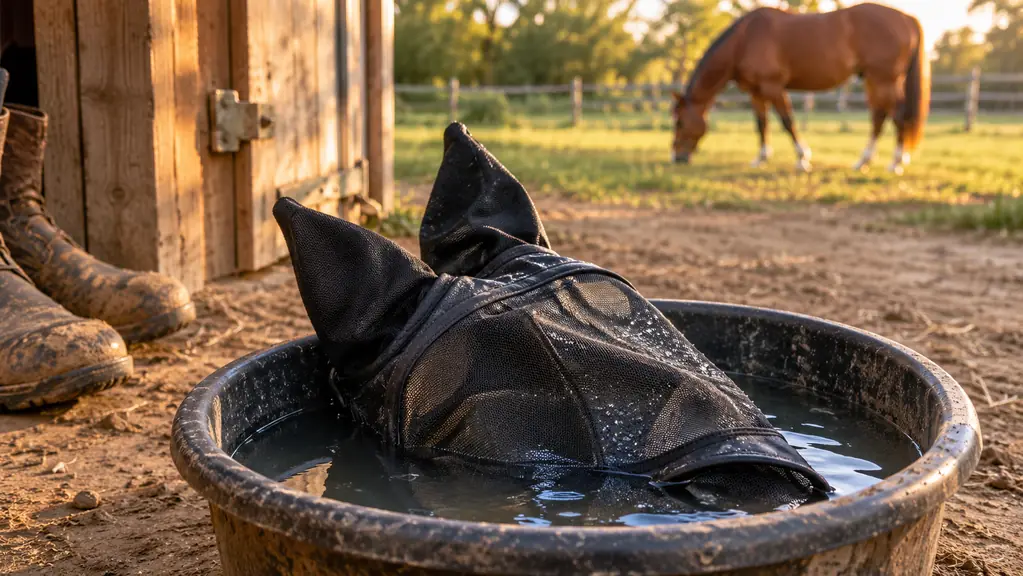
Fit on her is the Large, and she is 15.1 hands with a fairly ordinary Quarter Horse head. I measured her the way the listing's chart describes, from under the jaw to behind the ears, and she landed solidly in the Large range instead of on the edge of it, which is why I did not size up. The listing calls the shape anatomical, and what that means in practice is that the eye openings sit where her eyes actually are rather than up on her forehead. The thick fleece padding runs along the edges, and that padding is what keeps the mesh from sitting directly on her cheekbones. Twice a week I rinse it in a bucket of clean water and hang it on the stall door to dry, and by afternoon it is ready to go back on. In the wet weeks in February, when the rain rot shows up on her pasterns and the whole barn smells like a wet dog, the mask comes off and hangs on a hook in the tack room. It goes back on the first warm dry day, usually the first week of April, and that is when fly season starts here whether the calendar agrees or not.
The other thing I do, and I will be honest that it is not in any instructions, is check her ears every time I take the mask off. Ears are where dirt collects and where I want to catch anything early. That habit has nothing to do with the mask itself, but it is the routine the mask lives inside, and if you are buying one for a horse that lives outside, build those thirty seconds into your day.
What the CareMaster Pro Is Actually Made Of
Per the listing, the mask uses a translucent fine mesh that is meant to be midge-proof and breathable, with lab-tested UV protection, and the whole thing weighs 6.7 ounces. I am not a vet and I am not going to pretend I can verify a UV claim with a barn test. What I can tell you is what the mesh does in the heat. It is fine enough that I can see her eye through it from a few feet away, and she can see out. There was one afternoon in late July, 104 on the barn thermometer, when I pulled the mask off and expected to find her soaked underneath. Her face was damp along the edge of the fleece, the way a forehead is damp under a hat, and the mesh itself was dry within a minute of coming off. A solid nylon mask she wore two summers ago came off wringing wet, and she would shake her head for five minutes afterward.
The midge-proof part matters more than people expect, because midges come out at dusk and they are the ones that drive a horse genuinely crazy. The fine mesh keeps them off her face and out of her ears. The ear covers are attached, not stitched on as an afterthought, and the eye space is generous enough that her lashes do not drag on the fabric when she blinks. That sounds like a small thing. On the mask that rubbed her bald, it was not a small thing at all.
The touch closures are wide and the material they sit on is stiff enough that they do not slide. Harrison describes that outer material as resistant, and the practical version of that is a strap that has not stretched out or curled at the end after three seasons of being yanked on by a person in a hurry. I have had the strap let go once in three years, in a windstorm, and I found the mask hanging off one ear. That is the only time it has come off her head without me taking it off. The whole thing weighs 6.7 ounces, which is light enough that she does not push back when I bring it toward her face, and that alone saves me a wrestling match every morning.
Three fly seasons on the same style of mask, and the fleece edging still has not rubbed a single patch of hair off her face.
How It Held Up Over Three Fly Seasons
Year one, no problems. Year two, I noticed the fleece at the poll was flattening out but not worn through, and the mesh was still intact after being rinsed maybe forty times. Year three is when the strap the windstorm did in got replaced, and that was a cheap fix at the feed store, not a new mask. The windstorm was in January, the one that took a section of the run-out fence down and left a tarp in the neighbor's field. I found the mask on the ground by the water trough with one closure still fastened and the other popped. The mesh itself has never torn. She has pushed through a fence line and caught the mask on a gate latch, and it came through both with the binding still attached.
Washing matters more than I expected. The first year I rinsed it every couple of weeks. Now I rinse it twice a week in fly season, because dust in the mesh holds heat and because a dirty mask against a sweaty face is how you get a rub. The mesh dries fast, which matters when you only own one. If you are the kind of person who buys one and forgets about it, the mask will still work, it will just get stiff and gray and start to smell like the inside of a feed bin.
The ear covers are the part I would call the weak point, and that is not a knock on this mask specifically. Ear covers are always the weak point. They take the most abuse, they are the hardest to clean, and on a horse that rubs her head on a fence post they are going to be the first thing to fray. Mine are still intact at the end of three seasons, but they are noticeably softer than they were, and I expect them to go before the mesh does.
The Ears, the Eye Space, and the Rubbing Problem
I bought the version with ears on purpose, because the gnats around here go straight for the inside of a horse's ear and an ear-shy horse is a miserable thing to handle. The ear covers do their job. What I would tell you honestly is that they also add heat, and in the worst week of August Juniper sweats more around the ears than she does anywhere else on her head. I still leave them on, because the trade is worth it, but if your horse runs hot and the flies are not bad in the ears, the earless version is a reasonable choice.
The eye space is the feature that solved my actual problem. The bald patch on her cheekbones came from a mask that pressed right on the bone with no padding between the fabric and the hair. The fleece on this one is thick enough that there is a gap, and the space around the eyes is large enough that the mask does not sit on her lashes. She stopped rubbing her face on the fence within about a week of switching. I am not going to claim the mask cured anything. I am telling you what stopped.
Before this one I tried a pull-on stretch mask with no closures at all, and that was the one that rubbed her cheekbones bare. A pull-on mask has to be tight enough to stay on, and tight is exactly what you do not want over a bony face. The other failure was a mask with a stiff binding and no fleece, which left a bald stripe across her cheekbones about two inches long. It grew back, but it took most of a summer and she was miserable in the meantime. The difference here is not complicated. Padding on the edges, a closure that lets you set the tension instead of the fabric deciding it for you, and enough eye space that nothing touches her lashes.
What I Liked
- Fleece edging stopped the rub on her cheekbones within a week
- Fine mesh keeps midges off her face and out of her ears at dusk
- Touch closures fasten one-handed in the dark at morning feed
- Mesh and binding have survived three fly seasons and a fence line
- Light enough at 6.7 ounces that she does not fight putting her head in it
Where It Falls Short
- Ear covers run hot in the worst August afternoons
- Fleece at the poll flattens out by year two
- Needs a rinse twice a week in fly season or it goes stiff and dusty
- It will come off in a serious windstorm if the strap is not snug
Who This Is For
This is for the person with one or two horses at home, doing their own chores, who is tired of replacing a cheap mask three times a summer. It is for a horse with thin skin who rubs her face raw, and for a barn where the person putting the mask on is also carrying a feed bucket and does not have a free hand. If your horse lives out in fly season and you want something that will still be on her head at night check, this is the one I keep buying. I have put two people at the feed store onto the Harrison Howard mask after they asked me what Juniper was wearing, and both of them came back to say it stayed on.
It is also a good fit for a horse that is hard to catch or head-shy, because the mask goes on quickly and comes off quickly and the whole exchange stays short. Short exchanges are how you keep a head-shy horse from getting worse. That is not a training claim. It is just what a two-second closure buys you on a Tuesday morning when you are already late.
Who Should Skip It
Skip it if your horse lives in a stall with a fan and only goes out for an hour, because you do not need this much mask. Skip it if your horse is an escape artist who destroys everything, because no fly mask wins that fight and you will end up angry about the wrong thing. And skip the ear version if your horse runs hot and the ears are not the problem, since the earless version exists and it is cooler. If you are dealing with a skin condition rather than flies, ask your vet before you buy any mask.
One more thing I would say plainly. A fly mask is not a substitute for fly control. I still spray, I still pick the paddock, and I still have a feed-through in her ration in the worst months. The mask is the part that protects her face, and the Harrison Howard mask does that job better than anything else I have tried. That is the whole claim. It does not need to be bigger than that.
Three fly seasons on one mask is the whole review
If you are tired of buying the same cheap mask every June, this is the one that stayed on her head, kept the midges off, and never rubbed a patch of hair off her face.
Amazon Check Today's Price on Amazon →