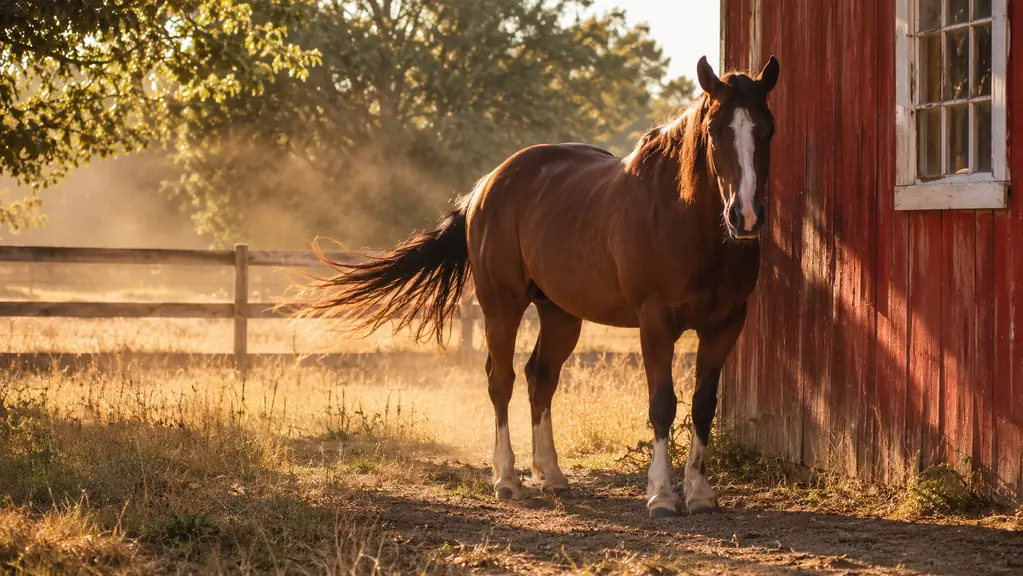
Fly season on five acres outside Hollister does not arrive quietly. One week the pasture is green and everybody is easy to catch, and the next week Juniper is standing in the barn shade with her head down and her tail going like a metronome, stomping every few seconds hard enough to rattle the fence. She is a 14-year-old bay Quarter Horse mare, about 1,050 pounds at 15.1 hands, and she is thin-skinned in the way that makes fly season personal. By mid June her cheekbones are a map of small scabs and she has rubbed a bald patch above one eye on the water trough. This is the story of why I switched to the Harrison Howard CareMaster Pro, and it starts with that bald patch.
For the first few summers I did what everybody does. I bought the plain mesh mask off the shelf at the feed store, put it on in June, took it off in October, and told myself it was fine. It was fine for about six days. Then the binding along the nose started to rub, the eye openings sat right against her lashes, and the ear holes were cut for a horse with smaller ears than mine. Juniper is not a difficult mare about much. She is difficult about her ears. By the second week she was lifting her head out of reach the second she saw the mask in my hand, and I was the one who had to catch her, so I was also the one losing twenty minutes every morning before work.
That is how I ended up paying attention to construction instead of buying on habit. I work part time doing the books at a family-owned feed store, which means I hear what comes back through the door and what does not, and the fly mask that kept coming up last summer was the Harrison Howard CareMaster Pro. Not because anyone was pushing it. Because two boarders and one of our delivery drivers mentioned it in the same month and none of them were selling anything. I ordered the Large (Horse) size, which is the standard full size, and I had it on her the day it arrived.
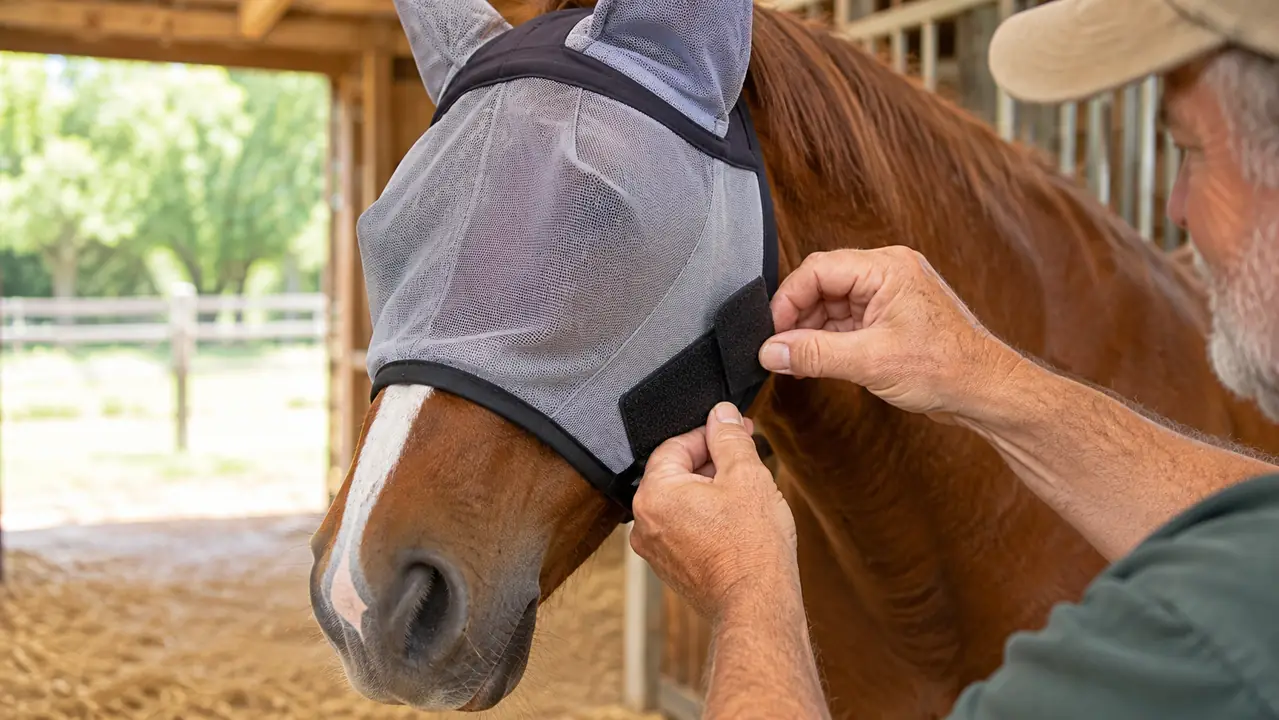
The first thing I noticed is that it is shaped, not sewn flat and hoped for. The mask is anatomically cut, so it sits over the cheekbones rather than pressing on them, and the eye area is generous enough that her lashes clear the mesh instead of brushing it every time she blinks. The edges are finished with thick fleece padding, which is the part that actually solved my problem, because the rubbing was never about the mesh, it was about the seams sitting on thin skin. It goes on with touch closures, which I can manage in the dark at 5:40 in the morning with cold hands and a mare who is ready for breakfast. It weighs 6.7 ounces, so it is not something she notices on her head. And it has ears, which for this mare is the whole negotiation.
The rubbing was never about the mesh. It was about the seams sitting on thin skin, and the fleece padding along the edges is the part that ended four summers of scabs.
The first fly mask in four years that did not leave a rub mark on her
Anatomically shaped, fleece padded edges, large eye space, and ears. Sized Large (Horse), which is the standard full size for most adult horses.
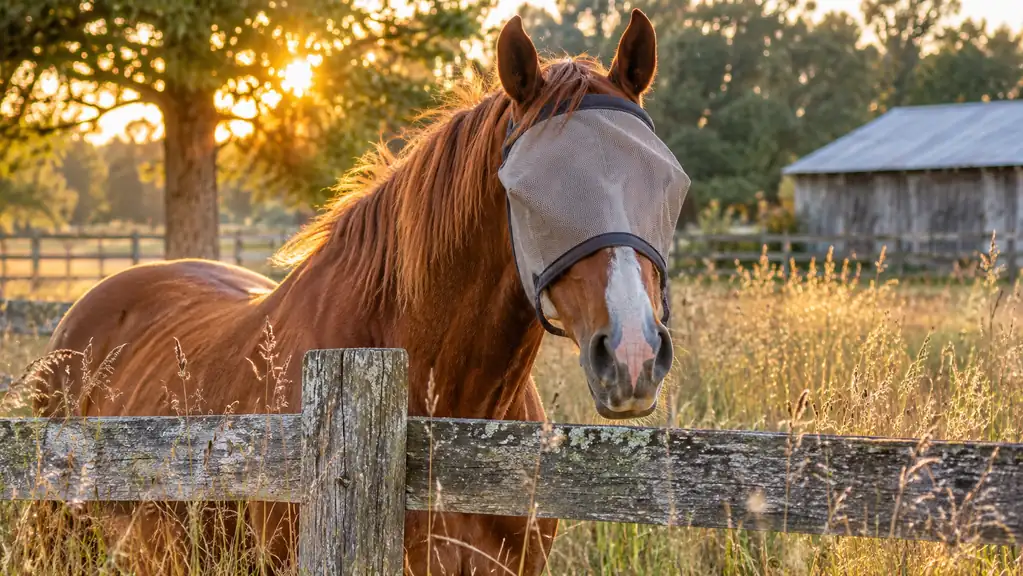
Amazon Check Today's Price on Amazon →Ten days in, I did the thing I always do, which is run my hand over her face looking for heat and hair loss. Nothing. The patch above her eye from the old mask had grown back in. She kept it on through turnout, through the sprinklers, through a week of dust and one afternoon of actual mud when the farrier came and everybody got turned out early. The translucent fine mesh is fine enough that I can see her expression through it, which matters more than I expected, because a mask you cannot read a horse through is a mask you take off to check on her ten times a day.
Here is the honest part, because a review with no downsides is not a review. She can still get it off if she is determined, and her method is to rub the side of her head down the fence rail until the whole thing slides. She does it maybe once every two weeks, usually when the flies are at their worst and she is already annoyed. The fleece gets dirty, and dirty fleece is what causes rubs, so I hand wash it in a bucket with a little mild soap and let it dry in the sun. That is a fifteen minute job, and if I skip it for two weeks I can feel the difference in how the edges sit. Sizing is the other thing. Large fits a 15.1 hand mare at 1,050 pounds, but if your horse is between sizes, measure the length from browband to nose rather than guessing, because a mask that is too big slides and a mask that is too small presses.
What the Summer Actually Looked Like
The change was not dramatic. It was just quiet. She stopped throwing her head while I groomed her. The scabs along her cheeks dried up and did not come back. I stopped making a special trip to the barn at dusk to put a mask back on a horse who had scraped it off in the paddock. That is what I wanted from the beginning, and it took the Harrison Howard CareMaster Pro, with its real padding and a proper eye opening, to get it. The mesh is lab-tested for UV protection, which matters with a blaze faced horse in California, though I still do not leave her out in the worst midday sun without shade.
One thing I will say plainly: a fly mask is not a medical device and it is not a substitute for a vet. If your horse is squinting, holding an eye closed, or has discharge, take the mask off and call your vet that day. I am not a vet and I do not play one at the feed store. This is a piece of gear that keeps flies off a horse who is sensitive to them, and it does that job well.
What I'd Tell You If We Were Sitting at My Kitchen Table
I would tell you to stop buying the cheapest mesh mask and calling it done, because I did that for four years and all it bought me was a horse who learned to dodge the halter. Measure your horse's head before you order, wash the fleece before it gets crusty, and buy two if you can so one can dry while the other is on. I would tell you that ears and eye space are not extras, they are the fit, and that a mask with thick padding at the edges is worth more than a mask with a fancy pattern. And I would tell you that the Harrison Howard CareMaster Pro is the one that finally stayed on Juniper without rubbing her, and that after this many summers I am not shopping around anymore.
If your horse rubs, dodges the halter, or loses a mask every other week, start here
Large (Horse) full size, 6.7 ounces, fleece padded edges, touch closures, large eye space, with ears. Wash the fleece and it keeps sitting the way it did in week one.
Amazon See Today's Price on Amazon →