
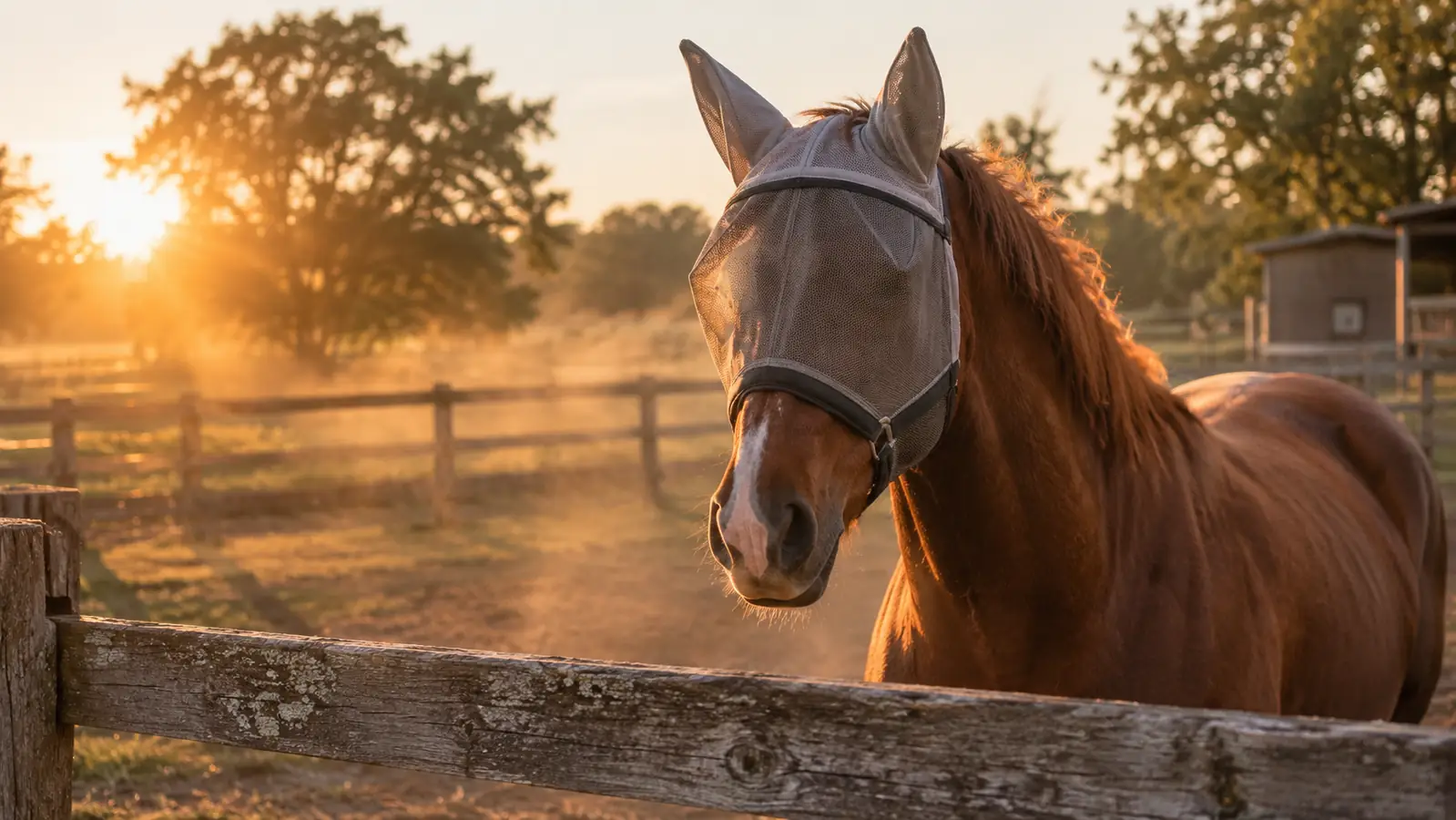
The first fly mask I bought for Juniper lasted nine days. Nine days, and then I found it hanging off a fence post with the seam above her left eye split open like a paper bag that had been rained on. She is a 14-year-old bay Quarter Horse mare, about 1,050 pounds and 15.1 hands, and she is thin-skinned in the way that makes fly season personal. If yours rubs a bald stripe across the cheekbones by August, or slides down over the eyes by noon, you already know why I went looking for something else.
This is the honest version of a Harrison Howard CareMaster Pro review. Not the listing photos with a clean horse standing in tall grass. The version with dust worked into the fleece and a mare who has opinions about her head. I have run this mask through two fly seasons, through mud, through the week in July when the gnats were thick enough that I wore a head net to feed, and through a stretch where Juniper scraped it off on the same gate post twice in one afternoon. Here is what held up, what did not, and the two things I wish someone had told me before I ordered.
The Quick Verdict
Well padded, genuinely breathable, with real room in front of the eye and ears that stay put. Buy it for the fleece and the fit, and measure your horse before you order, because the sizing is where this goes wrong.
Amazon Check Today's Price →Real eye room, ears that stay put, fleece exactly where it rubs
The fit is the whole reason this one works, so check the size chart on the listing against your own tape measure before you commit.
Amazon Check Today's Price on Amazon →What Nobody Tells You About Fly Masks With Ears
Ears are the first thing people argue about. Some horses will not tolerate anything pulled over their ears, and no amount of padding fixes that. Juniper does not care, which is lucky, because on this mask the ears are also what keeps the whole thing from rotating down over the eyes at turnout. The Harrison Howard ear covers are cut from the same breathable fabric as the face panel rather than being a stiffer piece sewn on as an afterthought. That matters more than it sounds. A stiff ear attached to a soft panel pulls at the seam every time the horse shakes, and the seam is where cheap masks fail first.
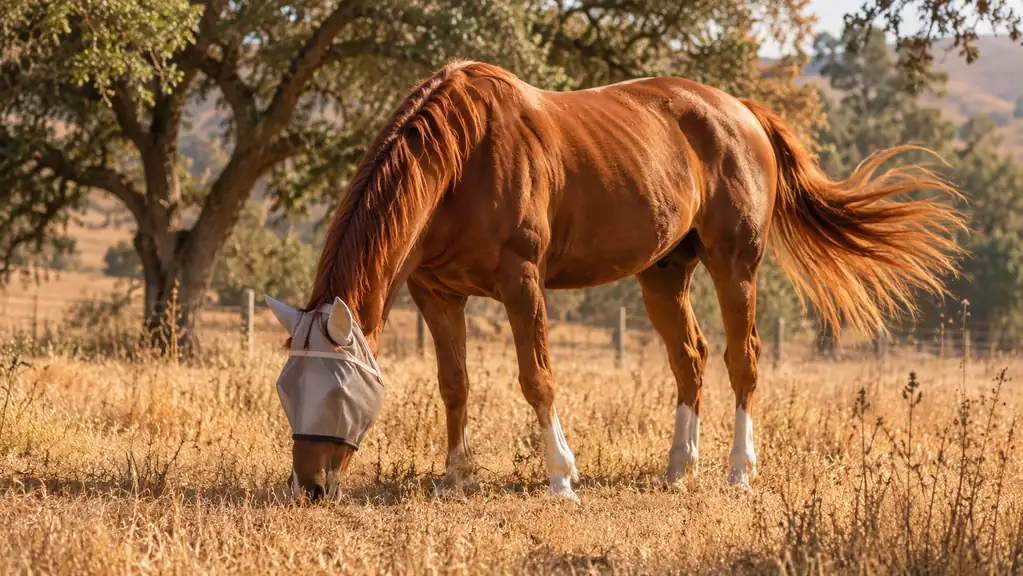
The second thing nobody tells you is that large eye space is a claim on a listing, not a measurement. Half the masks on the market say it and still sit flush against the eyelashes. What you actually want is room in front of the eye so the mesh does not press on the eyeball when the horse grazes with her head down. The eye area on this one is cut wide and holds itself off the face, and the mesh is translucent, so I can see her eye and she can see out. On the third day I watched her walk the fence line head down and the mesh never flattened against the lid.
The third thing is UV. The listing says lab-tested UV protection on the mesh and I have no way to test that in my own barn, so I will not pretend I did. What I can tell you is that a mask is shade for the face, shade helps, and shade is not a replacement for actual shade, fly spray on the body, or a vet if your horse has an eye problem that keeps coming back. Ask your vet about that. I do the books part time at a family-owned feed store. I am not the person who diagnoses anything.
One more thing worth saying plainly. The fabric is billed as midge-proof and breathable, and those two goals usually fight each other. A tight weave stops the tiny biting midges and traps heat. A loose weave breathes and lets the midges straight through. Harrison Howard lands on the tight side, but the panel is thin enough that I have not seen her sweat under it the way she did under a heavier mask I tried two summers ago. On a hot afternoon in the hills outside Hollister, that difference is the whole ballgame. It is the difference between a mask she wears and a mask she spends the day trying to scrape off on the water trough.
How the CareMaster Pro Actually Fits
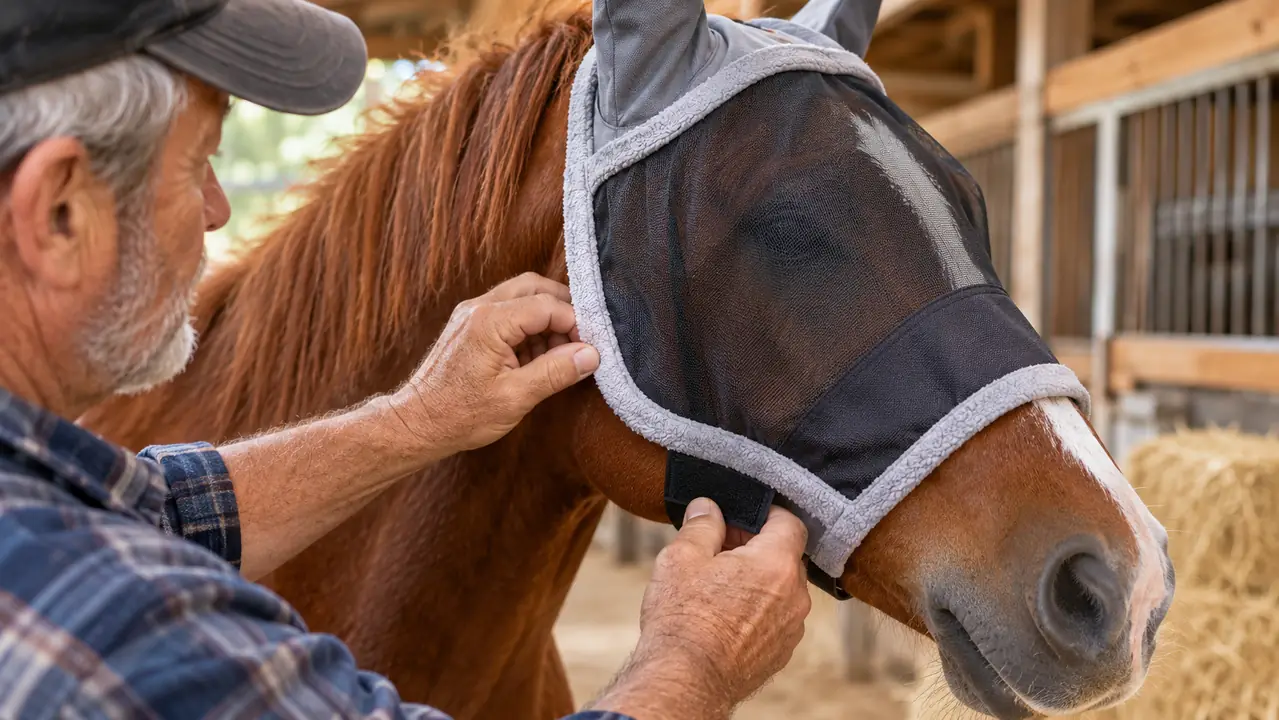
Juniper has a fairly ordinary Quarter Horse head, maybe a touch wide between the eyes. The Full Size fits her with the closures pulled to roughly the middle of the strap. The mask is anatomically shaped, which in plain terms means it is cut deeper at the jaw and narrower at the poll instead of being a flat bag yanked over the head. It weighs 6.7 ounces, so it is not heavy, but it is not a wisp either. There is enough body to the fabric that it does not flap flat against her face when she trots across the paddock.
The closures are touch tape, two points, and I prefer that to a buckle for one unglamorous reason: I can fasten it with gloves on in the dark. We have a small two-stall barn with a run-out, and I am out there around 5:40 most mornings before the feed store opens, working by whatever light the sky is offering. A buckle in that light means dropped straps in the shavings. Touch tape means I feel the edge and press, and I am done in four seconds.
What surprised me is that she stopped objecting to it. Masks she has worn before earned a head toss and a step backward, every single morning, for weeks. This one she stands for. Some of that is the padding, which I will get to. Some of it is that the ears are soft enough that pulling the mask on does not catch or drag. Either way, by day three she was dropping her head for me, and that is the reason I kept reaching for it instead of the older mask hanging on the hook.
One habit I would pass along: check under the mask every day for the first week. Not because the padding is bad, but because every horse's head is shaped differently and the spot that rubs on yours may not be the spot that rubs on mine. Run two fingers under the fleece at the cheekbone and along the jaw and feel for heat or a wrinkle. If the fleece has folded under itself, smooth it before you turn out. A folded fleece edge becomes a rub by the second day, and a rub becomes a bald patch you look at all winter.
By day three she was dropping her head for me to put it on. That is most of the review, honestly.
The Fleece Padding Is Doing More Work Than the Mesh
Harrison Howard runs thick fleece around the edges, and the listing says it prevents gaps and pressure marks. In practice, the fleece is why this mask has not taken hair off her. My previous two masks both thinned the hair over the cheekbones by August. Not a sore, just a patch that looked worn and grew back over the winter. Two summers in with this one, the hair on her cheekbones is still there and still laying flat. That is the single most useful thing I can tell you about it, more useful than anything about mesh denier or stitching.
The padding also closes the gaps. A fly mask that leaves an opening at the throat latch is decorative, because the gnats find the opening. Juniper gets tiny bites along the jawline every year, little bumps that crust over and take a week to settle. With the fleece pressed flat along the jaw and the closures snug, those bumps showed up far less this year. Not zero. Less. I will take less.
A note on washing, because nobody tells you this either. The fleece holds grit. If you rinse the mask and hang it dripping, the fleece dries stiff and crusty and then it rubs worse than it did before you washed it, which is a genuinely stupid way to lose a good mask. I hand wash in warm water, work the fleece between my fingers, rinse twice, and lay it flat on a towel in the sun. Ten minutes, every couple of weeks in fly season, and the padding stays soft the whole way through.
The Parts I Do Not Love
The ears collect burrs. If you ride where there is foxtail or cocklebur, you will be picking them out of ear fabric, and picking burrs out of ear fabric is nobody's favorite ten minutes of the day. That is not a defect exactly. It is what happens when you put cloth over ears. But plan for it, and check the ears before you put the mask back on, because a burr trapped inside the ear cover will rub.
The mask covers the face and the ears. It does not cover the neck, the throat, the chest, or the midline. If your horse is the type that gets bites under the jaw or along the belly, you are still spraying. I see reviews that treat a fly mask as the entire fly program and that has not been my experience at all. This handles the face and the ears and it handles them well. Everything else is still your job, same as it was before you bought it.
There is also the daily on and off. This is not a mask you put on in May and forget until September. I take it off every evening, look at her eyes and the skin under the edges, and hang it on a hook inside the barn door. That is three minutes, twice a day, and I do not mind it, because the evening check is how I caught a small scratch above her eye last summer before it turned into anything. But if you want a set-and-forget mask, this is not it, and honestly no mask should be.
I also want to be straight about durability. This is a fabric mask with a fine mesh panel. It survived two summers on a mare who is not rough on her turnout gear, and it picked up one small pull in the mesh near the ear that has not grown since. A horse that rubs on fence posts, or a gelding who plays hard over the fence with the neighbor's horse, will destroy this mask. That horse would destroy a more expensive one too. Nothing made of cloth wins that fight, and Harrison Howard is not selling you something that does.
What I Liked
- Fleece edging held up two seasons without thinning the hair over the cheekbones
- Ear covers are the same soft breathable fabric as the face panel, not a stiff add-on
- Wide eye area keeps the mesh off the eyelashes, even head down grazing
- Touch tape closures you can fasten with gloves on in low light
- Translucent mesh, so you can see the eye and check it in seconds
Where It Falls Short
- Ear fabric grabs burrs and foxtail
- Covers the face and ears only, nothing on the jawline or neck
- Not built for a horse that rubs or roughhouses at turnout
- Fleece needs hand washing and flat drying or it stiffens and rubs
Sizing Notes From Someone Who Guessed Wrong Once
I ordered the wrong size first. I measured her head the lazy way, roughly from the middle of her forehead down to the bottom of her cheekbone, guessed at the rest, and ended up with a mask that pinched at the throat latch and left an opening at the jaw. The mask itself was fine. The size was my mistake, and it cost me a return and two weeks of fly season.
Measure properly. Soft tape around the widest part of the head, just below the cheekbones and above the nose, then a length from the poll down the side of the face. Write both numbers on the back of a feed receipt and keep it in the tack box, because you will want it again in two years. Then use the size chart on the listing rather than the chart in your head. Every brand cuts differently and Harrison Howard runs to its own chart.
If your horse falls between sizes, size up and use the touch tape to take it in. You cannot add fabric to a mask that is too small, and a too-small mask is the one that rubs. The Full Size is what fits a 15.1 hand, 1,050 pound mare with a slightly wide forehead. If you have a draft cross or a very tall warmblood head, look at the larger option, because this one is not going to stretch its way into that.
Who This Is For
This is for the person with one or two horses, doing their own chores, who is tired of replacing a mask every six weeks and tired of bald cheekbones in August. If your horse tolerates ears, and you want the eye area clear and something soft against the face, this is a sensible buy. It also suits the horse that is a little sensitive about having things pulled over the head, because the fabric goes on softly and there is nothing rigid sitting over the ears.
It works for a horse that lives out, too. Juniper is in a run-out paddock off the barn rather than stalled, and this mask has stayed on through wind, through her rolling in the dust patch, and through the two days last spring when the neighbor's goats got loose and everyone in the paddock lost their minds. It came through all of that still on her head with the closures where I had set them.
It is good for the trailer as well. We pull a two-horse bumper-pull a couple of hours out to trailheads, and the mask goes on before we load, comes off in the parking area, and rolls into the tack box. It takes up no space and it does not need to be pressed back into a shape before the next use. If you haul with the windows down, it is worth having on for the drive.
Who Should Skip It
Skip it if your horse will not tolerate ear covers. There is no version of this that works if she fights the ears, and you will be the person at the barn with the mask hanging off one ear and a horse backing away from you. Get a mask without ears and solve the face first. That is not a knock on this product, it is just how horses are.
Skip it if your horse is hard on turnout gear, if you need neck and chest coverage, or if you want something you can machine wash and forget about. And if your horse has an eye problem that keeps returning, that is a conversation for your vet, not a conversation about masks. I would tell you the same thing if you were standing in front of me at the feed store, which happens more often than you would think.
Two summers, no bald cheekbones, one small pull in the mesh
If your horse tolerates ears and you measure before you order, this is the mask I keep reaching for at 5:40 in the morning. Check the size chart first, then the listing.
Amazon Check Today's Price on Amazon →