
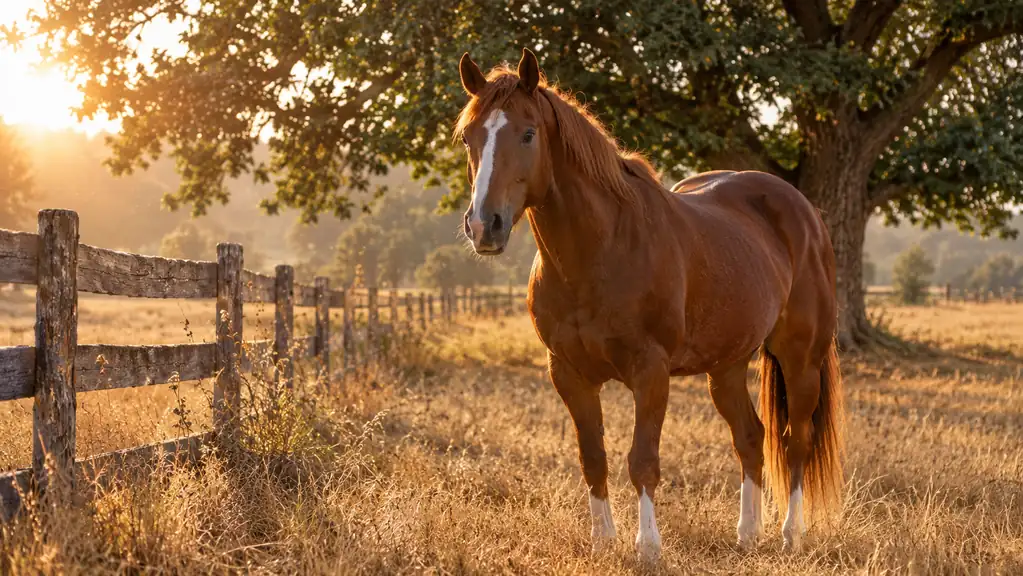
Flies do not bite a horse evenly. They go for the soft places: the skin under the eye, the inside of the ear, the thin hide along the jaw. Two summers ago, by the second week of June, Juniper had a scab below her left eye, a raw ear tip, and a head toss that showed up every few strides on the trail. I had been doing what most of us do, which is spray her at the hitching rail and hope. That was the summer I stopped treating fly control as a luck problem and started treating it as an equipment problem.
The equipment that changed the most for us is the Harrison Howard CareMaster Pro fly mask. Not because a mask is a new idea, but because this one fits a wide Quarter Horse forehead, leaves real room around the eyes, and is still where I put it after a night in the run-out paddock. Here is the routine we actually run from May into October on five acres outside Hollister, with one thin-skinned mare and a schedule that has no room in it for a wrestling match before breakfast.
Put the armor on before the first bite
The Harrison Howard CareMaster Pro covers the eyes and ears with fine translucent mesh, thick fleece padding at the edges, and touch closures that go on in seconds at the hitching rail. Large eye space, standard fit, with ears.
Amazon Check Today's Price on Amazon →Why the Face Comes First
A horse can tolerate flies on her back for a while. She cannot tolerate them in her ears. Watch a horse with a bad fly problem and you will see the same four things: head tossing, rubbing her face on fence posts and on her own forearms, rubbed hair at the base of the ears, and eyes that water and squint. Each of those can turn into broken skin or an eye problem. I am not a vet, so anything that looks hot, swollen or squinty gets a phone call, not a home remedy.
A mask is not a force field. It covers the face and the ears, not the belly, the sheath or the legs. What it does is stop the repeated small damage: the bites at the eye corners, the midges that set up camp inside the ears, the hair rubbed off where she drags her head along the fence. Those small things are what tip a horse from annoyed into miserable, and miserable is where the weight loss and the bad rides start.
Step 1: Start Two Weeks Before the Flies Do
Fly season here does not start on a date on the calendar. It starts on the first stretch of warm days after a wet spell, when the manure pile stops steaming and starts hatching. For us that lands in April, sometimes late March. I watch for it the same way I watch for the first foxtails, and I get the mask out then, before the first scab shows up rather than after. Two years ago I waited. We had a wet March, then four straight days in the eighties, and by the following Monday Juniper had a line of bites along the jaw that took three weeks to grow out.
Starting early means the first few wearings are not an emergency. A horse is far more willing to stand for something unfamiliar when she is not already head tossing and sore. If the first time she sees a mask is the day she cannot stop rubbing her face, you are asking her to accept a change and relief at the same time, and that is a harder sell than either one alone. The first spring I owned her I did exactly that: waited until she was visibly miserable, then spent a week arguing with a horse who had already decided anything near her ears was a bad idea.
Early also means you are not the person calling every tack shop in the county in July asking who has a size left. I have been that person. It is not a good use of a Saturday.
Step 2: Fit It at the Hitching Rail, Not in the Field
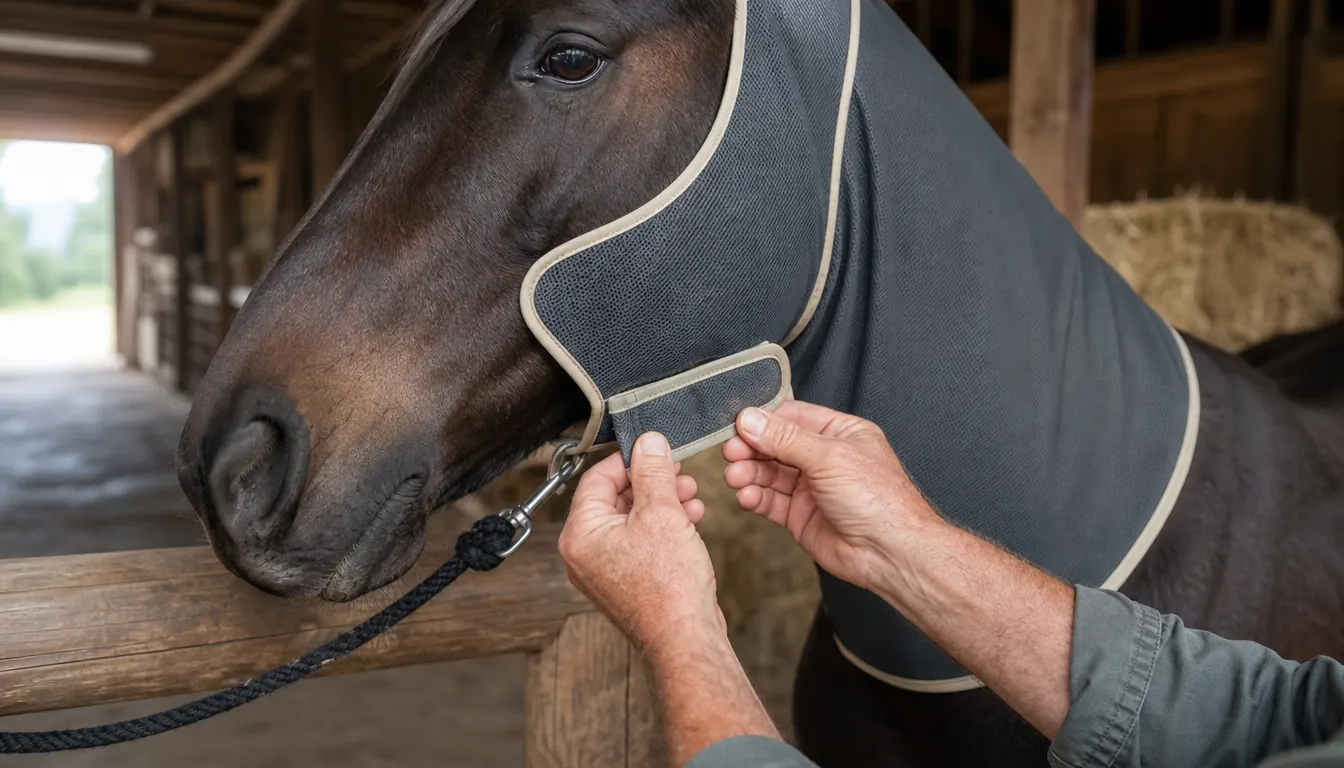
Slip the mask over the nose first, settle the ears through the openings, then bring the touch closures under the jaw. Snug enough that it cannot slide forward over her eyes when she shakes, loose enough that you can still slide a couple of fingers under the closure. I do this with her tied, in good light, because a mask fitted in the dark is a mask fitted wrong.
Then check three things. Eyes: the large eye space should sit clear of the eyelashes, with mesh in front of the eye rather than fleece. Ears: the ear covers should sit on the ear, not folded forward and not bunched at the base. Jaw: the thick fleece padding should lie flat along the cheek and under the jaw, with no gap where a midge can slip in and no wrinkle where it can rub.
What a bad fit looks like: hair missing in a stripe along the jaw, a red line behind the ears, or a mask that has spun half sideways by morning. All three mean adjust it or go up a size. None of them mean wait and see how it looks next week.
Step 3: Watch the First Three Days Like a Hawk
The first three days are the entire test. I check twice a day, at morning feed and at evening feed, and on day one I take a photo of both sides of her head so I have something to compare against. It is astonishing how easy it is to talk yourself into "that looks a little pink" when you cannot remember what normal looked like yesterday. Day one is about the fit, day two is about the skin, and day three is about whether she has stopped arguing with it. If she is still rubbing on day three, the problem is almost always a closure pulled one notch too tight or fleece sitting on the wrong part of the cheekbone.
Some horses rub at first. Juni rubbed the first night, not because the padding was wrong but because she had never worn anything on her head and she objected to the idea. I took it off, let the hair settle for two days, then put it back on for short stretches, an hour at a time while I did chores. By the end of the week she stopped noticing it.
If a horse will not settle after a solid week, take the mask off and re-check the fit before you decide the mask is the problem. And if the skin is already broken, leave it off until it is not. A mask over an open rub is a bandage over a wound that needs air, and you will spend the rest of the summer chasing your own mistake.
Step 4: Build a Ten-Second Check Into Every Feed
This is the part that actually keeps flies from winning. Twice a day, while she is eating, I take the mask off, look at both eyes, run a hand inside each ear, run the flat of my hand under her jaw, and put it back on. Under a minute, both times, and it catches everything while it is still small.
What I am looking for: a weepy eye, a puffy eyelid, a scab at the ear tip, a fresh bite on the muzzle, hair rubbed off at the closure, or a mask that has suddenly gone loose. Any one of those is a five-minute fix today and a vet call later, and the difference is entirely in whether you noticed. The check earned its keep last August, when I found one scab the size of a pencil eraser at the top of her right ear, right where the ear cover meets the poll. Nothing dramatic, but the ear was warm and she flinched when I touched it. I cleaned it, left the mask off two days, and it healed with no vet visit. Found a week later, that would have been a different phone call.
The mask itself needs washing. Once a week I rinse it in a bucket with a little mild soap, hose it off, and let it dry in the shade rather than in the sun, because heat is hard on fine mesh. I keep a second mask hanging in the barn so I never have to choose between a wet mask and no mask on a ninety-five degree afternoon.
Step 5: Cut the Population, Not Just the Bites
A mask protects one horse's face. It does nothing about the flies breeding twenty feet from the water trough. On five acres with one horse, the biggest change I made was manure. I pick the paddock twice a week in fly season instead of once, and I keep the pile well away from the barn and the run-out, because a pile next to the barn is a nursery with a door on it. I measure it in wheelbarrow loads: three or four a week from May through September, against one a week in winter. The pile sits a good hundred feet from the barn, on gravel rather than dirt, so runoff does not wash back toward where she stands.
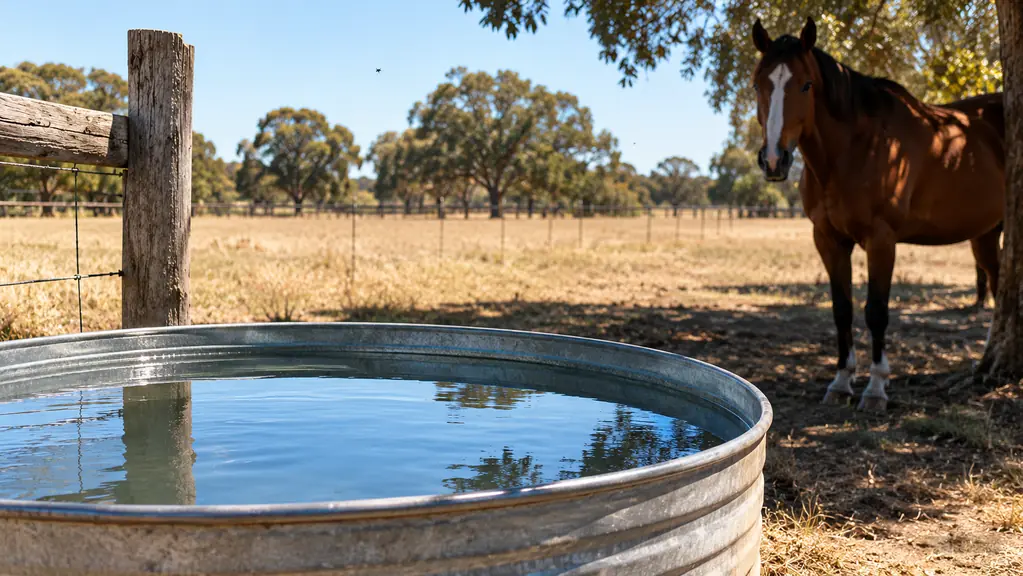
Water matters just as much. I scrub the trough every week in summer, dump anything that holds standing water, and finally fixed the drip under the hydrant that I had been stepping around for two years. Flies need wet organic matter to reproduce. Every puddle you remove is a few thousand flies that never hatch.
Shade and airflow help a horse defend herself. Juni stands under the big oak from about eleven in the morning until the heat breaks, and on the still days I run a fan down the barn aisle, because flies are lazy in moving air. Fly predators and traps are worth the money if your neighbors are not also breeding flies, and around here that is a real if.
What Else Helps
A mask is one layer of several. The others I keep on the shelf are a fly wipe for the belly and legs, a fly sheet for the worst two or three weeks, and fly boots once the bites move down to her legs. Timing turnout helps too. Dawn and dusk are the worst hours, so if I can ride at nine in the morning instead of six, I do, and the horse is happier for it.
It also helps to be honest about what a mask cannot do. It will not survive a determined pasture mate who wants to chew the ears off it. It will not cover the body, keep flies out of the sheath, or fix an eye that is already infected, which is a vet call every single time, no exceptions. I put the Harrison Howard CareMaster Pro up against a plain mesh mask in a separate post, and the difference comes down to the ears and the fleece padding, not to anything flashy.
The mask does not kill a single fly. What it does is stop a bite from becoming a scab, a scab from becoming a rub, and a rub from becoming a vet call in the middle of softball season.
That is the whole routine. Fit it early, fit it right, check it at every feed, and spend the ten minutes a week on manure and water that keeps the population from replacing every fly you swat. The Harrison Howard mask does the part you cannot do with a spray bottle, which is stay on her face at two in the morning when the midges are out and nobody is awake to help.
The fly control that works is the one still on her head at sunrise
Fine translucent mesh, thick fleece padding at the edges, and touch closures that hold through a paddock night. Large eye space so the mesh sits off the lashes, with ear covers for the places flies love most.
Amazon Check Today's Price on Amazon →