
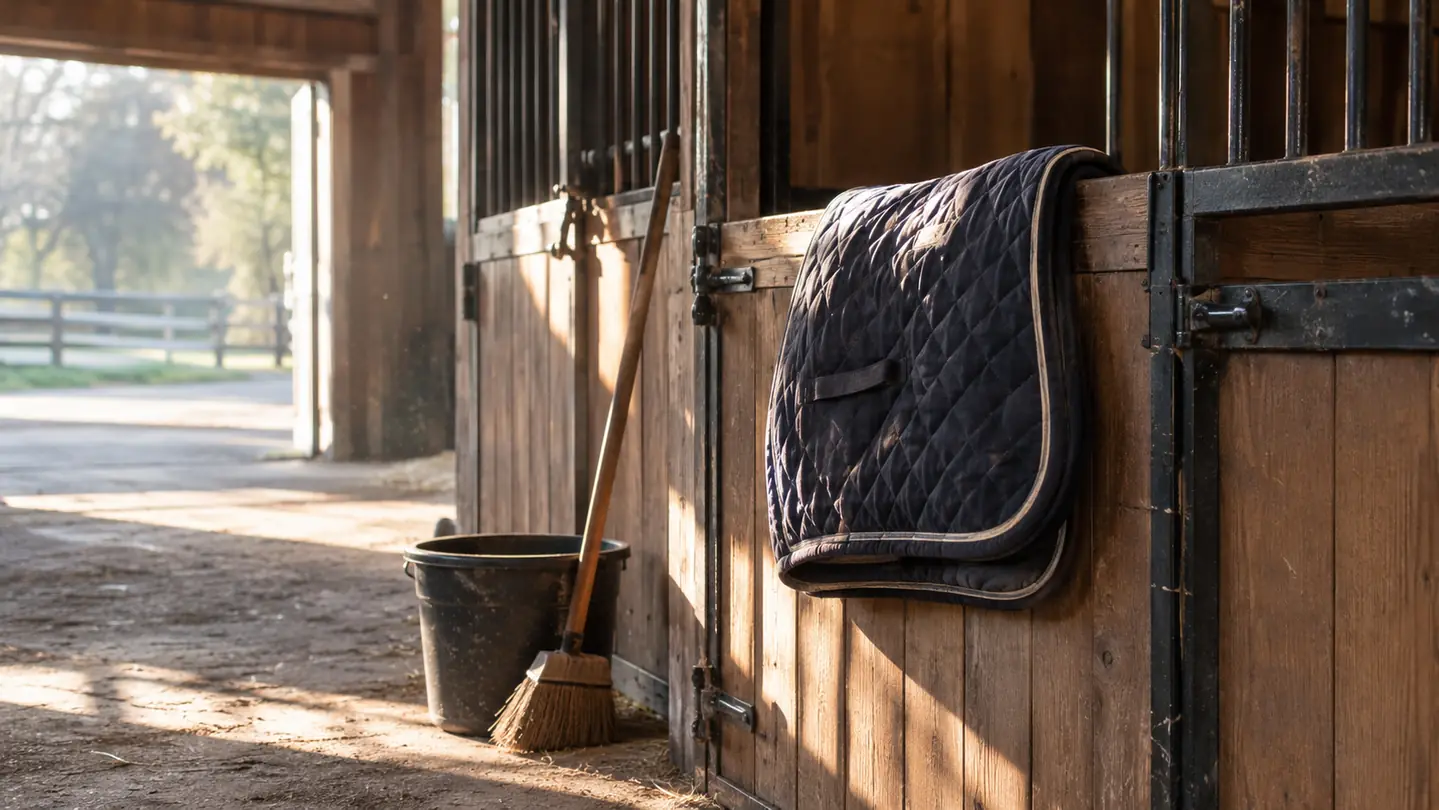
Most saddle pad reviews are written in an arena. Clean horse, clean pad, forty minutes of flatwork, five stars. That is not where I live. My mare Juniper is turned out on a run-out paddock off a two-stall barn, and by February the ground between the gate and the hay feeder is closer to clay than dirt. So when I say I have used the TuffRider Basic All Purpose Saddle Pad hard, I mean sweated through, rained on, hosed off, and hung over a stall door in a cold wind more times than I can count.
This is the version of the review I would give a friend standing in the aisle at the feed store. I have had the pad long enough to stop being polite about it. There is a lot here to like. There is also one thing I think every buyer should know before the box lands on the porch, and it has nothing to do with how the pad looks hanging up.
The Quick Verdict
An honest work pad that shrugs off sweat and mud without asking to be treated like a show piece. The flannel underside is the whole story, and it cuts both ways.
Amazon Check Today's Price →A work pad that does not need to be babied
Mine have been through two wet winters and a dusty California summer without coming apart. If you want something to ride in rather than something to photograph, start here.
Amazon Check Today's Price on Amazon →How I've Actually Used It
I ride four to five days a week when travel softball is not eating my Saturdays, mostly trail miles out of the barn and the occasional regional park. That is not heavy work. It is also not the kind of riding where gear gets babied. I tack up in the dark half the year, I ride in whatever the weather is doing, and I untack in a hurry because somebody needs dinner and the son needs a ride home from the moto track.
The pad went into rotation the week it arrived. I have two, and the reason is not that the first one wore out. It is that a pad that comes off a hot horse at seven in the morning should not go back on that same horse at four in the afternoon still damp. Having a second one means I am never choosing between a wet pad and no ride, and that alone changed my winter more than any piece of tack I have bought in years.
Last February I found out what that second pad was really for. We had four straight days of rain, the run-out turned to soup, and the pad came off Juniper wet every single morning because she sweats under the saddle no matter what the thermometer says. I hosed one off at the spigot by the barn, hung it over the door, and by the next morning it was dry enough to put back on. The other one was already dry from the day before. Before I owned two, I had one pad and a hair dryer I am not proud of, and there were mornings I skipped the ride rather than press a damp pad against a damp horse.
What I noticed first was how little it moved. Juniper is round through the barrel and not especially high through the wither, and pads cut too generously will creep back over a couple of miles of hills. The TuffRider pad has stayed where I put it, ride after ride, including the long ones where I am not paying attention because the ground is rocky and I would rather look at my horse's ears than my tack. What I noticed second, and did not expect, was how fast it dried. The polyester face sheds sweat instead of drinking it, and a pad that dries overnight is a pad you can ride in the next morning.
The Flannel Underside Is the Whole Story
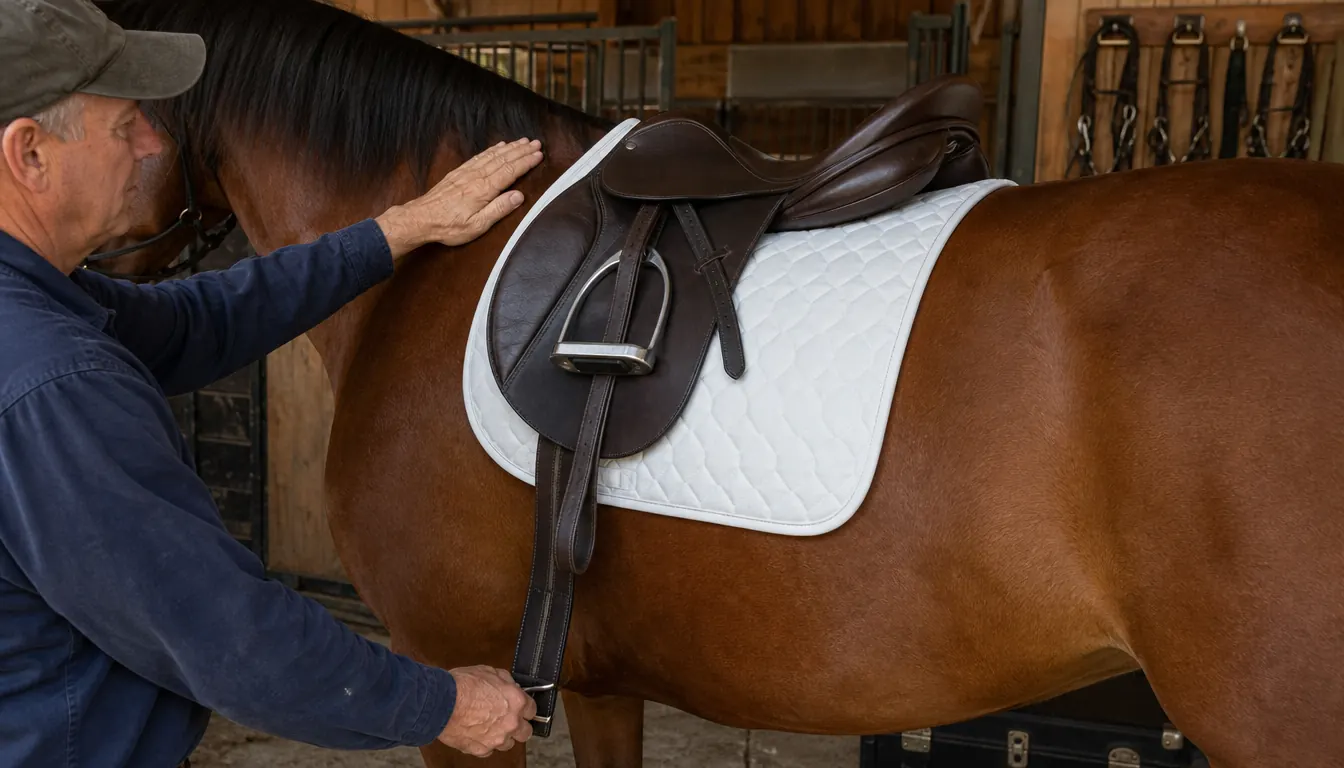
The listing says flannel against the horse and polyester against the saddle, with a composition of 84 percent polyester and 16 percent cotton. That detail is what separates this pad from every other basic quilted pad in the same aisle, and it is the detail almost nobody mentions in a review. Flannel is soft. It is the same reason people put flannel sheets on the bed. Against a thin-skinned horse, that matters more than anyone who has never owned a thin-skinned horse will believe. Juniper gets fly bites and rain rot and cracked heels, and rough fabric under a saddle is the sort of thing she tells me about immediately.
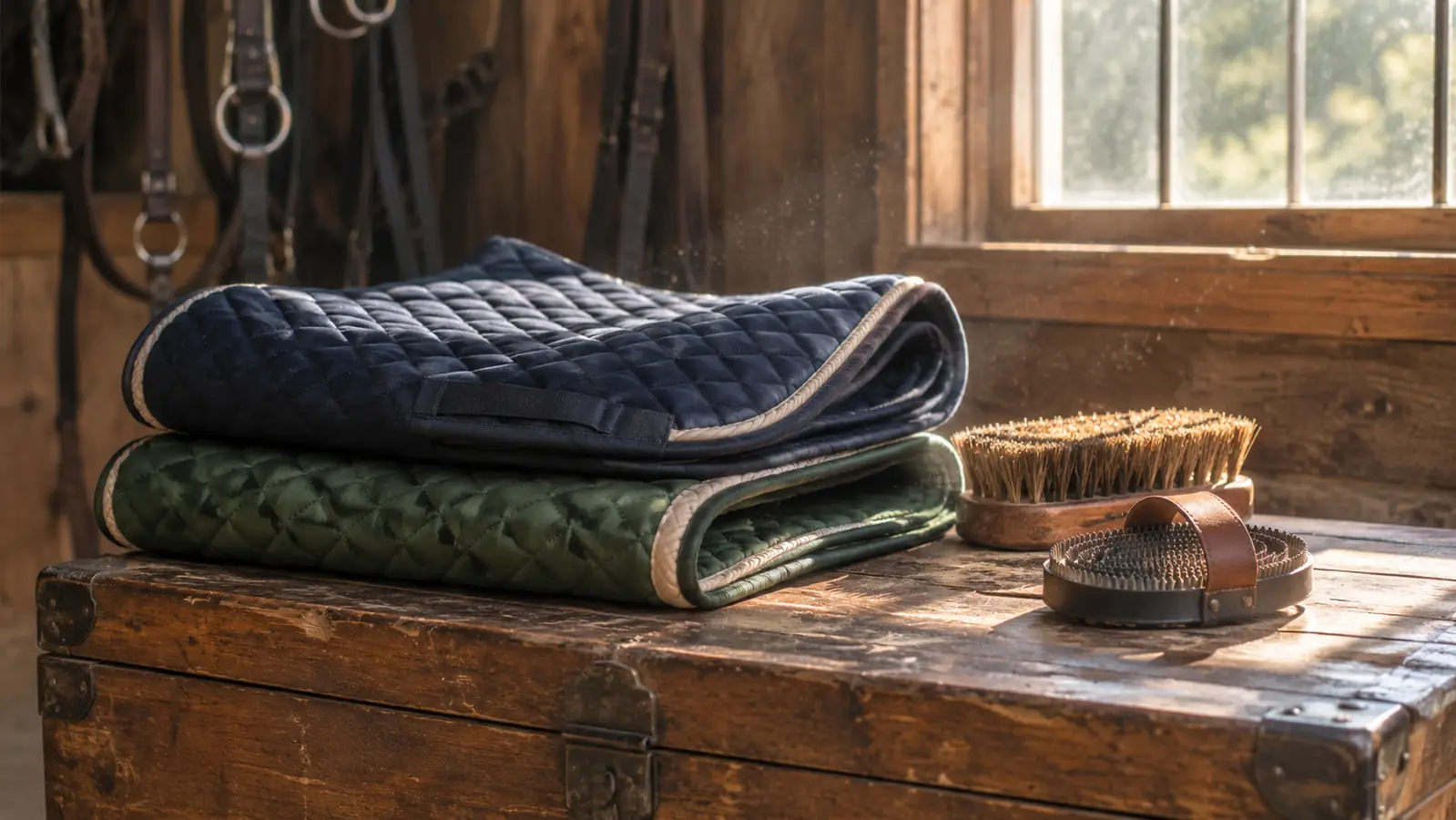
Here is the part nobody tells you. Flannel grabs hair. It grabs dirt. It grabs shavings. A pad with a slick lining can be wiped down and put away, and a flannel pad cannot. It has to be brushed out, and if your horse is shedding in April, it has to be brushed out twice. I keep a stiff brush by the tack trunk for exactly this and I flick the underside clean after every ride, not every week. If that sounds like one chore too many on a schedule that already has too many chores, that is your honest reason to look at something else.
The other thing about flannel is that it does not lie to you. On a warm day the sweat pattern on the underside will tell you plainly whether the saddle is bearing evenly or sitting heavy on one side. I caught a fit problem earlier than I would have with a synthetic pad, simply because the flannel showed me what was happening back there. To be clear, the pad does not fix a saddle that does not fit, and I would not pretend it does. It just stops hiding the evidence.
Here is the concrete version of that, because it sounds like a sales line otherwise. Two springs ago I kept noticing the flannel came off darker on the left of the panel, not by a lot, but by enough that I stopped and looked at it three rides running. I checked my own habit first, since I tighten the girth from the left like most people do, and I had a saddle looked at by someone who knows more about trees and flocking than I ever will. Turned out I had been riding a touch off center for longer than I wanted to admit. The pad did not cause that and did not cure it. It just made a quiet problem loud enough for me to catch it, which is more than the pad I owned before ever did.
Sizing, Fit, and the Numbers on the Listing
The listing gives three measurements: a 22 1/4 inch length, a 19 1/2 inch drop, and a 26 inch length. Read that twice, because it reads oddly, and it took me a minute to work out that the first number is the length across the top and the last is the overall length end to end. On a 15.1 hand Quarter Horse with an all-purpose saddle, that is a sensible fit. Not generous, not skimpy. I have a bit of pad showing in front of the saddle and a bit behind it, which is exactly what I want and exactly what I check for in a mirror by the barn door.
The shipped package measures 28.5 by 27 by 1 inches and the pad arrives folded. It flattens out over a day or two on the tack trunk. I mention it only because if you open the box expecting something crisp and flat, you will spend a minute wondering whether you got the wrong item. You did not. Hang it up and give it a day.
When I ordered, I did the thing I am about to tell you to do. I laid a tape across the panels at the widest point, wrote the number on the back of my hand in marker, and carried it to the computer. Mine came out just under 23 inches, which put the TuffRider's 22 1/4 inch top length right where I wanted it, with pad showing front and back and none of it bunching up under my thigh when I shorten my stirrups for hills. If your panels measure 25 or 26 inches, order something cut differently, because this one will leave you short at the corners and you will feel it about three miles in.
One more number, and this one is worth a laugh. The listing puts the pad weight at 0.450 grams and the item weight at 4.54 grams. A saddle pad does not weigh less than a paperclip. That is a data entry problem on the listing and not a problem with the pad, but it tells you how much faith to put in the spec table on any of these pages, including this one. Trust your own hands more than any number you read online. The one number that matters here is the drop, because that is what decides whether your saddle panels sit on pad or on horse.
Washing, Hair, and What Mine Look Like Now
I wash my TuffRider pads on cold with a mild detergent and hang them over the stall door to dry. I am not going to pretend that is an official instruction from the company, because it is not. It is just what has worked in this barn. What I can tell you is that neither pad has shrunk, warped, or come apart at the quilting after repeated washings, and I have washed them more than a person probably should.
One thing I will not do is put a pad in the dryer. I know people who do, and I have watched a pad come out with the quilting puckered and the binding along the edge gone wavy, and I decided I would rather wait the day. Hung over the stall door with air moving through the barn, mine have been dry in about six hours in July and overnight in January. In a closed-up barn on a cold wet week it takes longer than that, which is the other reason I own two and would own three if I had the hooks for it.
The diamond quilting has held its loft, and that surprised me more than it should have. Cheaper quilted pads go flat in the areas where the saddle bears down, and once a pad goes flat it is a blanket with opinions. Mine still has cushion under the panel after two years of steady use, which is the single test I care about most and the reason I stopped shopping.
What has not held up perfectly is the appearance. These are not pads that stay looking new. The flannel picks up a permanent dinginess along the edges where it rubs, and no amount of washing brings that back. If you want a pad that still looks show-ring fresh at the end of a season, this is not that pad. If you want a pad that still functions like a pad after a season, it very much is.
Where It Falls Short
No pad is right for everything, and I would rather tell you the limits than have you find them out in a wet arena on a Saturday. The flannel is the first limit. It is soft against the skin and it is a magnet for everything else. If you are the kind of rider who wants to slap a pad on and go, with no brushing step in your routine, a slick-lined pad will suit you better and I will not talk you out of it.
The second limit is that this is a work pad and it looks like one after a season. The quilting is modest, the fabric is plain, and nothing about it is trying to be pretty. That is fine for trail miles and lessons and the Tuesday evening ride nobody photographs. It is not what I would take to a show, and I do not think it is pretending to be.
The third limit is sizing. These measurements suit an all-purpose saddle on a horse in the middle of the size range. On a small pony or a very large warmblood you may want something cut differently, and the listing does not give you a size chart worth the name. Measure your saddle before you order. I mean that literally. Take a tape to the panels, write the number on your hand, and order from that.
What I Liked
- Flannel underside is genuinely soft against a thin-skinned horse
- Dries overnight, so a morning ride after a wet evening is possible
- Stayed put over miles of hills on a round-barreled mare
- Diamond quilting has kept its loft after repeated washings
- 84 percent polyester and 16 percent cotton takes real abuse
Where It Falls Short
- Flannel grabs hair, dirt and shavings and needs brushing after most rides
- Shows its age in appearance long before it stops working
- Listing measurements are confusing and there is no useful size chart
- The weights on the listing are plainly wrong, which undermines the rest of the spec table
Two wet winters, four rides a week, and the quilting still has loft under the panel. That is the whole test, and this pad passed it.
That is the short version of two years. The longer version is a hundred small mornings where I did not have to think about tack, and a hundred wet evenings where I was glad a second pad was hanging dry. Gear that gets out of your way is worth more than gear that impresses somebody in the warm-up ring, at least at my house.
Who This Is For
This pad is for the rider with one horse, a saddle that fits, and a schedule with no slack in it. It suits trail miles, lessons, and the kind of riding where you tack up in the dark and untack in a hurry. It suits a thin-skinned horse that reacts to rough fabric. It suits a rider who does not mind spending ninety seconds with a brush, because that ninety seconds is the price of the flannel.
It also suits a household where the budget is watched and the gear is shared, because two of these in rotation costs less than one specialty pad and covers you on the week when the rain will not stop. That sounds like a small thing. On a February morning with a wet pad on the door and a horse waiting, it is not a small thing at all.
Who Should Skip It
Skip it if you want a show pad. Skip it if you are not going to brush the underside, because flannel that never gets brushed turns into a sanding block. Skip it if your horse is a size these vague measurements do not obviously cover, unless you are willing to measure first and possibly deal with a return.
And skip it if you are hoping a pad will solve a saddle fit problem. A pad is not a fit correction, and stacking more of them is how people end up with a sore horse and a mystery. If your horse is flinching, hollowing his back, or changing attitude under saddle, that is a conversation for your vet and a saddle fitter, not for a review written by a woman who does her own chores. I am not a vet, a farrier, or a trainer, and I am not going to play one here.
The pad I still reach for at six in the morning
Two of these live in my tack trunk and neither one has quit. If your horse has thin skin and your schedule has no give in it, this is the one I would hand you.
Amazon Check Today's Price on Amazon →